REVIEW · MEXICO CITY
National Museum of Anthropology: a journey into Mexico’s past – English lang.
Book on GetYourGuide →Operated by Hector Balderas Iglesias · Bookable on GetYourGuide
That first look at ancient art is about to click.
This 3-hour tour at the National Museum of Anthropology turns the museum from a pile of objects into a readable system of ideas. I especially love the way the guide teaches you to connect symbols in art to how people explained the universe, not just what they built. You start with worldview, then you see the evidence in real galleries.
My second favorite part is the pace and format: you’re not stuck in a slow, read-the-label routine. Hector Balderas Iglesias runs it like an interactive class, asking questions and pointing out details you might miss, using an iPad with reconstructions plus a laser pointer for small but important design choices.
One consideration: you do a lot of standing and listening, and the tour is not geared for kids under 16 because the explanations can get cosmology-heavy and abstract. If you want a casual stroll with simple facts, this may feel more intense than fun.
In This Review
- Key things you’ll notice on this tour
- Entering the National Museum of Anthropology in Chapultepec
- What makes this tour feel different: a worldview you can actually use
- Mural of Duality: the museum’s “main idea” made visual
- The Umbrella: symbolism that points to social meaning
- Teotihuacan Room: city scale meets cosmic rules
- Mexica (Aztec) Room: glyphs, animals, and social order
- Pakal the Great replica: Maya power told through stone
- Hector Balderas Iglesias and the “interactive class” style
- Pace, comfort, and what to wear
- Price and value: what $75 buys you here
- Logistics that affect your day (without stealing your time)
- Who this tour fits best
- Should you book this 3-hour English tour?
- FAQ
- How long is the National Museum of Anthropology guided tour?
- Is the tour in English?
- What’s included in the price?
- What rooms or stops will the guide cover?
- Do I need to buy my own tickets?
- Is this tour suitable for children?
- Are food, drinks, or transportation included?
Key things you’ll notice on this tour
- Symbol-first explanations so you learn what animal, sun, moon, and glyph imagery is doing
- Mural of Duality used as a map for the Mesoamerican way of thinking
- Teotihuacan and Mexica rooms taught as culture systems, not just timelines
- Pakal the Great replica explained as power, craft, and meaning in Maya tradition
- Hector’s iPad visuals (reconstructions and extra imagery) to make confusing objects click
- An active Q-and-A approach that helps you interpret pictograms and symbols on the spot
Entering the National Museum of Anthropology in Chapultepec
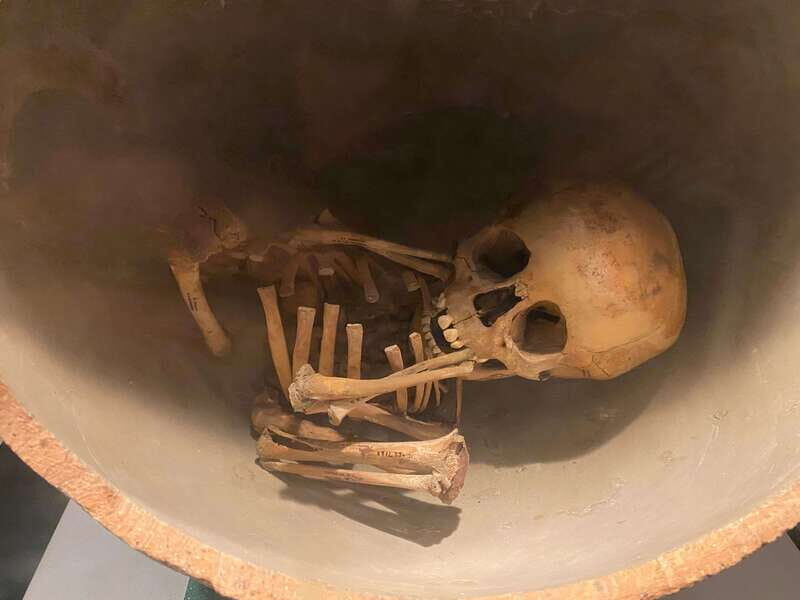
The museum sits in the Bosque de Chapultepec area, and the setting matters. It’s not just a building; it’s a big, calm space where your mind can slow down long enough to see patterns in art.
You’ll meet your guide near the Mexican flag at the entrance. Then you’ll walk the museum with Hector Balderas Iglesias, with a live English guide and a private group format. That private setup helps the tour feel focused—you can ask questions and you’re not competing with a loud crowd.
Expect a guided circuit followed by time to explore on your own inside the same 3-hour window. This is a smart combo. The guide gives you the keys, then you get to use them while the ideas are still fresh.
You can also read our reviews of more museum experiences in Mexico City

What makes this tour feel different: a worldview you can actually use
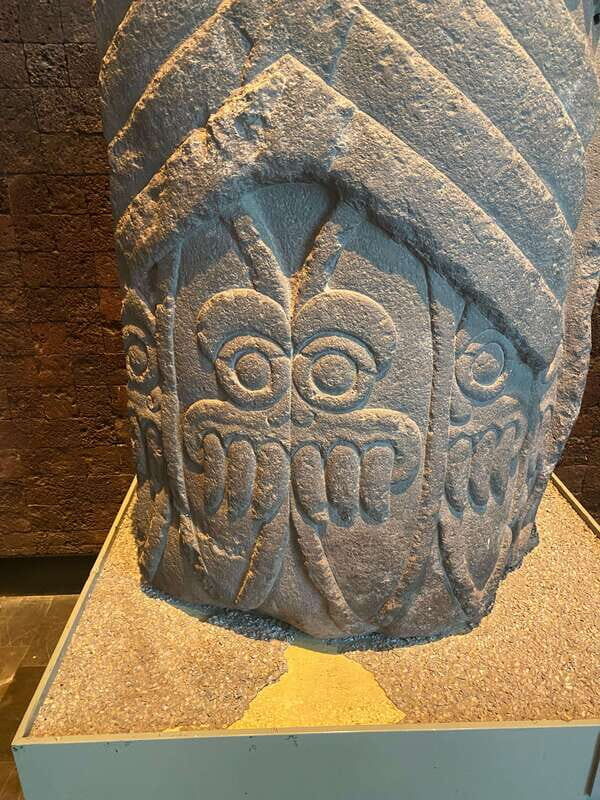
This tour isn’t built like a “chronological greatest hits” overview. It’s built like translation.
You start with a big idea: ancient peoples in Mexico didn’t just make art for decoration. They used images—on vessels, in pictograms, and in stone engravings—to explain how the world works. If you’ve ever wondered why animals show up again and again, or why the sun and moon are more than just sky objects, you’re in the right place.
Hector also connects symbolism across cultures, pulling comparisons to Asian and European ideologies when they help you understand the logic. That doesn’t mean the cultures are the same. It means you get mental hooks to interpret unfamiliar symbolism without flattening it.
Mural of Duality: the museum’s “main idea” made visual
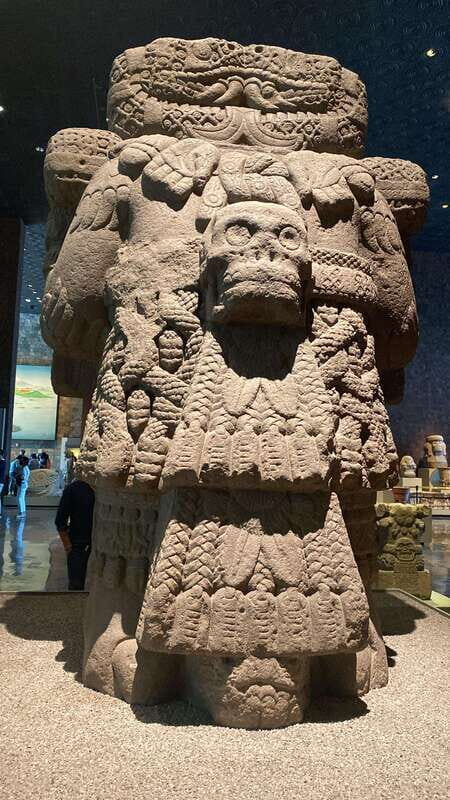
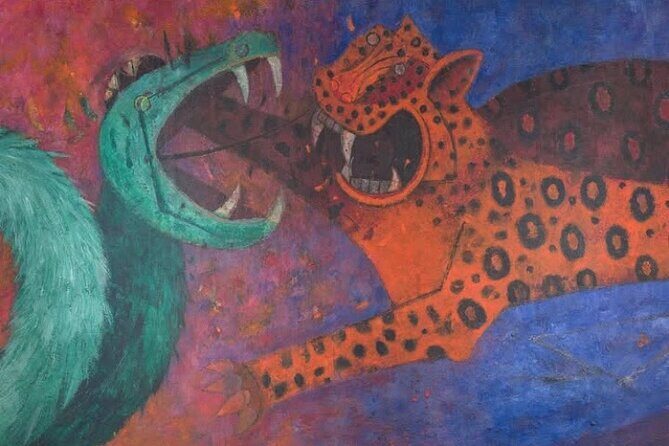
The Mural of Duality is where this tour earns its keep.
Instead of treating it like a wall decoration, Hector explains it as a worldview in action—a way of organizing meaning. You’ll learn how duality shows up as a way to describe balance, forces, and relationships in the cosmos. The payoff is practical: once you understand what duality is doing here, you start noticing how other symbols behave in the museum.
You’ll likely find yourself re-reading the museum after this stop. Duality becomes a lens, so later rooms stop feeling like separate topics and start feeling like different expressions of the same thinking style.
Why this matters for you: museums can be overwhelming. A strong interpretive framework reduces the chaos. After Duality, you spend less time wondering what you’re seeing and more time understanding why it was made.
The Umbrella: symbolism that points to social meaning
Next up is the Umbrella stop—another piece that could look “weirdly specific” if you only skim labels.
With Hector’s explanation, the umbrella becomes more than an object. You’ll see how symbolic items can signal status, worldview, and roles in society. In many Mesoamerican contexts, “ordinary” forms can carry heavy meaning, especially when linked to power and the sacred order of the universe.
This is also where Hector’s teaching style shines. He doesn’t just name symbolism. He helps you interpret it by linking the object to the wider logic of cosmology and social structure.
If you like that moment when a detail stops being random and starts being intentional, you’ll probably enjoy the Umbrella stop a lot.
Teotihuacan Room: city scale meets cosmic rules
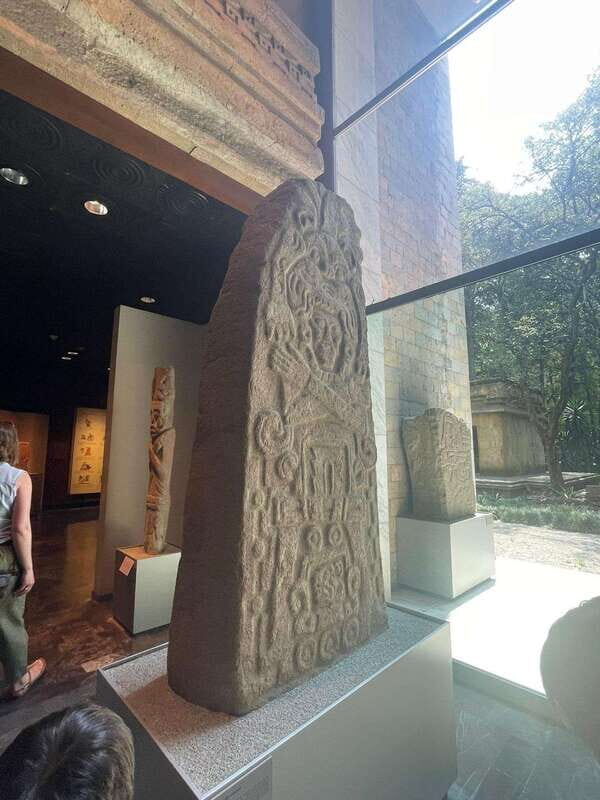
In the Teotihuacan Room, the tour shifts from general symbolism into a more concrete view of how ideas get built.
Teotihuacan is often discussed in terms of architecture and urban planning. Hector adds the missing piece: how that physical layout ties to cosmology and meaning. You get an explanation that helps you understand why certain designs matter beyond engineering—because ancient designers weren’t separating “science” from “belief.” For them, worldview and daily structure were connected.
A small drawback to note: if you’re looking for a simple, low-effort history lesson, you might find the cosmological angle more demanding than expected. But if you’re curious, it makes the room more than impressive—it becomes understandable.




Mexica (Aztec) Room: glyphs, animals, and social order
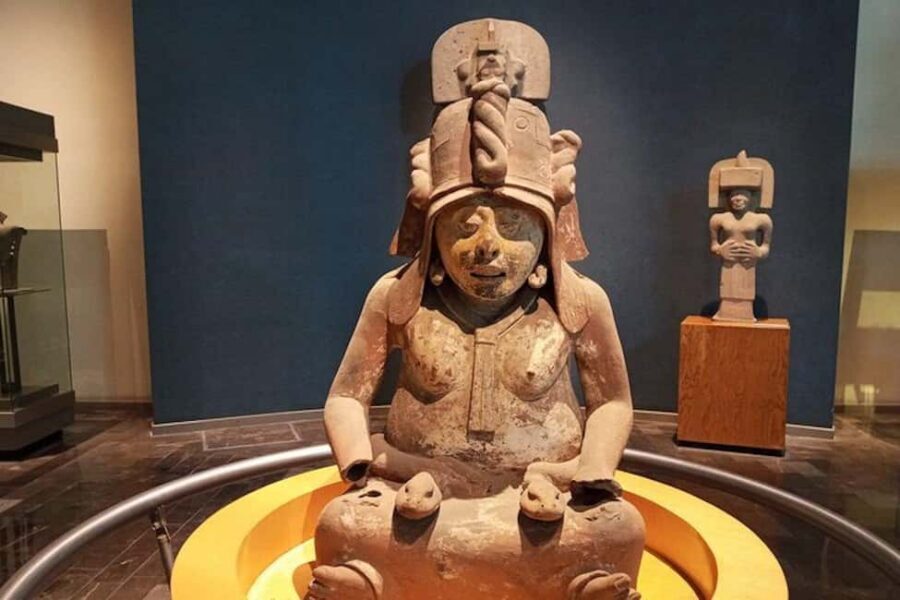
The Mexica (Aztec) Room is where symbolism becomes extra alive.
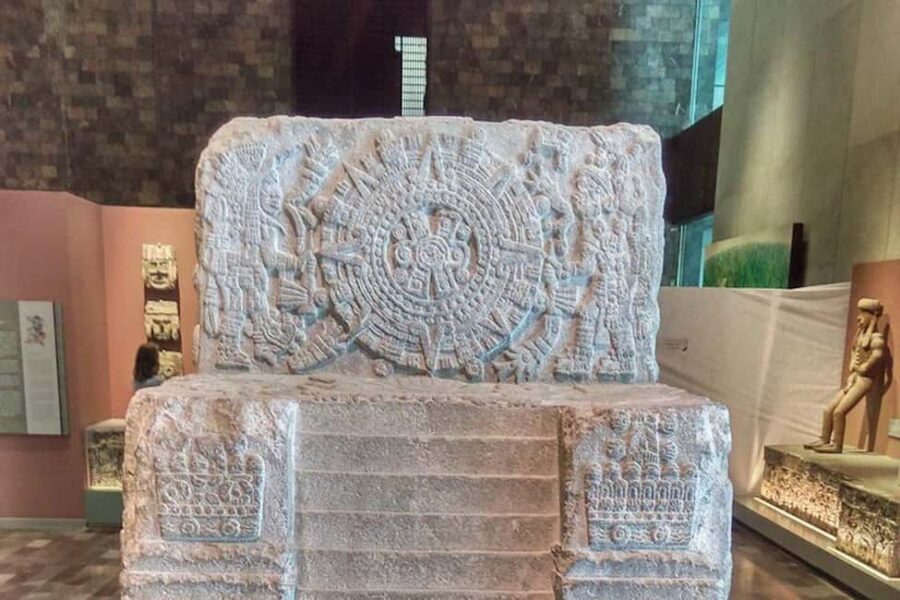
This is the stop that helps answer the classic questions people ask when they first see ancient iconography: why snakes, eagles, or jaguars show up in art and outfits; what sun and moon representations mean; and how pictograms function as a kind of visual language.
Hector’s approach tends to be interactive here. You’ll be asked questions designed to guide how you interpret what you see. In some cases, he uses the iPad with reconstructions or added imagery to show relationships between what’s in the gallery and what the symbol likely meant in context.
You’ll also get more than art history. You’ll start understanding how social systems show up in imagery: who holds power, how authority is expressed, and how the sacred order is displayed through everyday and ceremonial forms.
Pakal the Great replica: Maya power told through stone
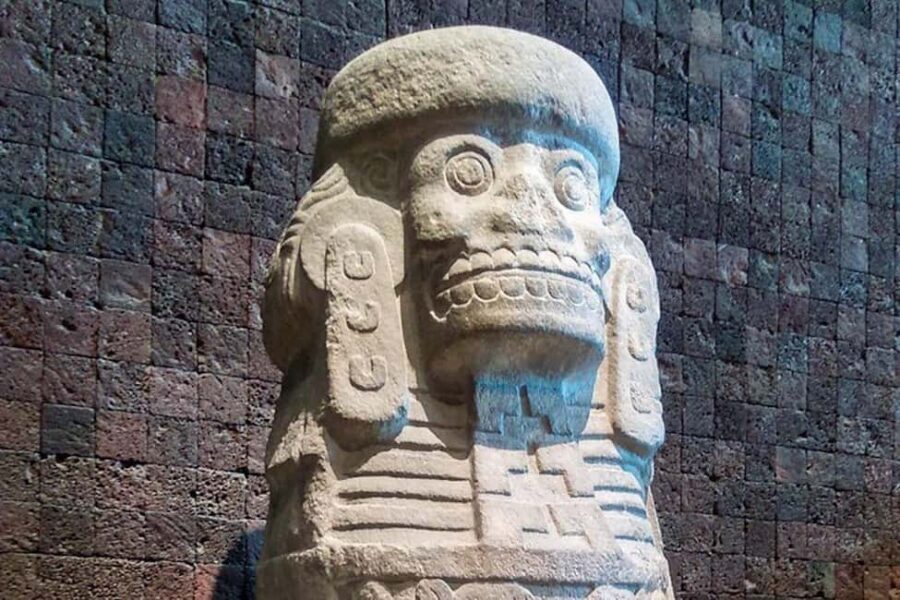
The stop at the replica of the tomb of Pakal the Great is a strong reminder that “dynasty” isn’t just dates. It’s craft, meaning, and how people positioned themselves within the cosmos.
You’ll get an explanation that frames Pakal as a figure through symbolism—how royal power is represented in visual form, and how the tomb imagery communicates identity, authority, and cosmic connection.
This part works well even if you don’t already know Maya history. Hector explains so the significance makes sense rather than requiring you to memorize a timeline first.
Also, the museum itself is large. This guided focus gives you a chance to understand one major Maya story without getting lost in the sheer size of the collections.
Hector Balderas Iglesias and the “interactive class” style
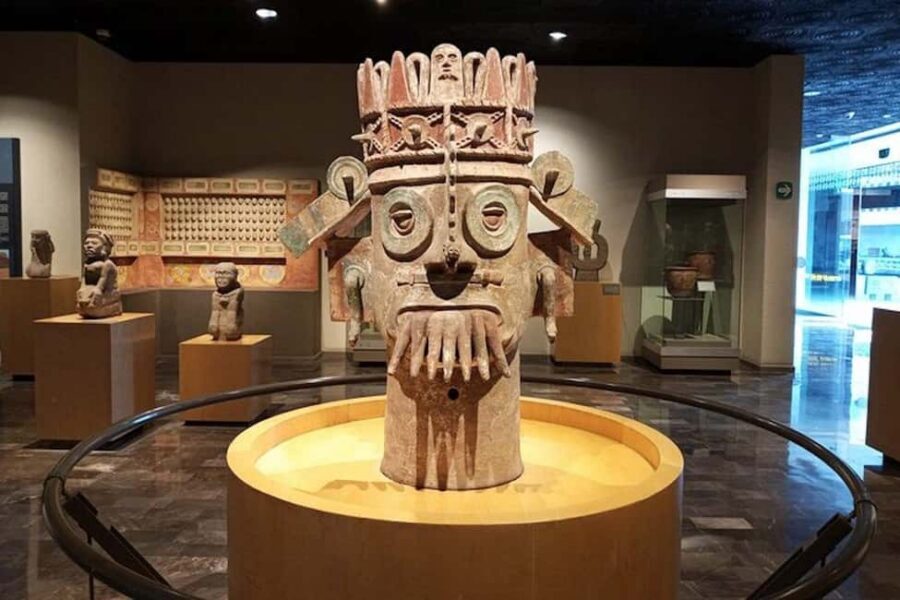
A big reason this tour earns top ratings is the way Hector teaches.
His style is described as interactive, like a college class people miss—meaning you’re not just passively listening. You ask questions, you answer prompts, and you get coached through interpretation. That’s a rare skill in museums where most tours feel like a lecture.
He also uses an iPad with reconstructions and extra visual background. For objects that are hard to spot at first glance, he points out what matters with a laser pointer, helping you focus on smaller design features you could easily ignore.
The result: by the time you’re in the Mexica and Maya-related stops, you’re not only absorbing facts—you’re building your own ability to “read” the imagery. That’s the real value.
Pace, comfort, and what to wear
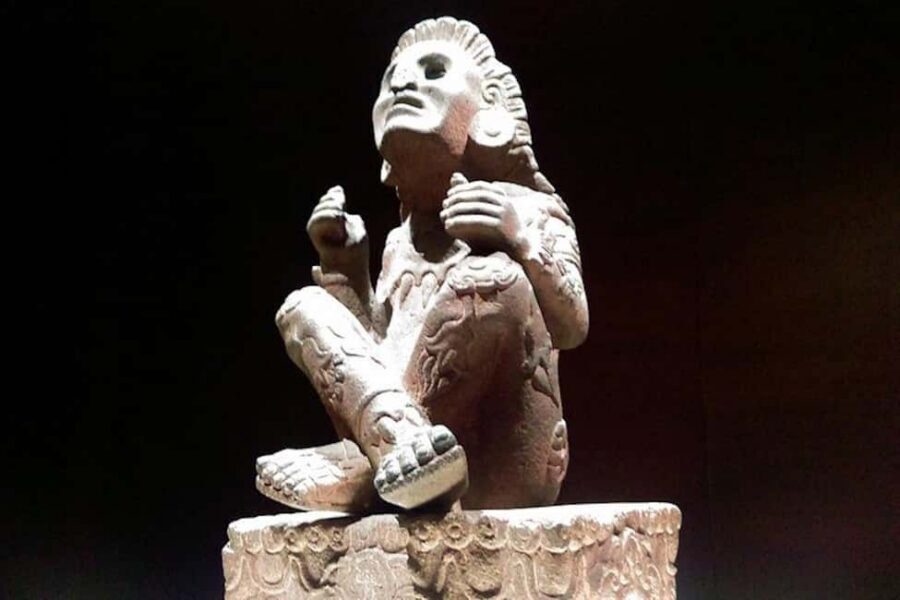
This experience is done on foot with a 3-hour duration, and the time is spent standing while you listen. Bring comfortable shoes and comfortable clothes. You’ll be happier if you dress for walking in museum interiors where you might stop frequently and look up close at artifacts.
The tour isn’t designed as a kid-friendly casual experience. It’s aimed at adults and older teens, especially because the cosmological explanations can be abstract.
Content may include some material shown in its original language. That’s not a problem if you’re relying on the guide, but if you dislike anything language-related, know this is part of the experience.
Price and value: what $75 buys you here
At $75 per person for about 3 hours, this is priced like a guided museum experience—not like a generic pass with a pamphlet.
The value comes from three things that are hard to replicate on your own:
- A guided route that picks the most meaningful rooms (not just the biggest rooms).
- A framework that explains symbolism and cosmology, so you understand what you’re seeing.
- A teaching style that includes interaction and visual aids, including an iPad and laser pointer.
Also, the museum admission and permanent exhibitions are included, and the tour includes skip-the-ticket-line. That reduces friction on the day, which matters when a museum is big enough to sap your energy.
What’s not included is also worth knowing: food and drinks are not part of the tour, and you’re responsible for getting to the museum.
Logistics that affect your day (without stealing your time)
The tour starts at a clear meeting point: near the Mexican flag at the museum entrance.
It’s a private group. That typically helps you get more attention and a smoother pace than large groups.
English is supported via a live English guide. If you’re traveling with someone who needs English explanations, this is a good fit.
The museum rules are fairly strict. You should plan to avoid prohibited items such as drones, selfie sticks, flash photography, tripods, professional cameras, and anything that could be considered a large bag or luggage. There’s also a clear “hands off” rule—you can’t touch exhibits, and you should expect the guide to keep the focus where it belongs: on viewing and interpreting.
Who this tour fits best
This tour is best for you if:
- You want a deeper understanding of ancient Mexico beyond names and dates.
- You like symbolism and you’re curious about how images function as a language.
- You’re planning to visit other Mexico City sites and you want background that makes them easier to understand.
It may be less ideal if:
- You want a short, light overview with minimal standing.
- You prefer a family-friendly format with kid-focused pacing.
- You dislike cosmology-style explanations.
If you’re the type who likes turning a museum into a puzzle you can solve, this one is for you.
Should you book this 3-hour English tour?
Yes, if your goal is understanding. This isn’t just a museum walk; it’s a way to learn the logic behind Mesoamerican imagery so the objects stop looking random.
I’d book it early in your time in Mexico City if you can. The mental framework it gives tends to make later visits easier, especially when you’re seeing symbols, carvings, and architecture across the city.
If you’re on the fence, use this simple test: do you want answers to the why behind the animals, the sun and moon, and the repeated visual motifs? If yes, you’ll get your money’s worth from Hector Balderas Iglesias’s interactive approach and the specific rooms chosen for meaning.
FAQ
How long is the National Museum of Anthropology guided tour?
The tour lasts 3 hours, including guided time at key rooms and free time inside the museum afterward.
Is the tour in English?
Yes. The live guide provides explanations in English.
What’s included in the price?
The price includes museum admission with access to the permanent exhibitions, plus a guided walking tour through the selected areas of the museum.
What rooms or stops will the guide cover?
You’ll visit and get explanations for the Mural of Duality, the Umbrella, the Teotihuacan Room, the Mexica (Aztec) Room, and a replica of the tomb of Pakal the Great.
Do I need to buy my own tickets?
No. Admission to the museum and its permanent exhibitions is included, and the tour includes skip-the-ticket-line.
Is this tour suitable for children?
No. It isn’t meant for children or teens under 16 due to the cosmological explanations.
Are food, drinks, or transportation included?
Food and drinks are not included, and getting to the museum is also not included. You’ll want to plan meals around your tour time.