REVIEW · MEXICO CITY
Learn How To Cook Mexican Food
Book on Viator →Operated by Eat Mexico Culinary Tours · Bookable on Viator
Food lessons beat museum tickets. In Mexico City’s Roma neighborhood, this 3-hour, hands-on class teaches you core Mexican techniques in a real working kitchen, with time to ask questions and actually get your hands moving. You’ll learn how to make basic green salsa, work with fresh and dried chiles, shape corn masa with your hands, and cook nopales—not just memorize a recipe card.
I like two things a lot: the class stays small (max eight people), so you get focused attention, and you leave with written recipes for what you made. One thing to consider is that private transportation isn’t included, so you’ll want to plan how to reach Tonalá 194 in Roma Nte. for the 6:00 pm start.
In This Review
- Key Highlights at a Glance
- A Hands-On Mexican Cooking Class in Roma (Not a Demo)
- Chef Julieta Carrion Runs the Room with Real Kitchen Energy
- The 3-Hour Rhythm: Learn, Cook, Taste, Adjust
- Core Techniques You’ll Actually Use: Salsa, Chiles, Masa, Nopales
- Green Salsa Basics
- Fresh and Dried Chiles
- Handling Corn Masa by Hand
- Cooking Nopales
- Sopes Starter: How Masa Turns Into a Flavor Vehicle
- Nopales Salad Starter: A Fresh Dish with Real Health Appeal
- Tinga Main: Smoked Chipotles, and a Choice for Vegetarians
- Papas con Chorizo: Potatoes Learn to Love Smoke and Spice
- Chilaquiles Rojos: Crunch, Salsa, and the Crema Balance
- What’s Included in the Price (And Why It’s Better Than It Sounds)
- Where to Meet and How to Plan Your Evening
- Who Should Book This Class (And Who Might Skip It)
- Should You Book This Mexican Food Cooking Class?
- FAQ
- How long is the cooking class?
- What’s the group size?
- Where does the class meet, and what time does it start?
- Is the class taught in English?
- What dishes are included in the menu?
- What if I need to cancel?
Key Highlights at a Glance
- Max 8-person class size means hands-on help, not a lecture
- Chef Julieta Carrion teaches in a professional kitchen linked to her pastry business
- You learn core skills like green salsa, chiles, masa handling, and nopales prep
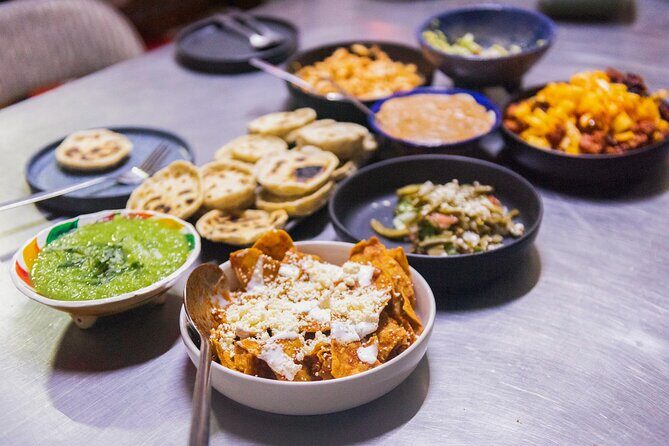
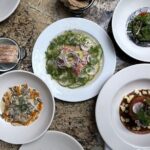
- A full menu you cook and eat: sopes, nopales salad, tinga, papas con chorizo, chilaquiles rojos
- Everything you cook is yours to eat after class, plus containers if you have leftovers
A Hands-On Mexican Cooking Class in Roma (Not a Demo)
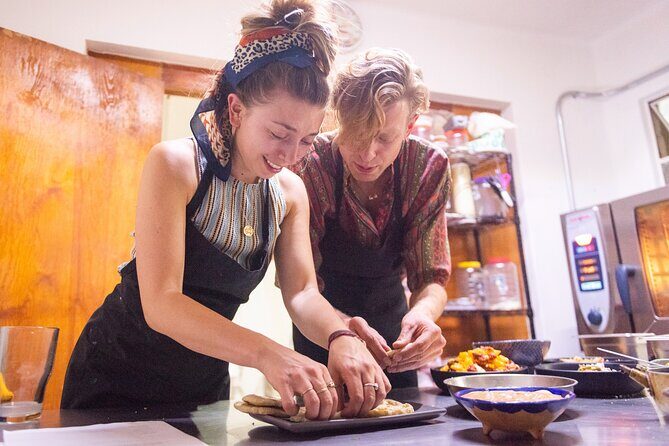
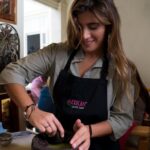
This experience is built for people who want to eat well and learn skills you can repeat at home. The setting matters: you’re not hovering at the edge of a screen behind a glass. Instead, you step into a professional working kitchen in Roma (Roma Nte., Cuauhtémoc area) and cook at a pace that lets you get it right.
You’re also getting something deeper than a menu tour. The class centers on techniques Mexicans use at home—things like how salsa changes when you handle chiles a certain way, how masa feels before it turns into sopes, and how nopales cook down so they’re tender instead of tough or bitter. That’s the stuff that makes your cooking feel confident rather than guessy.
And yes, you get to eat. Not the tiny “one bite” approach. The included dinner means you can eat as much as you want once class ends, and take home leftovers in provided containers.
You can also read our reviews of more food & drink experiences in Mexico City

Chef Julieta Carrion Runs the Room with Real Kitchen Energy
The teacher is Chef Julieta Carrion. She owns a pastry business that supplies restaurants and coffee shops, and she runs these Mexican food classes in the same kitchen. That matters because the teaching style tends to feel practical, like someone who lives in a working kitchen every day.
In a class this size, you’re not competing for attention. With a maximum of eight participants, you can ask follow-up questions without feeling rushed. From the reviews, the teaching vibe is consistently described as professional, engaging, and friendly—so you don’t feel like you’re “being tested” in front of strangers. You’re learning.
Also, it’s offered in English. If you’re more comfortable cooking while following explanations in English, that’s a big plus.
The 3-Hour Rhythm: Learn, Cook, Taste, Adjust
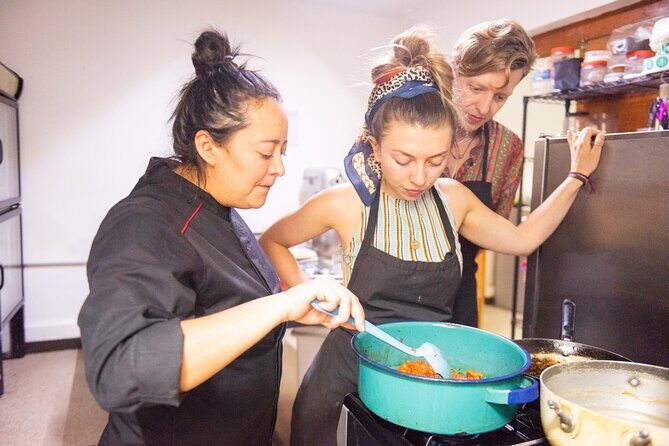
The class is about three hours long and starts at 6:00 pm. The time window is ideal because you’re not trying to cram a full cooking vacation into an afternoon. It’s long enough to do prep, cook multiple components, and still have time to taste and adjust as you go.
Here’s what that rhythm usually means for you:
- You practice key steps while they’re relevant, so it sticks
- You taste the dishes you’re making, not just the finished plate at the end
- You’re able to adjust spice levels during parts of the menu (more on that with the tinga)
You’ll be provided an apron for use during the class. That sounds small, but it makes the whole thing feel easier—less worry about splashes, flour, or chile stains on your clothes. Cooking classes should be fun. This one is set up for exactly that.
Core Techniques You’ll Actually Use: Salsa, Chiles, Masa, Nopales
This class is organized around foundational skills. You’re not only learning what to cook; you’re learning how Mexicans build flavor and texture.
Green Salsa Basics
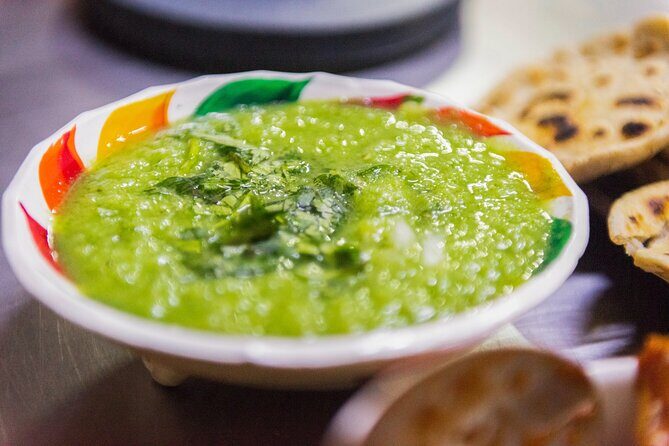
You’ll learn how to make basic green salsa. The big value here is technique. Once you understand the basic approach—how to combine ingredients and how chile affects flavor—you can adapt later with what you can find.
You can also read our reviews of more tours and experiences in Mexico City
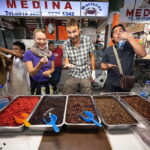
Fresh and Dried Chiles
You also learn how to use both fresh and dried chiles. That’s a major confidence booster. Many people get stuck because they know one type of chile only. Knowing how to work with both gives you flexibility for cooking at home.
Handling Corn Masa by Hand
You’ll learn about corn masa and how to shape it with your hands. That’s not a trivial step. Masa texture controls the final result, and knowing the feel makes your cooking outcomes more repeatable.
Cooking Nopales
Nopales (cactus paddles) can sound intimidating. In this class, you learn how to cook them as part of the menu. This matters because nopales are a staple in Mexico, and they’re something you can use in other dishes once you’ve seen how they turn out after cooking.
Sopes Starter: How Masa Turns Into a Flavor Vehicle
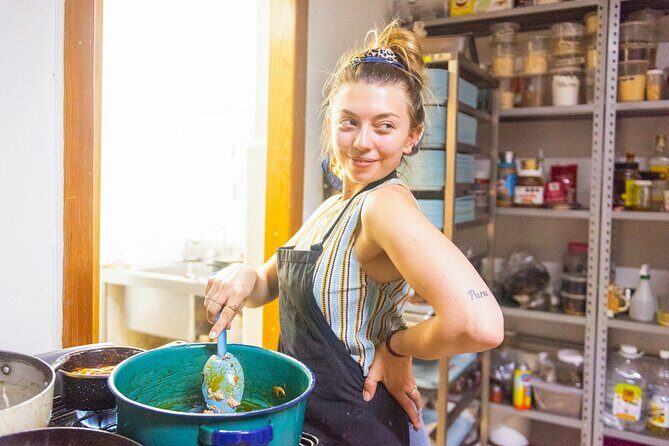
Your first starter is sopes. These are round, thick patties made from nixtamalized corn dough, topped with refried beans, salsa, and onion and cilantro if you want them.
Why sopes are a great learning dish:
- You see how masa behaves when shaped by hand
- You practice the “base + toppings” logic that fits lots of Mexican snacks and meals
- The toppings teach balance: beans for richness, salsa for brightness, onion/cilantro for freshness
You’ll be working through the structure of the dish, not just assembling toppings. That gives you a template you can reuse later.
Nopales Salad Starter: A Fresh Dish with Real Health Appeal
The second starter is a nopales (cactus) salad. Nopales show up across Mexican cooking, and this salad version keeps the focus on freshness while still teaching you a key ingredient.
The class description emphasizes health benefits, but the more practical win is learning how nopales taste and feel once prepared correctly. People often get nopales wrong at home because they don’t cook or season them the right way. In class, you’ll handle the ingredient as part of a dish that’s clearly meant to be enjoyed, not endured.
Tinga Main: Smoked Chipotles, and a Choice for Vegetarians
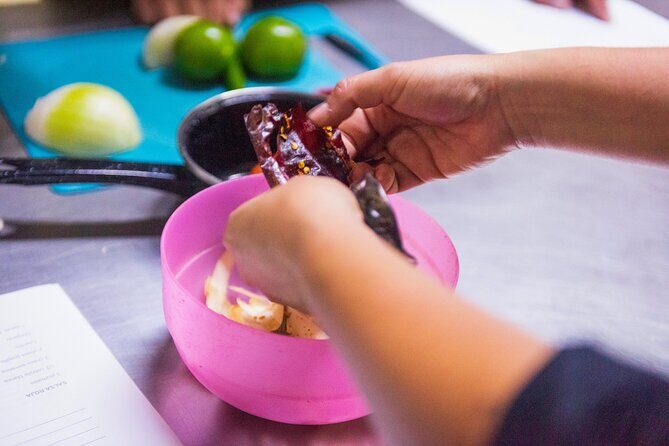
Your main dish includes tinga. It can be made with chicken, or with oyster mushroom for vegetarians. The seasoning uses smoked chipotles, and the class is set up so you can choose how mild or spicy you want it.
This is one of the most valuable parts of the menu because it teaches you flavor-building, not only a specific final outcome:
- You learn what chipotle smoke brings to the dish
- You see how seasoning impacts taste even when the main ingredient changes
- You get to adjust spice level to your preference, which is huge if you cook for people with different spice tolerance
Papas con Chorizo: Potatoes Learn to Love Smoke and Spice
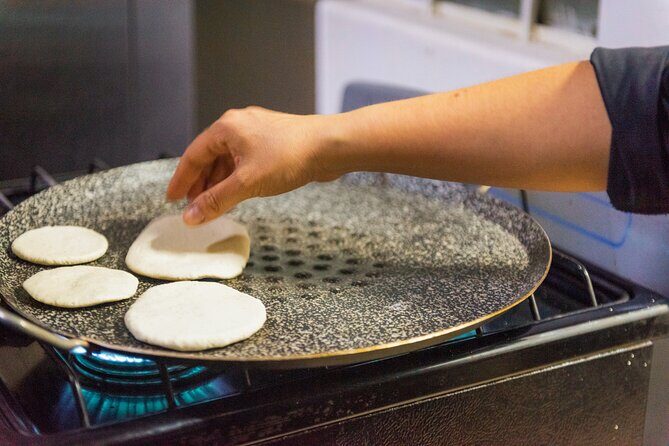
Another main is papas con chorizo—potatoes cooked with chorizo, described as flavorful and mildly spiced.
This dish is a practical follow-up to tinga. If tinga is about smoked chile depth, papas con chorizo shows how you can turn simpler ingredients into something satisfying and well-seasoned. Potatoes are forgiving and easy to find almost anywhere, so this is exactly the kind of dish you’ll be more likely to recreate after the trip.
Chilaquiles Rojos: Crunch, Salsa, and the Crema Balance
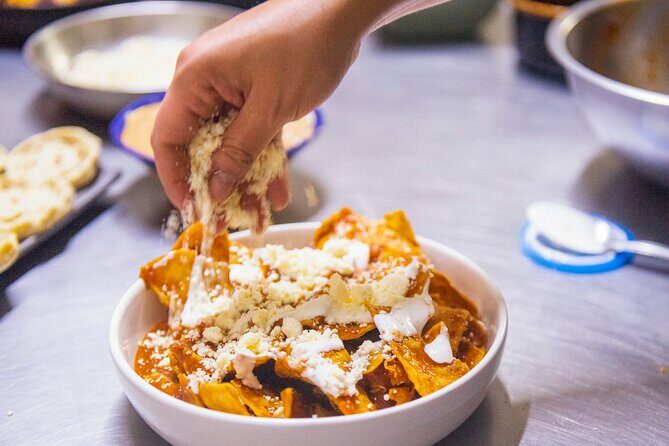
For the other main (or major dish on the menu), you’ll make chilaquiles rojos. These are crunchy tortilla chips dipped in red salsa, topped with fresh thick crema.
This one teaches texture and timing. The balance between crunchy and sauced is the whole point. You don’t want tortilla chips turned into mush, and you don’t want them totally dry either. In class, you’re learning how the salsa interacts with chips in real time—again, not just reading instructions.
And the crema finish matters. It cools heat, rounds out chile flavors, and gives that classic chilaquiles experience you’ll miss if you only make “hot salsa with chips.”
What’s Included in the Price (And Why It’s Better Than It Sounds)
At $149.28 per person, you’re paying for an evening in a real kitchen, with an actual menu and ingredients provided. In many cooking classes, you pay for instruction and get a small tasting. Here, the included dinner model is different.
Included highlights:
- Everything you cook is for you to eat
- If you don’t finish, you can take leftovers in containers provided
- All ingredients for the class are included
- Aprons are provided
- You take home written recipes for the dishes you prepare
Not included:
- Private transportation
Value check: you’re getting both skill-building and multiple dishes. That’s what makes it feel fair—especially because you get written recipes you can use later. Food-focused travelers love a great meal, but cooking classes are worth it when you leave with something you can repeat. This one is designed for that.
Where to Meet and How to Plan Your Evening
You’ll meet at Tonalá 194, Roma Nte., Cuauhtémoc, 06700 Ciudad de México, CDMX, Mexico. The class starts at 6:00 pm and ends back at the meeting point.
It’s near public transportation, which helps a lot since private transportation isn’t included. Plan to arrive a few minutes early so you’re not rushing into apron-on, knife-out mode.
Also, this is a hands-on experience. Wear clothes you’re okay with cooking in, even with an apron. If you’re coming straight from walking around Mexico City, a quick stop to refresh yourself can make the class smoother.
Who Should Book This Class (And Who Might Skip It)
Book this if:
- you want basic Mexican cooking techniques you can repeat at home
- you like learning by doing, not watching from the sidelines
- you want a meal that’s more than sightseeing food, plus written recipes to take with you
- you prefer a small group setting (max eight)
Skip it if:
- you want a purely sightseeing-focused evening with lots of roaming (this is a kitchen session)
- you don’t want to travel to a specific neighborhood meeting point on your own
- you prefer eating only, with no hands-on prep (this is hands-on by design)
Should You Book This Mexican Food Cooking Class?
Yes, if your goal is skills, not just plates. The small eight-person size, the hands-on teaching, and the fact that you cook and eat a full menu make it feel like a real investment. I also like that it covers fundamentals: green salsa, chiles, masa, nopales—ingredients and techniques you’ll actually use later.
The only real caution is logistics: you need to get yourself to Tonalá 194 in Roma Nte. for a 6:00 pm start, since private transportation is not included. If you can handle that, this class is a smart way to spend an evening in Mexico City and leave with recipes you can trust.
FAQ
How long is the cooking class?
It lasts about 3 hours.
What’s the group size?
The class has a maximum of 8 travelers.
Where does the class meet, and what time does it start?
The meeting point is Tonalá 194, Roma Nte., Cuauhtémoc, 06700 Ciudad de México, CDMX, Mexico, and it starts at 6:00 pm.
Is the class taught in English?
Yes. The class is offered in English.
What dishes are included in the menu?
You cook and eat sopes, nopales salad, tinga (chicken or oyster mushroom for vegetarians), papas con chorizo, and chilaquiles rojos.
What if I need to cancel?
You can cancel for a full refund if you cancel at least 24 hours before the experience’s start time. If you cancel less than 24 hours before, the amount paid isn’t refunded. The experience can also be canceled if a minimum number of travelers isn’t met, with an offer of a different date/experience or a full refund.