REVIEW · MEXICO CITY
La Roma Private Art Tour
Book on Viator →Operated by City Art Tours · Bookable on Viator
Street art has a map here. This is a La Roma private art tour that mixes a walking loop through the neighborhood with time around La Romita and its 16th-century church. I like that it focuses on what you can actually see on the street, with context that turns random walls into a story you can follow.
Two things I really like: the guide (Neene) keeps the pace human, and the tour connects murals to local themes like street life and even politics. One thing to consider: at about two hours, it is a compact format. You’ll get smart highlights, not a marathon of every artwork in the area.
Expect a route built for easy movement. You’ll cover roughly ten to twelve blocks of flat terrain, and then finish back at the same starting point near Monterrey 104 in Roma Norte.
In This Review
- Quick hits on this Roma private art tour
- What you’re really buying with a $65 private art tour
- Mercado Roma start: murals and street-art history on flat terrain
- Street art with meaning: politics, daily life, and art you can read
- La Romita and the 16th-century church stop
- When murals aren’t enough: getting contemporary art in galleries
- Your walking route, timing, and what 2 hours feels like
- English-friendly with a bilingual guide (and a real conversation vibe)
- Price and value: why this tour can feel like a bargain
- Practical tips so the tour goes smoothly
- Who should book this Roma art tour
- Should you book the La Roma Private Art Tour?
- FAQ
- Where does the La Roma Private Art Tour start?
- How long is the tour?
- Is the tour offered in English?
- Is this a private tour or shared?
- What’s included with the tour price?
- Is there an admission fee for Mercado Roma?
- What is the cancellation policy?
Quick hits on this Roma private art tour
- Mercado Roma start: walk the area and learn the street-art story as you go
- Flat, neighborhood pace: about ten to twelve blocks, so shoes matter but it’s not steep
- Neene-led context: street art connected to wider life topics, not just art trivia
- La Romita + a 16th-century church: you get a historic stop alongside contemporary visuals
- Art beyond murals: the guide may add nearby galleries for contemporary Mexican artists
What you’re really buying with a $65 private art tour
At $65 per person for about two hours, you’re paying for something more personal than a typical big-group street-art walk. This tour is private, meaning it’s just your group (not mixed into strangers), which makes a difference when you want the guide to slow down or zoom in on what you’re noticing.
You’re also not paying mainly for entry tickets. The plan includes a walk and guided interpretation. That’s usually the best value in cities where the art is already around you—on walls, in markets, and in everyday spaces—if someone helps you read it.
The other value angle: timing. This tour is the kind of plan you can fit on a day when you want culture without losing half your life to logistics. It’s offered in English, and the guide works as a real conversation partner rather than a one-way lecture.
You can also read our reviews of more private tours in Mexico City


Mercado Roma start: murals and street-art history on flat terrain
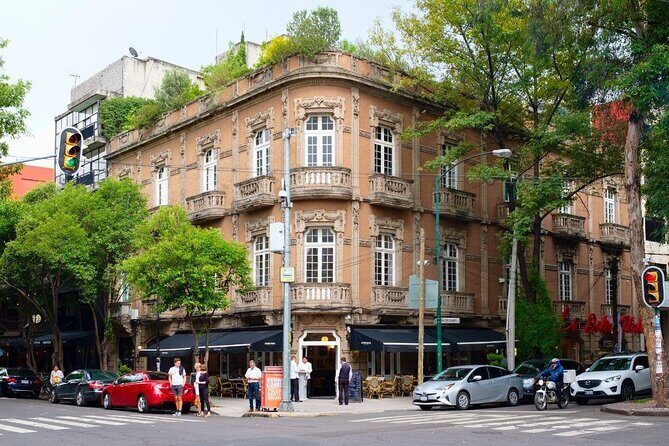
The tour kicks off at Monterrey 104 in Roma Norte, right in the neighborhood’s orbit. From there, you’ll head toward Mercado Roma, where the focus is on street art you can see in context—murals, faces, symbols, and the visual language people use to comment on their world.
You’ll walk about ten to twelve blocks on flat ground. That matters because the tour is built to be accessible and not constantly fight hills or long climbs. I’d still wear comfortable shoes, because you’re walking a city block at a time while stopping to look and listen.
One practical win: the tour includes free admission for Mercado Roma. That means you’re not adding extra cost mid-tour, and you can focus on the experience instead of hunting down ticket rules.
Street art with meaning: politics, daily life, and art you can read
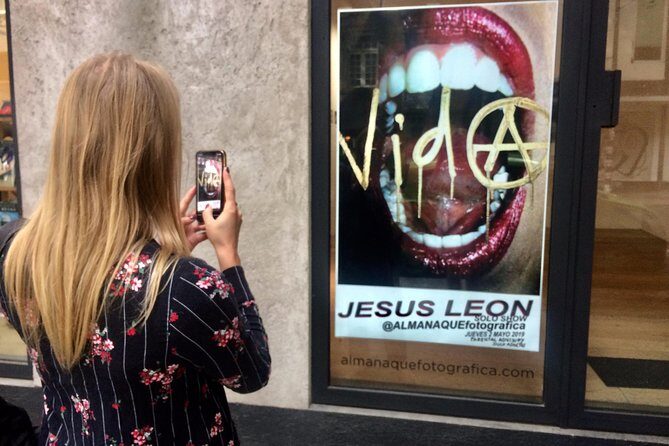
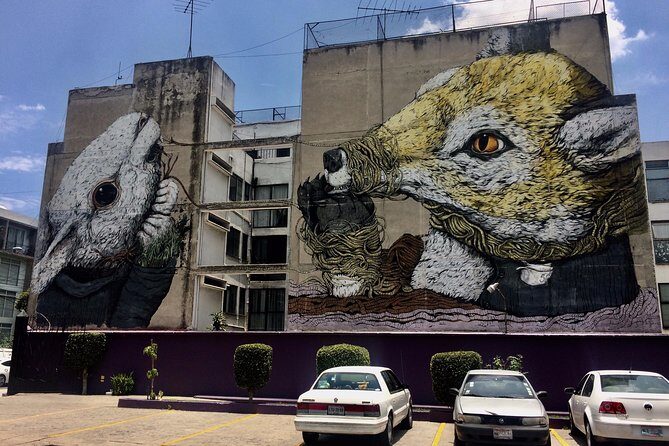
This isn’t a “point and say what it is” style tour. Neene’s approach (as described in the tour’s feedback) links the visuals you see to bigger themes—how art functions in Mexico City street life, and how murals can reflect public mood and local conversation.
Here’s what you should pay attention to as you walk:
- Recurring symbols: even when style changes, themes can travel through a neighborhood
- Where art is placed: on a wall near traffic, by a market edge, close to foot traffic—placement shapes impact
- How the style shifts: if you see different techniques or eras, that often tells you something about how the city’s art scene changes over time
I also like that the tour framing gives you permission to think. You’re meant to connect what you see to why people might paint it, not just memorize details. If you’ve ever stood in front of a mural and felt like you missed the point, this kind of guided read helps.
La Romita and the 16th-century church stop
After the street-art walk, the tour also focuses on La Romita and its 16th-century church. That’s a smart pairing. Roma has plenty of contemporary visual culture, but the neighborhood also has deep roots, and mixing the two helps you avoid a flat, one-note view of “street art only.”
Even if you’re not a hardcore church-history person, this stop works because it changes your tempo. You go from quick glances at walls to a place where the architecture and atmosphere slow you down. It’s a reminder that cities layer their identities—new messages go up on old space, and you can feel both at the same time.
When murals aren’t enough: getting contemporary art in galleries

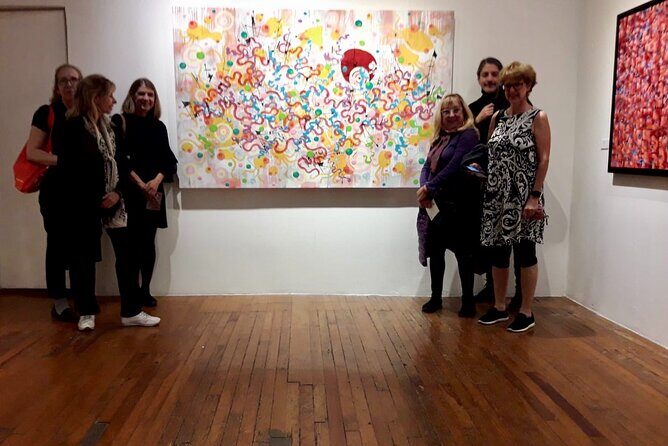
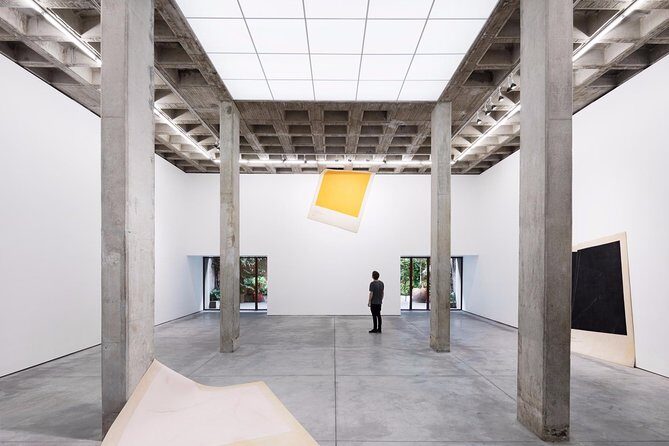
One of the standout ideas tied to Neene’s guiding style is that the tour can go beyond murals when the neighborhood’s outdoor art is limited. The tour feedback points out that Roma can have a more limited supply of street art than you might expect, so the guide may bring you to nearby places to see contemporary Mexican artists’ work.
If that happens during your tour, it’s a nice balance: you’re not stuck waiting for the next mural to appear. You keep moving, and you still get the art lesson.
Practical note: because the tour is private and guide-driven, your route may feel slightly different than someone else’s. That’s not a flaw—it’s part of the value.




Your walking route, timing, and what 2 hours feels like
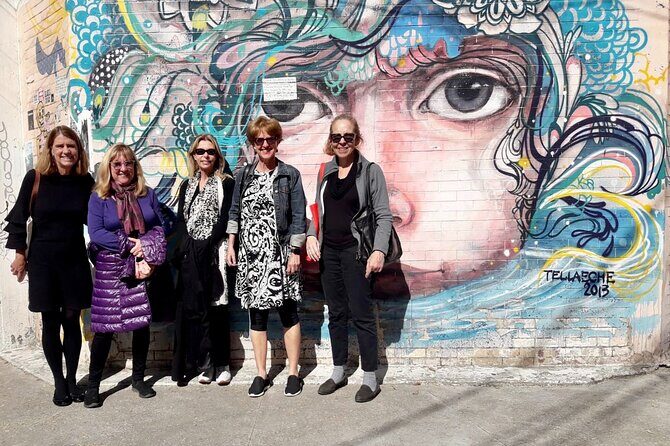
The tour is listed at around 2 hours. In that time window, you’re not doing a “see everything” loop. You’re doing a highlights-and-context walk where stopping is built in. That’s good for most people. If you like to linger over details, the guide can often adjust to your group’s rhythm.
Also, the terrain is described as flat, and you cover around ten to twelve blocks. So the physical ask is mostly “walk and look,” not “walk and climb.”
You’ll meet at Monterrey 104 and end back at the meeting point. That makes planning your day easier. You’re not wondering how you’ll get across the city after the tour ends.
English-friendly with a bilingual guide (and a real conversation vibe)
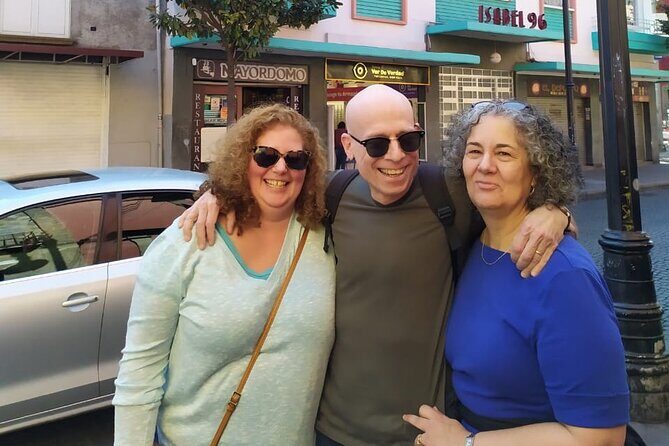
The tour is offered in English, and it includes a bilingual art guide. In practice, that’s what you want: someone who can explain ideas clearly, translate nuance when needed, and answer questions without making you feel like you’re interrupting.
Neene is specifically named in the tour’s feedback as both personable and well connected to the subject matter—street art, neighborhood context, and the way art links to local issues. If you’re the type who asks why something was painted, this style works well.
For groups, private format plus English support usually means fewer awkward pauses. You’re not stuck trying to guess what you missed.
Price and value: why this tour can feel like a bargain
Let’s talk money. At $65 per person, this is not a “free walking tour” level price. But it also isn’t priced like a museum day with expensive admissions and transportation.
The value comes from:
- Private guiding for a short, focused time
- Bilingual support in English
- Interpretation, not just movement from A to B
- A mix of street scenes and a historic stop, plus possible gallery time for contemporary work
If you’re comparing it to doing street art on your own, the cost starts to look reasonable. Street art is easy to look at and hard to decode. A good guide saves you from that frustration, because the tour gives you a framework to understand what you’re seeing.
One more value point: it’s booked fairly far in advance on average. That often signals steady demand, which usually means you’re picking something people find useful—especially for a short time window.
Practical tips so the tour goes smoothly
Here’s how to set yourself up for an easy, low-stress experience:
- Bring comfortable walking shoes. Even on flat terrain, you’ll be on your feet for a while.
- Plan to pay attention. The tour is built around looking closely, then getting explanations. If you treat it like background noise, you’ll miss the best part.
- Use transit if you need it. The tour is listed as near public transportation, so you should be able to get there without a big taxi hunt.
- Expect a mobile ticket. Have your confirmation ready on your phone.
- If you use accommodations or have a service animal, the tour indicates service animals are allowed.
And keep your expectations realistic: it’s most likely not a “sit down in cafes for two hours” kind of tour. It’s a guided neighborhood walk with stops.
Who should book this Roma art tour
This is a great fit if you:
- want street art with context, not just photos
- like a private pace (so you can ask questions)
- enjoy pairing contemporary culture with historic places
- have limited time in Mexico City but still want a meaningful culture hit
It may be less ideal if you:
- want a long, multi-stop day that covers the entire city’s art scene
- prefer totally self-guided exploring with no structured interpretation
- expect museum-style exhibits as the main focus (this tour is mainly neighborhood-based)
The sweet spot is “short on time, curious mind.”
Should you book the La Roma Private Art Tour?
If you want a guided walk through Roma’s street-art world, with a stop at La Romita and a 16th-century church, this is an easy yes. The private format makes it feel personal, and the guide’s connection to the art and neighborhood themes is the real draw.
Book it if you like compact tours that give you a framework for what you’re seeing—especially if this will be your first time really looking at Roma’s mural culture. If your plan is all-day museum hopping, you might skip it. But if you want two hours that teach you how to read the neighborhood, this one does the job.
FAQ
Where does the La Roma Private Art Tour start?
The tour starts at Monterrey 104, Roma Nte., Cuauhtémoc, 06700 Ciudad de México, CDMX, Mexico.
How long is the tour?
The duration is about 2 hours.
Is the tour offered in English?
Yes. The tour is offered in English.
Is this a private tour or shared?
It’s a private tour/activity, so only your group participates.
What’s included with the tour price?
It includes a bilingual art guide and a private tour.
Is there an admission fee for Mercado Roma?
No. The admission ticket for Mercado Roma is listed as free.
What is the cancellation policy?
This experience is non-refundable and cannot be changed for any reason. If you cancel or ask for an amendment, the amount you paid will not be refunded.