REVIEW · MEXICO CITY
Guided Tour Zócalo to Palaces, Churches and Pyramids
Book on Viator →Operated by GM International Travel · Bookable on Viator
You’ll feel the city’s eras blend quickly. This guided route stitches together politics, art, and ancient roots, from the Hemiciclo a Juárez to the Zócalo and the Catedral area, then finishes outside the Templo Mayor zone. It is a tight loop of big landmarks with short, focused stops—so you get context without spending half your day wandering.
I love how this tour links the 1800s to the colonial center in plain language, including the Juárez reforms and the Porfiriato when you start at the Hemiciclo. I also like the chance to step inside major interiors, like Bellas Artes, and then compare them to what you see in the public spaces that still run daily life.
One possible drawback: the pace is fast for a two-hour walk, and some streets and squares can be busy. If you want slow lingering in one spot (instead of seeing many), you may feel slightly rushed.
In This Review
- Key highlights you’ll remember
- A walk that connects politics, palaces, and ancient Mexico
- Hemiciclo a Juárez: the starting point with big context
- Palacio de Bellas Artes: marble, doors, and the kind of detail you want to see in person
- Alameda Central: a park that doubles as an outdoor sculpture lesson
- House of Tiles: architectural details plus a Clemente Orozco mural
- Palacio Postal: stamps, coats of arms, and mail as a national symbol
- Museo Nacional de Artes: a neoclassical/Renaissance setting by Silvio Contri
- Francisco I. Madero Avenue: the architecture lesson you walk through, not read about
- Zócalo: why Mexico City’s main square still feels alive
- Catedral Metropolitana: chapels, tabernacle, and fresco detail
- Finishing outside Templo Mayor: the ancient layer at the edge
- Price and value: is $53.46 a smart deal for 2 hours?
- Who should book this Centro loop
- A note on guides and the experience vibe
- Should you book this Zócalo to palaces and pyramids walk?
- FAQ
- How long is the Guided Tour Zócalo to Palaces, Churches and Pyramids?
- What is the meeting point and where does the tour end?
- Is the tour offered in English?
- What is the price per person?
- How big is the group?
- Are admission tickets included for the stops?
- Is cancellation free, and when do I need to cancel?
Key highlights you’ll remember

- Small group size (max 15): You move at a comfortable pace and can ask questions.
- Free-entry stops built into the route: Multiple interiors are included with admission noted as free.
- Stop-to-stop context: Juárez reforms, the Porfiriato, and architecture styles are explained along the way.
- Art stops with recognizable details: Clemente Orozco’s mural at the House of Tiles and the Palacio de Bellas Artes interior features.
- Zócalo and Catedral in one sweep: The city’s political heart and its major church details are both covered.
- Ends near Templo Mayor: You finish outside the archaeological zone, with Aztec-era Mexico right nearby.
A walk that connects politics, palaces, and ancient Mexico
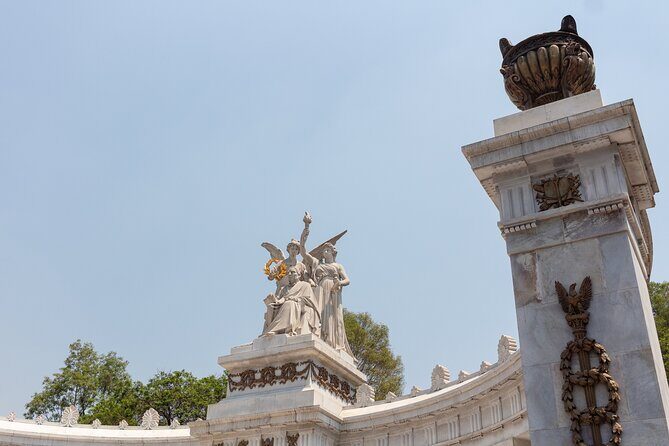
This is the kind of City Center tour that helps you get your bearings fast. You start in the Centro area with a major monument to Juárez and move through a string of buildings that show how Mexico City learned to wear different historical outfits—19th-century reforms, colonial-era power, and older layers beneath the pavement.
What makes it work is the mix of inside-and-outside stops. You are not only looking at façades from the sidewalk; you get to enter selected spaces and notice details you’d likely miss on your own. The route is also designed to keep the story moving, so by the time you reach the Zócalo, you understand why the square matters beyond being a photo stop.
And yes, you still get the fun parts: marble interiors, tile-like architectural details, and church artwork. The tour’s rhythm is short explanations plus time to look around, which is a good fit if you have limited time in Mexico City.
You can also read our reviews of more guided tours in Mexico City

Hemiciclo a Juárez: the starting point with big context
You begin at the Hemiciclo a Juárez at Av. Juárez 50 (Colonia Centro). This first stop is only about 10 minutes, but it’s a strong anchor because it frames what you’ll see later in the walk.
You’ll hear about the Juárez reforms and the Porfiriato, and how those periods helped shape modern Mexico. That matters because the Centro isn’t just decorative—it’s political memory in stone and civic symbolism. Even if you’re not a policy-history person, the guide’s explanation helps you notice how monuments and official buildings are designed to project authority.
This is a smart opener: it prevents you from treating the rest of the day as a checklist of pretty sites.
Palacio de Bellas Artes: marble, doors, and the kind of detail you want to see in person
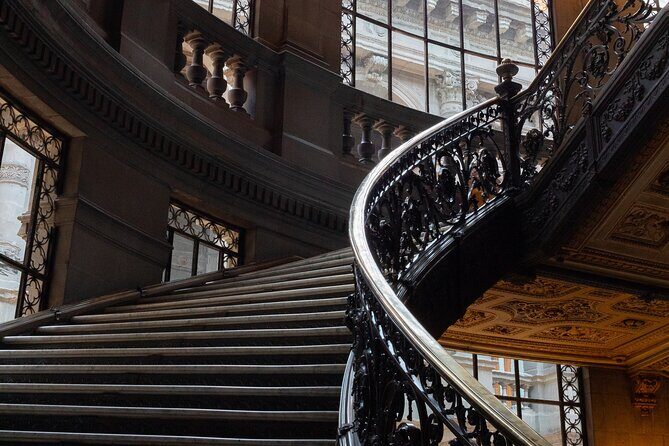
Next comes Palacio de Bellas Artes, where you enter the first floor for about 20 minutes. This is one of the best stops on the route because you get time to actually look.
The interior focus is specific: you’ll contemplate Mexican marble and also pre-Hispanic details on the doors and stairs. That blend is a big deal. Bellas Artes isn’t just a theatre building—it is a statement about Mexican identity, mixing European-style grandeur with local visual references.
If you tend to glaze over when someone starts talking art terms, don’t worry. The guide route here is practical: where to look and what the materials and decorative cues are telling you. It’s also a good break from street-level movement.
Alameda Central: a park that doubles as an outdoor sculpture lesson
At Alameda Central, you’ll spend around 10 minutes. This stop is brief, but it has two useful payoffs.
First, you’ll see sculptures of Greek gods, which can feel surprising in a Mexican city center. Second, you’ll get the park’s backstory, including the note that it was the first in America. Even if you’ve heard bits of this before, hearing it in context makes the Alameda feel less like a random park and more like a cultural landmark that helped shape public space.
Here’s how I’d use your time: scan the sculptures, then look at how the space is laid out. The Alameda is one of those places where the setting makes the art feel less like museum pieces and more like city life.
House of Tiles: architectural details plus a Clemente Orozco mural
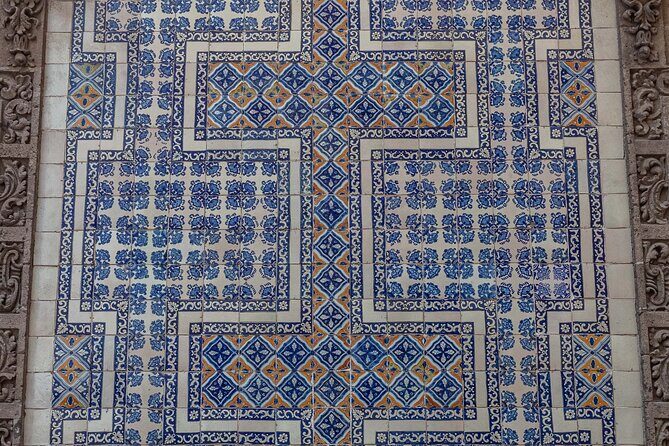
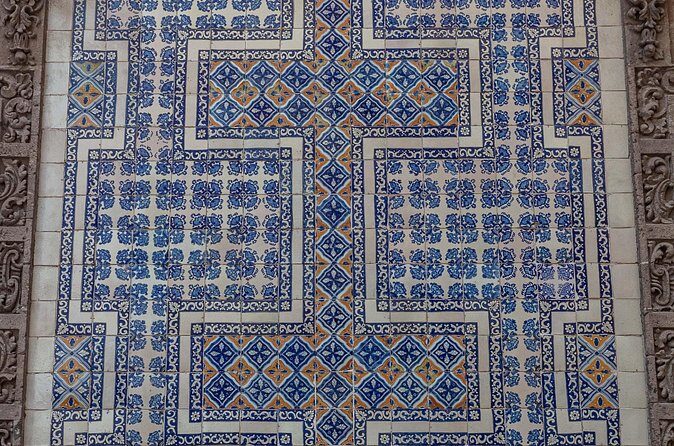
The Casa de los Azulejos (House of Tiles) is where the tour turns hands-on with texture and craft. You’ll get about 20 minutes inside, and this stop includes two standout elements: interior detail and the mural by Clemente Orozco.
Even without fancy art knowledge, this is an easy stop to enjoy because the building itself teaches you what to notice. The tiles and design patterns give you something to look at besides just the mural. Then Orozco’s work brings in the human side—so you end up with both visual craft and artistic message in one visit.
One caution: because you have limited time, don’t try to read everything at once. Focus on one main mural scene and then circle the interior for a second look at architecture details.




Palacio Postal: stamps, coats of arms, and mail as a national symbol
Next is Palacio Postal for about 10 minutes. This stop is shorter than others, but it’s cleverly themed around something you can relate to: mail.
You’ll be guided through the interior luxury of the building and also learn about the origin of the mail in Mexico. Then comes a very specific visual idea: the meaning of the national coat of arms explained through a work of art made from stamps.
That’s the type of detail that’s hard to find on your own unless you know exactly what to look for. In a few minutes, you get a story that turns a familiar concept—letters and stamps—into something national and symbolic.
If you like architecture but also want stories you can tell later, this is one of those “short stop, big memory” moments.
Museo Nacional de Artes: a neoclassical/Renaissance setting by Silvio Contri
At the Museo Nacional de Artes, you visit the first floor of a neoclassical/Renaissance palace designed by Italian architect Silvio Contri. The visit is about 10 minutes, so it’s more of a focused introduction than a full museum experience.
Even if you don’t plan to become a museum-goer this trip, this stop helps you understand the kind of building the city used to host art and culture. The value here is seeing the architecture and learning how to recognize style cues as you move through Centro.
Use your time to look at proportions and façade style from inside. After Bellas Artes and House of Tiles, this museum building helps you compare how different institutions express taste and prestige.
Francisco I. Madero Avenue: the architecture lesson you walk through, not read about
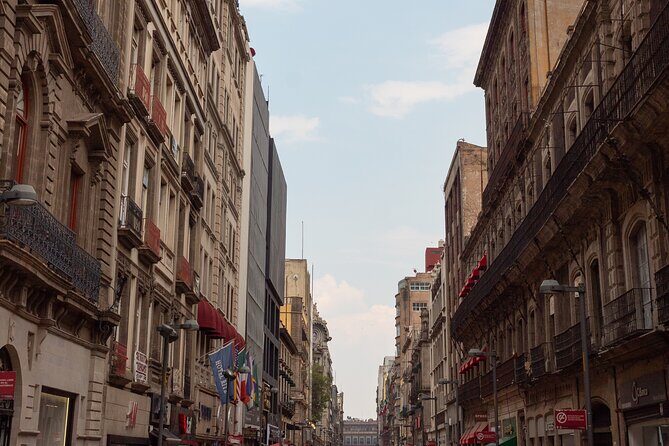
You then head along Francisco I. Madero Avenue, one of the most visited streets in Mexico City, with around 20 minutes on this stretch. The guide focuses on baroque and neoclassical architecture in the historic center and points out popular palaces in the area.
This is where the tour helps you turn street walking into real learning. You start to recognize that the Centro is not one single style—it’s a layered mix. If you’re planning to explore on your own after the tour, the avenue stop acts like a mini map in your head.
Practical note: street time can be a little stop-and-go if you’re at crossing points. Wear shoes you’re comfortable walking in for the full loop.
Zócalo: why Mexico City’s main square still feels alive
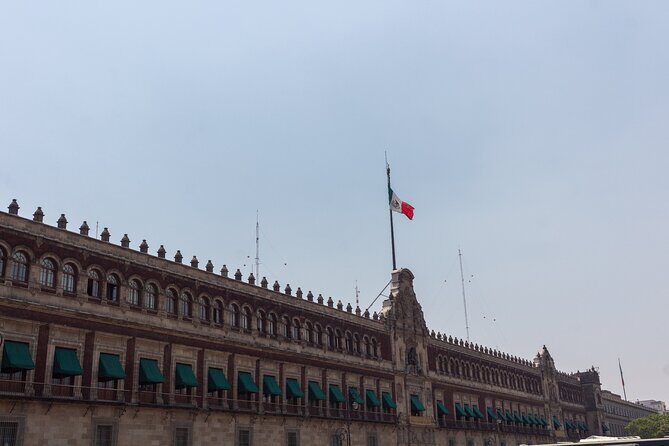
The highlight for many people is the Zócalo, and this tour gives you about 10 minutes there. You’ll hear that it’s the most important square in CDMX, and you’ll see major symbols tied to national and city identity.
The explanation focuses on architecture from the 16th–17th centuries, plus the government palace, the national flag, and the city coat of arms in Talavera. You also get something practical and human: you’ll observe daily life, including families visiting the square.
Here’s a useful way to enjoy it: don’t just look for the big backdrops. Watch how people use the space—how they move, gather, and take breaks. That’s what keeps the Zócalo from feeling like a staged museum courtyard.
If the crowd level is high, the guide’s job becomes even more important: timing and orientation. You should still come away knowing what everything represents.
Catedral Metropolitana: chapels, tabernacle, and fresco detail
From the Zócalo, you move to the Catedral Metropolitana de la Ciudad de México for about 10 minutes. This is a short visit, but it’s packed with specific points of interest.
You’ll learn about details of the chapels, the tabernacle, and the beautiful altar with frescoes of the Immaculate Virgin. Even if you only get a brief look, focusing on the chapels and altar details helps you avoid the common problem of rushing in, taking photos, and leaving with no idea what you actually saw.
If you’re sensitive to crowds or want quiet time, just be ready for the cathedral to feel active. The solution is to slow down in your head: one chapel detail, one altar area, then move with the group.
Finishing outside Templo Mayor: the ancient layer at the edge
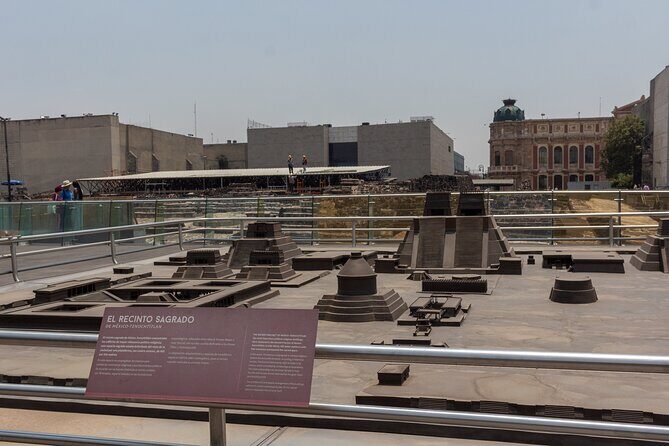
The tour ends outside the archaeological zone of the Templo Mayor Museum, with the endpoint listed at Seminario 8, Centro Histórico. This matters because Templo Mayor is one of the big reminders that Mexico City is built on older foundations.
Finishing outside the zone doesn’t give you a long archaeological visit in this tour format, but it gives you a strong closing note: you’ve spent the day moving from reforms and palace-style prestige toward a pre-Hispanic center of gravity. It’s a good mental shift.
If you want to go deeper after the tour, ending near Templo Mayor makes it easier to extend your day on your own, based on what you feel curious about.
Price and value: is $53.46 a smart deal for 2 hours?
At $53.46 per person for about 2 hours, this tour can be good value if you want a guided overview of the Centro’s heavy hitters without paying for multiple ticketed attractions.
Here’s the value math that matters:
- You get a bilingual guide in English.
- You visit a dense lineup of major monuments and interiors.
- Admission is noted as free for the stops listed, which reduces the total cost compared with many other city-center tours.
- The group is capped at 15, which usually helps with pacing and questions.
The main trade-off is time. Two hours is enough to see a lot, but not enough to linger. If your travel style is slow, you’ll want to do a second visit to whichever stop grabs you most—Bellas Artes, House of Tiles, the Zócalo area, or the cathedral.
Who should book this Centro loop
This tour fits best if you:
- Have limited time and want a smart overview of palaces, churches, and the Zócalo area
- Like architecture and want help noticing details such as tilework, marble, and symbolic design
- Prefer a guide who keeps the pace moving while still giving short windows to look around
- Want a small-group experience rather than a large bus-style crowd
It may be less ideal if you:
- Want one deep museum experience with long free time inside
- Get frustrated when moving from stop to stop within tight time windows
- Are planning to do a lot of additional walking afterward unless you’re already acclimated to city-center crowds
A note on guides and the experience vibe
The tour listing emphasizes a bilingual guide in English, and the overall vibe from prior experiences is that the guide makes history feel connected to what you’re seeing on the street. Guides mentioned in past bookings include José, Fernando Ramirez, and José Vicente, with praise for being friendly, engaging, and effective at explaining architecture and culture.
That’s exactly what you want for a route like this. When the story clicks, each stop stops feeling random.
Should you book this Zócalo to palaces and pyramids walk?
I think this is a solid pick if you’re doing Mexico City for the first time and you want a guided “backbone” of the Centro. The mix of inside visits, the Zócalo’s symbolism, and the finishing point near Templo Mayor make it a good orientation tour.
Book it if:
- You like structure and clear stop-by-stop explanations
- You want to see multiple iconic sites in just 2 hours
- You’d rather pay for a guide than figure out what to prioritize on your own
Skip or adjust expectations if:
- You prefer slow, quiet time in one place
- You want a long archaeological visit rather than ending outside the Templo Mayor zone
- You’re sensitive to crowds in the Zócalo and cathedral areas
If you do book, go with one simple goal: pick your favorite stop and plan a return visit the next day. This tour is best when it’s the opening act, not the whole show.
FAQ
How long is the Guided Tour Zócalo to Palaces, Churches and Pyramids?
It lasts about 2 hours.
What is the meeting point and where does the tour end?
The start is at Hemiciclo a Juarez, Av. Juárez 50, Colonia Centro. The tour ends outside the Templo Mayor Museum area at Seminario 8, Centro Histórico de la Cdad. de México.
Is the tour offered in English?
Yes. The tour is offered in English, and it includes a bilingual guide.
What is the price per person?
The price is $53.46 per person.
How big is the group?
The tour has a maximum of 15 travelers.
Are admission tickets included for the stops?
Admission is listed as free for the stops on the itinerary, and the tour includes the guide for the visits.
Is cancellation free, and when do I need to cancel?
Free cancellation is available up to 24 hours in advance for a full refund.