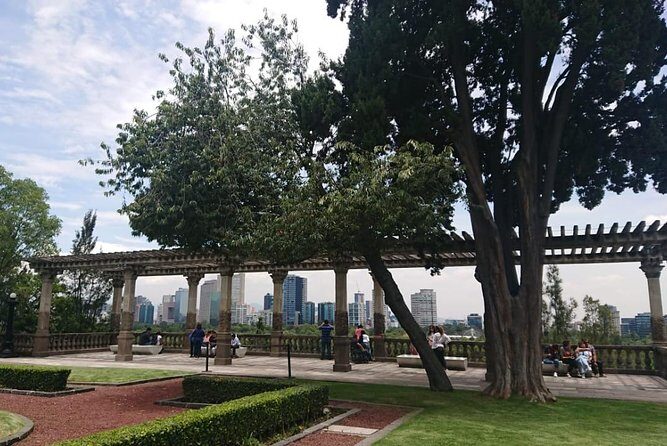
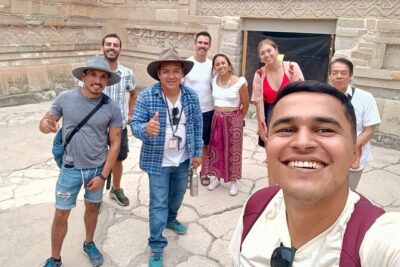
This trip strings together Teotihuacan and the Basilica of Guadalupe in one smooth, guided loop, so you get big sights without the hassle of planning between them. I like that you start with context before the pyramids—at Plaza de las Tres Culturas—so the day doesn’t feel like disconnected stops. I also like that the Teotihuacan time includes guided overview plus admission to the archaeological zone, which is where most DIY plans can get messy.
Expect the itinerary to move at a family-friendly pace, with a guide and host who explain what you’re looking at and help you get oriented. One thing to consider: this is a shared-vehicle tour (up to 12 people), so the schedule can feel a bit tight, and you’ll have less time than a long, slow Teotihuacan day.
In This Review
- What makes this tour work (and where it may pinch)
- Key highlights you’ll actually feel
- Price and logistics: what you’re really paying for
- Stop 1: Starbucks pickup on Paseo de la Reforma (your morning reset)
- Stop 2: Plaza de las Tres Culturas in Tlatelolco
- Stop 3: Teotihuacan Archaeological Zone (why it’s the main event)
- What you should expect at Teotihuacan
- A realistic consideration
- Stop 4: Antigua Basilica of Guadalupe (old faith, modern setting)
- Stop 5: Return around the Reforma area
- Service style: friendly guides and responsible driving
- Who this tour is best for (and who should skip it)
- What to bring so the day feels easy
- Should you book this Teotihuacan and Guadalupe day trip?
- FAQ
- How long is the tour?
- What’s included in the price?
- Is admission included for the Basilica of Guadalupe and Plaza de las Tres Culturas?
- Where does the tour start?
- Is the tour offered in English?
- How big is the group?
- What’s the cancellation policy?
What makes this tour work (and where it may pinch)
The tradeoff here is simple: you’re paying for transport + expert guidance + Teotihuacan entry in a single price, but you’re not doing a super-length deep exploration of either site. If you want to linger for hours on every detail, you might feel a little rushed—especially once you’re inside the Basilica complex, where it can be busy.
That said, the service style is clearly built for comfort: friendly attention, drivers who know the routes, and guides who stick to explanations rather than just pointing. For many first-timers, that combination is the sweet spot.
Key highlights you’ll actually feel
- Plaza de las Tres Culturas primer first: three time periods in one square, before you head to Teotihuacan
- Teotihuacan guided overview + entry included: you see the big structures and learn the why
- Basilica of Guadalupe orientation: time at both the old and modern basilica exteriors plus key spiritual context
- Shared round-trip transport, max 12 people: easy day logistics, small enough for attention
- English-speaking guide/host: clear explanations without language friction
Price and logistics: what you’re really paying for
At $59.11 per person for about 7 hours, this is aimed at “see the essentials, see them well” travelers. The value isn’t just the low sticker price. It’s that the package includes the things that usually add up fast in Mexico City on your own: round-trip shared transportation plus a guide/host and Teotihuacan archaeological zone access.
Here’s the practical reality. You’re not paying extra at the door for Teotihuacan, which is a big win. The other stops in the plan are listed as free-entry, so your main extra spending is optional (food, drinks, tips). The tour also uses a mobile ticket, which keeps you from hunting for paper confirmations.
Group size matters. With a maximum of 12 travelers, you’re not in a huge cattle-car situation. You still share the vehicle, so it’s not private, but you’re likely to get better human attention than on the biggest buses. And since the start time is 9:00 am, you’re doing this as a true day-trip rather than a late-morning shuffle.
Meeting point is straightforward: Starbucks, Av. P.º de la Reforma 80, Juárez, Cuauhtémoc, 06600, CDMX. That’s a big location with easy visibility, which reduces the “where do I go?” stress.
Stop 1: Starbucks pickup on Paseo de la Reforma (your morning reset)
You meet at the Starbucks on Paseo de la Reforma and board there. This might sound basic, but it’s actually a quality-of-life detail. Reforma is a major corridor; it’s usually simpler to find than a random side street. You also get a clear starting anchor—helpful if you’re staying in the Reforma/centro area.
From there, the day runs like a guided “greatest hits” route. You’ll get a host at the start, then the explanations kick in as you move between the historical stops. The format is designed to keep you from losing time in confusion or figuring out what to do next.
Stop 2: Plaza de las Tres Culturas in Tlatelolco
Before you see pyramids, you visit a place where three eras overlap in the same view. The plan calls it out as an iconic space that shows more than 500 years of Mexican history, and the idea is smart: it primes your brain for what you’re about to see at Teotihuacan.
Here’s what you’re looking at conceptually:
- Pre-Hispanic layer: archaeological ruins in Tlatelolco, tied to Mexica-era market life and the built environment you can still trace
- Colonial layer: the Temple and Convent of Santiago (16th century), built by Franciscans on older indigenous structures—basically a physical record of cultural fusion and evangelization
- Modern Mexico layer: the Tlatelolco Tower area, now part of a cultural center connected to UNAM Tlatelolco University
Even if you don’t consider yourself a “history person,” this stop helps. It gives you language for what you’ll notice later: how architecture, power, and belief keep getting rewritten on the same ground over time.
Time on this stop is short—around 5 minutes—so treat it like a quick orientation moment, not a long museum visit. The goal is to show you the idea of layered history and get you on your way to Teotihuacan with better context.
Stop 3: Teotihuacan Archaeological Zone (why it’s the main event)
This is the centerpiece: about 3 hours inside the Teotihuacan Archaeological Zone, with admission included. The tour frames Teotihuacan as the “City of the Gods,” and it’s easy to see why people react strongly when they first step onto the grounds.
Even from the outside, you’ll get the big landmarks in view:
- the Pyramid of the Sun
- the Pyramid of the Moon
- the Causeway of the Dead
What makes a guided format useful here is not just pointing. It’s the worldview and architecture explained in plain terms—how the site was built to matter, not just to impress. You’ll also get an overview of what reached its peak more than a thousand years ago, and why Teotihuacan still anchors so much of Mexico’s cultural imagination today.
What you should expect at Teotihuacan
With a guided “overview” approach, you’re not trying to hit every corner in the way a full-day independent plan might. Instead, you’re meant to leave with:
- a clearer sense of how the main structures connect
- basic context for what you’re seeing
- confidence to recognize key parts even after the tour ends
This is ideal if:
- it’s your first time at Teotihuacan
- you want the highlights without building a route
- you’re traveling with family and need a day that doesn’t drag
A realistic consideration
Three hours can feel long when you’re walking and listening, but it can also feel short if you’re a slow explorer or you love architecture details. If you’re the type who wants to stop, read every sign, and take your time comparing different viewpoints, you may want to add extra time on a separate trip later. For a first visit, though, this is a strong balance.
Stop 4: Antigua Basilica of Guadalupe (old faith, modern setting)
Next comes one of Mexico City’s most visited spiritual sites: the Basilica of Guadalupe, with time framed around the exterior and key areas of the complex. The plan specifically mentions the new basilica (modern, circular architecture), and the old basilica in Baroque style, plus the Chapel of the Cerrito and other parts of the religious complex.
Even if you’re not Catholic, this stop can still hit. Not because you have to agree with the beliefs—but because you’re seeing how devotion shaped a major landmark that millions relate to.
The tour also includes the story behind the apparitions of the Virgin of Guadalupe in 1531 and why it matters spiritually for countless people. That historical-spiritual context makes the site easier to read. Without it, you’re just looking at an impressive building. With it, the place feels more connected to why the crowds show up.
Time here is about 1 hour, and that length is usually right for an exteriors-focused orientation plus a narrative overview. You’ll likely spend most of it moving through key areas and listening, rather than doing an extended quiet visit.
Stop 5: Return around the Reforma area
After the Basilica, the tour returns you to the Starbucks at Fiesta Americana Reforma area, then ends back at the meeting point in the Reforma zone. In other words, you’re not stuck figuring out how to get back across town.
This is one of the underrated benefits of tours like this: you avoid the late-day transit scramble. After a day with early pickup and walking, having transport waiting is a real comfort.
Service style: friendly guides and responsible driving
Across the experience, the tone is consistently supportive. You get a guide/host who explains things in detail, plus drivers who drive responsibly and know routes. That matters more than you’d think.
In a city like Mexico City, the difference between “getting from A to B” and “arriving calm” is huge. Here, the logistics are built to keep the day flowing: pickup is clear, the route is handled, and the guide helps you understand what you’re seeing rather than leaving you with a pile of landmarks and no context.
Also, the experience is described as a good fit for families. That usually means the pacing and explanations aim to be understandable without getting too academic or too rushed.
Who this tour is best for (and who should skip it)
This is a strong match if you:
- want Teotihuacan + Basilica of Guadalupe in one day
- prefer a structured plan with a guide and entry handled
- like the idea of a small group (max 12)
- need an English-speaking guide/host
It’s less ideal if you:
- want deep, independent exploration time at Teotihuacan
- hate any schedule pressure at all (because it’s a full day)
- are hoping for a fully private, do-your-own-pace experience
If you’re deciding between this and a longer Teotihuacan day, think about your priority. For a first trip, this gives you the essentials with expert context.
What to bring so the day feels easy
Because the itinerary is mostly outdoor walking and site time, you’ll enjoy it more if you prepare like it’s an active morning:
- comfortable walking shoes
- sun protection (Mexico City sun can be sharp on exposed areas)
- water
- a light layer if you’re sensitive to morning temps
The tour doesn’t mention meals, so plan for your own food before or after. Brunch is not included.
Should you book this Teotihuacan and Guadalupe day trip?
I’d book it if your goal is a well-organized “big sights” day and you want the comfort of transport + guide + Teotihuacan entry bundled into one price. At $59.11, you’re getting more than a ticket—you’re buying time saved, explanations delivered, and fewer logistics headaches.
Skip it only if you’re the type who wants to linger for hours at Teotihuacan or you dislike shared vehicles. Otherwise, this is one of those day trips that hits two of Mexico City’s most important landmarks without making you pay for guesswork.
FAQ
How long is the tour?
It runs for about 7 hours.
What’s included in the price?
You get round-trip shared transportation, a tour guide/tourist host, and admission to the Teotihuacan archaeological zone.
Is admission included for the Basilica of Guadalupe and Plaza de las Tres Culturas?
The plan lists admission tickets as free for the Basilica stop and free for Plaza de las Tres Culturas.
Where does the tour start?
The meeting point is Starbucks, Av. P.º de la Reforma 80, Juárez, Cuauhtémoc, 06600, CDMX. Pickup is outside Starbucks.
Is the tour offered in English?
Yes, it is offered in English.
How big is the group?
The tour has a maximum of 12 travelers.
What’s the cancellation policy?
You can cancel for a full refund up to 24 hours before the start time. If you cancel less than 24 hours before, it’s not refunded.