Cook, shop, and taste with purpose. This Mexico City experience starts with agua fresca and kitchen history, then sends you to Mercado de Medellín to pick ingredients before you cook. It’s also built for small groups, so you get more than just watching.
I especially like two things: the hands-on cooking (you’ll make salsas, sopes, tortillas, and more) and the fact that you leave with printed recipes you can actually repeat later. The market tour also includes tastings, which makes the ingredients feel less theoretical and more real.
One consideration: it’s not suitable for nuts allergies. And because the class is active, you’ll want to keep jewelry and loose items out of the way in the kitchen.
In This Review
- Key highlights worth planning around
- Why this Mexico City cooking class feels more real
- Meeting point in Roma Norte and settling into Aura Cocina Mexicana
- Mercado de Medellín: the ingredient lesson you taste (and often sample) first
- Kitchen kickoff with agua fresca and recipe history
- Making Mexican street appetizers: sopes, sauces, and tortillas
- Mextlapiques and white mole: the courses that teach flavor architecture
- Mextlapiques (tamale without masa)
- White mole with chile guero and nut-and-seed base
- Lunch pairing and dessert: what you get to eat, not just cook
- Price and value: where the money goes
- Who should book this class (and who might want to skip it)
- Should you book Essence of Mexico?
- FAQ
- FAQ
- What time does the cooking class start in Mexico City?
- Where does the tour start, and where does it end?
- Is the tour offered in English?
- What’s included in the class?
- Do you visit a market during the experience?
- What dishes are on the menu?
- What is the mole blanco usually served with, and can you choose an alternative?
- Is the class safe for nut allergies?
- What should I wear to the cooking class?
- Can I cancel for a refund?
Key highlights worth planning around
- Small group size (max 8) keeps the class interactive and easier to manage
- Market-to-kitchen flow at Mercado de Medellín so you shop, then cook what you bought
- Uncommon dishes like mextlapiques (tamale without masa) and mole blanco
- Real instruction in sauces and tortillas, not just plating
- Drinks and dessert included, with pairing options like mezcal, craft beer, or wine
- Apron provided, plus guidance on what to wear for kitchen work
Why this Mexico City cooking class feels more real
This is not the usual cooking class where you arrive, get handed a few ingredients, and race through recipes. The day starts with drinks and a quick grounding in how Mexican cuisine builds flavor, then it moves to the market so you can see the supply chain up close. After that, the kitchen portion feels earned because you’ve already met the ingredients in the wild.
The best part for me is the way the experience links technique and sourcing. You don’t just learn that salsas matter; you learn which ingredients create which flavor and why different kitchens use different approaches. With a maximum group size of 8, you’re not stuck waiting your turn or asking follow-up questions into a void.
The menu is also designed to teach range: street appetizers first, then a mole course that has a lighter color and a nut-and-seed base, and finally a sweet finish. It’s a smart structure for anyone who wants Mexican food beyond the standard tacos-and-guac lane.
Meeting point in Roma Norte and settling into Aura Cocina Mexicana
The class starts at 9:30 am at Eje 3 Pte 191, Roma Nte., Cuauhtémoc, 06700 Ciudad de México, CDMX, Mexico. It ends back at the same meeting point, which makes planning your day easier because you don’t have to worry about transit after a full meal.
Aura Cocina Mexicana is set up for cooking instruction, and you’ll be given an apron for the class. You’ll also get a practical nudge about what to wear: comfortable clothes and shoes, and avoid scarves, long necklaces, and jewelry while you cook. That matters more than it sounds, because kitchen work gets hands-on fast.
You’ll also receive a mobile ticket, and the tour is offered in English. Service animals are allowed, and the meeting area is near public transportation, which helps if you’re using metro or buses to get around Roma/Condesa.
Mercado de Medellín: the ingredient lesson you taste (and often sample) first
Your market stop is at Mercado de Medellin, described as walking distance from the cooking venue. This is the part that turns the day from a cooking demo into an ingredient education. You’ll learn the market’s history, how it’s organized, and what you’ll commonly find in its main halls.
You’ll also get tastings from selected stalls. Based on past groups, that can include small surprise samples that go beyond the usual fruit-and-cheese expectations, and some tastings may include items like insects or other unusual snacks. If you’re curious and not squeamish, this can be a fun flex of bravery. If you’d rather keep it simple, you can still learn a lot from watching what others taste and focusing on common produce and staples.
A big value here is context. Markets can feel chaotic if you walk in alone. With a chef guiding you, you learn how to read the space quickly: what to look for, how to spot quality, and what ingredients matter for the recipes you’ll cook later.
Potential drawback: the pace can be quick. Markets move, and your tour is built to fit the cooking schedule, so you won’t have hours to wander at leisure. If you want slow shopping time, treat this stop as a guided orientation plus tastings rather than a full shopping spree.
Kitchen kickoff with agua fresca and recipe history
Before you cook, you’ll start with a welcome agua fresca and a short lesson on the history of Mexican cuisine. Then you’ll get detailed explanations of recipes and ingredients so you’re not guessing once you’re in the kitchen.
This setup matters because Mexican food is ingredient-driven and technique-driven. Learning what a chile guero does in mole, or how specific nuts and seeds contribute texture and flavor, makes the final dishes feel more like food science than just following steps. It also helps if you’re a beginner; the class format is structured so you can keep up even if you’re not a “cook at home” person.
Recent groups describe the instructors as friendly and very good at walking through the why, not just the how. The teaching team changes by date, but names that have led recent classes include Chef Lorena, Chef Pame (Pamé), Chef Ana, Chef Mariana, and Chef Nitze, and the consistent theme is clear guidance with enough attention to individual questions.
Making Mexican street appetizers: sopes, sauces, and tortillas
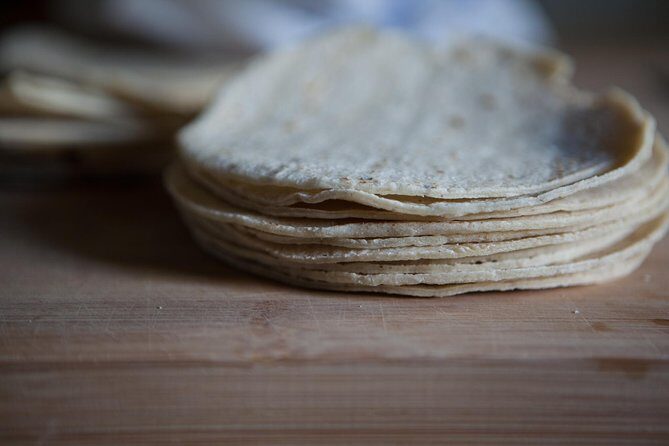
The first cooking portion focuses on Mexican street-style starters. You’ll prepare sopes with two Mexican salsas: a red sauce (served with a molcajete-style approach) and a green sauce. Then you’ll work with homemade tortillas, which is one of the best ways to understand Mexican cuisine because it’s where texture becomes flavor.
This is where I think this class earns its reputation. Salsas in a restaurant can feel like a finished product. Here, you learn how salsa choices change the meal. You’ll also practice bread-and-butter basics that restaurants rely on: tortilla handling, portioning, and the logic of building a dish with toppings.
Hands-on work can be messy, but the class is organized and includes kitchen staff support. There’s even a printed-recipe element, so after the excitement of cooking, you’re not left trying to remember what you did with your hands.
If you’re worried about getting overwhelmed, you can take comfort in the small group size. With up to 8 people, it’s easier to get corrected in real time rather than waiting until the end when one mistake can ruin a whole batch.
Mextlapiques and white mole: the courses that teach flavor architecture
After the starters, you’ll move to the more distinctive items on the menu: mextlapiques and white mole.
Mextlapiques (tamale without masa)
You’ll make mextlapiques, described as a tamale without masa, filled with vegetables and topped with a spearmint sauce. This is a great dish for learning because it breaks an assumption. People often think tamales must always be heavy on masa, but this version teaches that flavor can come from filling choices and the balance of sauce, not only from the base.
White mole with chile guero and nut-and-seed base
You’ll also prepare mole blanco, made with lighter-colored ingredients including white pine nuts, almonds, peanuts, sesame seeds, blonde raisins, and chile guero. Mole sounds intimidating to many people, but this course is a lesson in patience and structure: toasted elements, thickening behavior, and how chiles add warmth without needing dark, smoky color.
Mole blanco is usually served with chicken pieces. The class offers other options, and you should indicate your selection ahead of time: panela cheese or mushrooms. If you want a vegetarian meal, this is your key decision point.
One caution: since the mole includes nuts like pine nuts and almonds in the described ingredient set, it reinforces that the experience is not suitable for nuts allergies. If you have allergies beyond nuts, you should still treat this as a “confirm first” situation, because kitchen environments share ingredients.
Lunch pairing and dessert: what you get to eat, not just cook
When the cooking wraps up, you eat your four-course lunch with drink pairings included. The pairing options are artisanal mezcal, Mexican craft beer, or Mexican wine. That choice makes it easier to match your taste and keeps you from feeling locked into one alcohol style.
Dessert is corn bread served with hot chocolate described as water based. It’s a nice end to the menu because it doesn’t compete with the intensity of mole; it balances the meal with warmth and sweetness.
From a practical angle, this included meal matters a lot. A cooking class can be expensive, but when food and drinks are built into the price, you’re not paying twice for lunch. You’re basically paying for instruction, ingredients, and a guided food experience, and the meal is the payoff.
Price and value: where the money goes
At $178.77 per person for about 4 hours 30 minutes, this isn’t a budget activity. But it can feel like a strong value if you treat it as an all-in food lesson rather than a ticket to “a little cooking.”
You get: a professional chef guide, all needed ingredients for a four-course menu, printed recipes, a market tour at Mercado de Medellín, the full lunch, and alcohol options (mezcal/beer/wine), plus dessert. For many visitors, that bundle is what makes it worth it: you’re buying sourcing help, cooking instruction, and a complete meal in one package.
It’s also limited to a maximum of 8 travelers, which reduces the risk of feeling like a spectator. In a bigger group class, the instructor time drops fast. Here, that instructor attention is part of what you pay for.
Who should book this class (and who might want to skip it)
This experience is a great fit if you want food you can repeat at home and you like learning while you eat. You’ll get hands-on cooking, not just a lecture, and you’ll cover multiple kitchen skills: salsas, tortillas, and a mole that teaches how flavor builds.
It’s also a good pick for a first-time visit to Mexico City because it pairs a neighborhood market with a cooking studio setting. You get out of the tourist bubble without turning the day into a long bus-and-museum marathon.
If you have nuts allergies, skip this one due to the listed ingredients in mole blanco. If you strongly dislike alcohol, you can choose non-alcohol options only if the activity offers them; the data here lists alcohol choices included, so confirm based on your booking if you prefer to avoid it.
If you want a purely relaxed sightseeing morning, you may find the market and kitchen pace active. This is a hands-on class with a schedule that moves.
Should you book Essence of Mexico?
Yes, if you want a genuine food day with structure and a clear payoff: you shop, you cook, you eat, and you take home recipes. The combination of market tour plus a 4-course hands-on class is the main reason this works, especially for travelers who are tired of only walking and taking photos.
I’d say don’t book if you’re dealing with nut allergies, or if you’re not comfortable with kitchen work that involves sauces, tortillas, and a bit of mess. The upside is that the class is organized, the group is small, and the instruction is designed so beginners can still participate.
If you want the short version of the decision: this is a must-do when you’re in Mexico City for food, and you’d like your time to end with a meal you actually made.
FAQ
FAQ
What time does the cooking class start in Mexico City?
The start time is 9:30 am. The activity is about 4 hours 30 minutes and ends back at the meeting point.
Where does the tour start, and where does it end?
It starts at Eje 3 Pte 191, Roma Nte., Cuauhtémoc, 06700 Ciudad de México, CDMX, Mexico. The activity ends back at the same meeting point.
Is the tour offered in English?
Yes, the class is offered in English.
What’s included in the class?
You get a professional chef guide, all ingredients to cook the menu, printed recipes, a market tour, and a four-course lunch. Drinks are included too (artisanal mezcal, Mexican craft beer, or Mexican wine), plus dessert.
Do you visit a market during the experience?
Yes. You’ll tour Mercado de Medellin on foot (walking distance) and learn about the market’s history, organization, and what’s available in key halls. You’ll also have tastings from selected market stands.
What dishes are on the menu?
You’ll make Mexican street appetizers including sopes with two salsas (red molcajete sauce and green sauce). You’ll also prepare mextlapiques (tamale without masa) topped with spearmint sauce, mole blanco, and corn bread served with hot chocolate.
What is the mole blanco usually served with, and can you choose an alternative?
Mole blanco is usually served with chicken pieces. Other options are available: panela cheese or mushrooms. You should indicate your choice.
Is the class safe for nut allergies?
No. The experience is not suitable for nuts allergies.
What should I wear to the cooking class?
An apron is provided, but you should wear comfortable clothes and shoes. The guidance is to avoid scarves, long necklaces, and jewelry while you’re in the kitchen.
Can I cancel for a refund?
Yes. You can cancel for a full refund if you cancel up to 24 hours in advance of the experience start time. If you cancel less than 24 hours before, the amount paid is not refunded.