REVIEW · COOKING CLASSES
4 Moles Oaxacan Cooking Class with Traditional Cook
Book on Viator →Operated by Casa Crespo Cooking Class · Bookable on Viator
Four moles in one sitting? It works.
This cooking class in Oaxaca City follows the story of mole from pre-Hispanic roots through viceregal influence, with Chef Carrizosa guiding you in making Green and Yellow moles plus Almond and Party moles. I like that the lesson connects ingredients and technique to the culture behind them, and I also like that the class keeps moving so you get solid hands-on learning without turning into a full-day project.
One thing to consider: at about 2 hours 30 minutes, the pace is “efficient,” not slow and relaxed. If you want deep, step-by-step practice over many hours, you may feel rushed. If you want a complete sampler you can actually finish, this timing is a big plus.
In This Review
- Key highlights you’ll care about
- Why Oaxaca mole is more than a sauce
- The 2.5-hour flow: what you’ll cook and eat
- Green mole: herbs, tortilla dough, and holy herb omelette
- Yellow mole: dried chilies, tortilla dough, tomatoes, and pumpkin flower
- Almond mole and Party mole: Old World mix plus the 17-ingredient show
- Dessert and drinks: chocolate ice cream with guajillo chili powder
- Where it meets, where it ends, and how to plan your afternoon
- Price and value: $80 for four moles, tortillas, dessert, and drinks
- Should you book 4 Moles Oaxacan Cooking Class?
- FAQ
- What is the price of the 4 Moles Oaxacan Cooking Class?
- How long is the cooking class in Oaxaca City?
- Where does the class meet?
- What time does the class start?
- Does the class end at the same place it starts?
- Is the class offered in English?
- How big is the group?
- What’s included in the price?
- What dishes are included in the sample menu?
- What is the cancellation policy?
- Is a mobile ticket provided?
Key highlights you’ll care about
- Chef Carrizosa leads the class with cultural context tied directly to the dishes
- Four moles, four tortilla pairings, so you taste the logic behind each sauce
- Pre-Hispanic technique plus viceregal and Old World/Asia influences, all in one menu
- Small group size (max 12) and English instruction
- Meals and alcoholic beverages are included in the $80 price
Why Oaxaca mole is more than a sauce
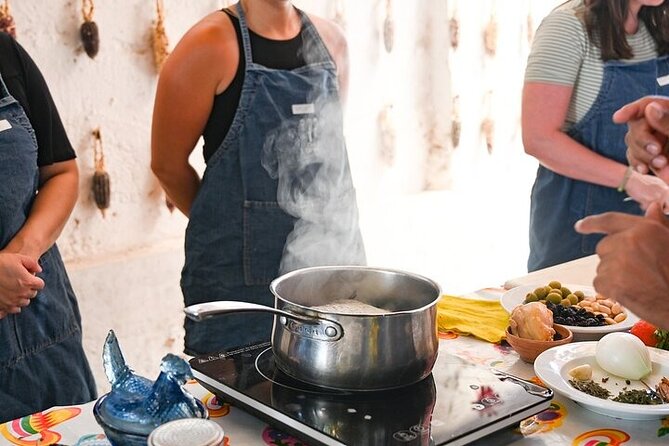
Mole is one of those Oaxaca staples that sounds simple until you look closer. The word traces back to Nahuatl molli, meaning salsa, and in Oaxaca you can feel how old traditions and outside influences shaped what ends up on a plate. In this class, you don’t just read about it—you learn how the flavors connect to the story.
The menu is built around that evolution. You’ll work with moles that use endemic chilies and older techniques, then also moles that reflect mixing—ingredients and cooking styles that arrived later and changed the food. That mix is what makes Oaxaca mole such a strong “sense memory” experience: you get aroma, texture, and spice structure, not just one flavor profile.
And because each mole gets paired with a different tortilla style, the class teaches you something useful for your next meal out. Mole isn’t one product. It’s a set of pairings and choices.
The 2.5-hour flow: what you’ll cook and eat
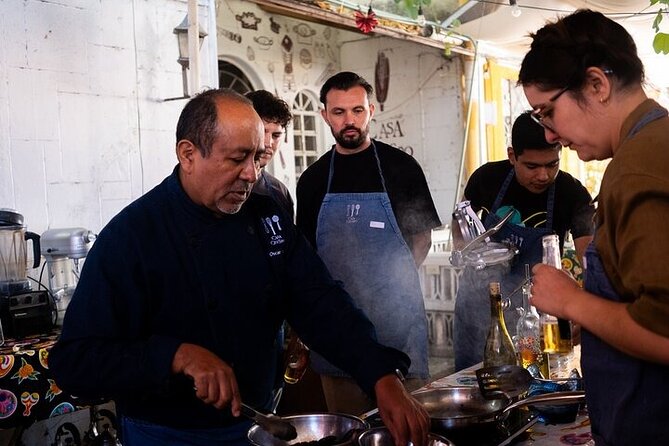
This experience runs about 2 hours 30 minutes, starting at 1:30 pm at Casa Crespo in Oaxaca City. You’ll make (and then eat) a four-mole menu, with each main paired with a different tortilla. Meals are included, and alcoholic beverages are included too, so you’re not doing mental math mid-class while you’re hungry.
A good way to think about value here: you’re paying for (1) instruction from Chef Carrizosa, (2) the ingredients and prep for four distinct moles, (3) multiple tortilla pairings, and (4) dessert and drinks. For $80, it’s less like a snack tour and more like a guided “taste-and-try” cooking workshop.
Group size matters. With a maximum of 12, you can expect the class to feel more personal than a huge public cooking show. That tends to matter most when you’re trying to learn technique and not just watch.
Green mole: herbs, tortilla dough, and holy herb omelette
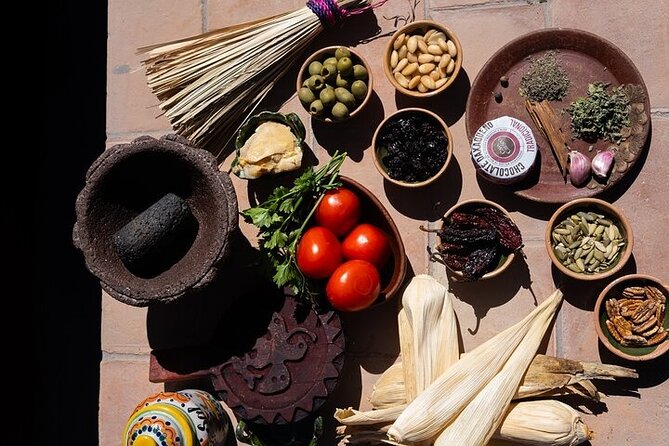
The class opens with Green mole, built around pre-Hispanic cooking roots. You’ll learn how it’s made using a grind from herbs plus tortilla dough, then served with vegetables and an omelette made with holy herb.
Why this is such a smart start: green moles often teach you the difference between green flavor from fresh herbs versus green flavor from chili heat. Here, the structure comes from the grinding process and the tortilla dough element—so you’re tasting how starch and herb paste create body, not just color.
Also, pairing it with an omelette-like component gives you a fuller picture than you’d get from tasting a sauce alone. You can learn the flavor logic: herb-forward mole works because it has enough richness to sit comfortably next to a savory egg preparation.
Practical tip for your enjoyment: go in ready to pay attention to aroma. The green mole’s herb notes are the first thing that hits, and once you know what to look for, you’ll recognize the same flavors when you try other Oaxacan dishes later.
Yellow mole: dried chilies, tortilla dough, tomatoes, and pumpkin flower
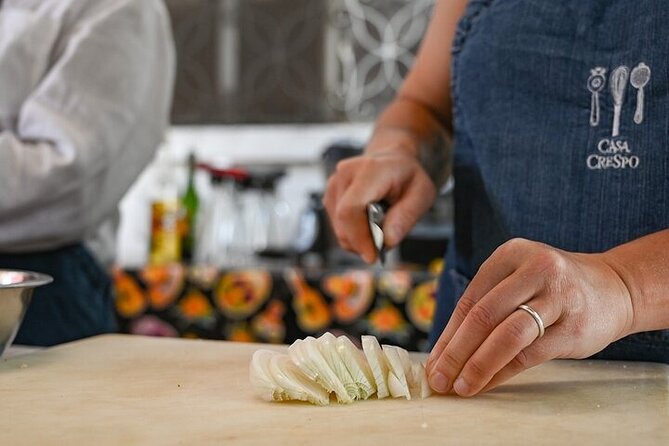
Next up is Yellow mole, another pre-Hispanic-style preparation. This one uses dried chilies, tortilla dough, and tomatoes, then gets served with a pumpkin flower tortilla.
This is where a lot of people realize mole isn’t just “chili + chocolate.” Yellow moles often feel warmer and rounder, with dried chilies bringing depth and tortilla dough adding that thick, comforting texture. The tomatoes don’t just add acidity—they also help smooth out the overall flavor, so the mole tastes more connected instead of spiky.
And the pumpkin flower tortilla matters. It’s not a random garnish. It’s another layer of flavor so you can compare how tortilla type changes what you perceive in the sauce.
If you’re the type who loves “ingredient to plate” connections, you’ll probably enjoy this part the most. The yellow mole setup gives you a clear before-and-after mental checklist: dried chilies + tortilla dough + tomatoes + pumpkin flower all contribute to the final balance.
Almond mole and Party mole: Old World mix plus the 17-ingredient show
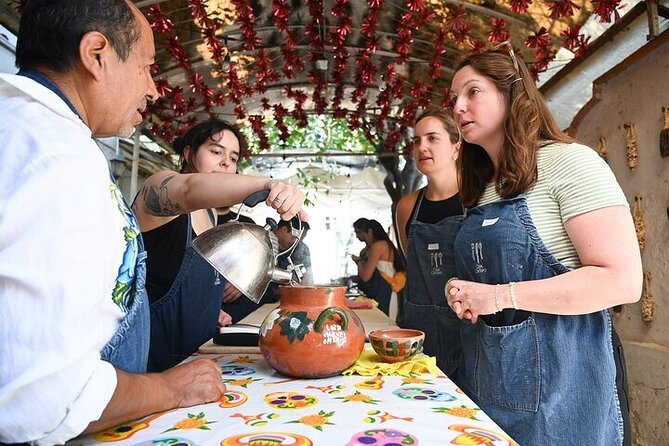
Now you hit two moles that highlight the “mixing” story of Oaxaca cuisine. First is Almond mole, described as viceroyal cuisine. It uses almonds and tomatoes, and it’s served with a ceremonial tortilla.
Almond mole is a clue to how outside ingredients can become local through technique and pairing. In the class, you’ll learn this as a flavor experience: almonds add a different kind of richness than chili heat does. Then tomatoes keep it grounded. The ceremonial tortilla pairing also signals that this isn’t just everyday comfort food—it’s meant to feel special and intentional.
Then comes Party mole, and it earns its name with a major ingredient count: the mole is made with 17 ingredients, served with an enchilada. That’s a lot of moving parts in one dish, and it’s a great way to understand mole as a process, not a single recipe line.
If you only taste one thing, make it the party mole—because it’s your proof that mole can be complex and still land as “food you want to eat again.”
Key value for you: after this part, you’ll likely understand why Oaxaca moles vary so much by household and event. When a mole is built from many ingredients, the final taste can shift based on what’s used and how it’s balanced.
Dessert and drinks: chocolate ice cream with guajillo chili powder
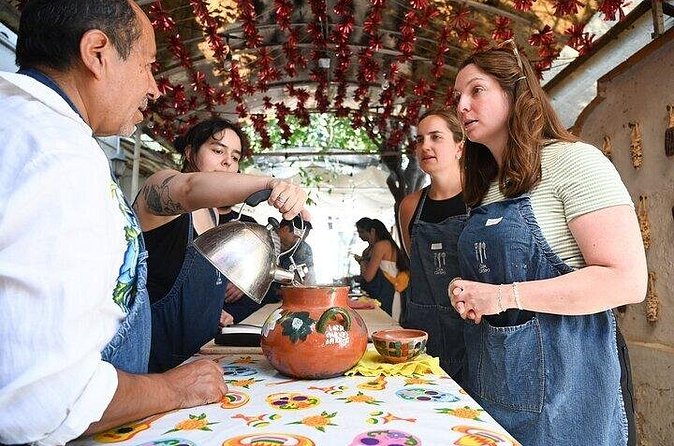
You finish with Oaxacan artisan chocolate ice cream, topped or served with guajillo chili powder.
This pairing is classic Oaxaca logic: chili doesn’t have to shout heat to be part of sweetness. Guajillo gives a gentle warmth and spice aroma, and it makes the dessert feel linked to the meal you just learned. It’s also a fun moment because it shows that chili is not only for savory dishes—Oaxaca cooks use it as a flavor tool across courses.
Alcoholic beverages are included with the meal, but the specific type isn’t listed in the details you’re given. Either way, plan your pacing. You’ll be in a cooking class environment, and you’ll enjoy the food more if you don’t rush the drinks.
Where it meets, where it ends, and how to plan your afternoon
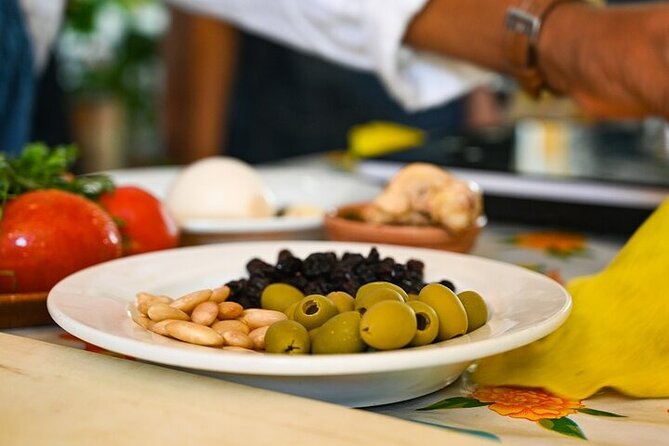
You’ll start at Casa Crespo, Reforma 808, Ruta Independencia, Centro, 68000 Oaxaca de Juárez, Oax. The class begins at 1:30 pm and ends back at the meeting point.
It’s near public transportation, and the tour notes that service animals are allowed. Confirmation is received at booking, and you’ll use a mobile ticket.
What I’d do as a practical traveler: show up a few minutes early so you can get your bearings quickly and settle in before cooking starts. Wear closed-toe shoes and clothes you don’t mind getting a little messy. Even if the session feels clean and organized, mole ingredients and tortillas can be surprisingly aromatic and a bit sticky.
And yes—this runs in English. If you prefer instruction in English, that’s a clear fit.
Price and value: $80 for four moles, tortillas, dessert, and drinks
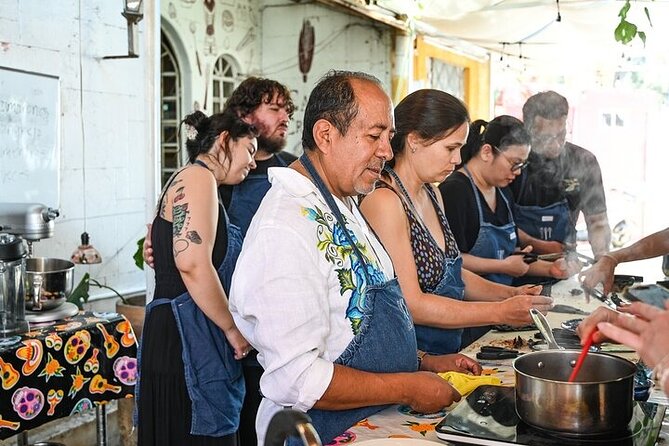
At $80 per person, this isn’t a bargain “snack and walk” experience. It’s priced like what it is: guided cooking instruction plus a full menu.
Here’s where the value actually comes from:
- You get four different moles, each with a distinct ingredient focus
- You learn the connection to tortilla pairing, not just sauce tasting
- Meals and alcoholic beverages are included, so you avoid surprise add-ons
- The class caps at 12 people, which often means you spend more time learning and less time waiting
Is it worth it? It tends to be, especially if you like food with a story and you want more than a one-bite sampling. It’s also ideal if you don’t want a long day of cooking. The schedule is short enough that you can still plan the rest of your evening in Oaxaca.
Who might skip it: if you want only tasting and zero cooking effort, or if you strongly prefer very hands-off experiences, you may feel the “work” portion more than you want. But if you’re curious about how mole is made and you like to leave with food knowledge you can use, this is an efficient way to do it.
Should you book 4 Moles Oaxacan Cooking Class?
Book it if you want a compact Oaxaca food education. This class gives you a structured tour of mole types—Green, Yellow, Almond, and Party—and it does that in about 2.5 hours, with meals and drinks included. Chef Carrizosa leads the class, and the format keeps it friendly and organized, with enough time to learn without dragging on.
Don’t book it if your priority is a slow, detailed cooking vacation or if you’re allergic to the idea of an active class schedule. At this length, you’ll move. You’ll taste. You’ll learn by doing, not by taking notes for hours.
One final practical nudge: bring an appetite. Four mains plus dessert is not just a “small sample” meal. If you like tortillas, spice balance, and understanding how Oaxaca cooks build flavor step by step, this is a very strong pick.
FAQ
What is the price of the 4 Moles Oaxacan Cooking Class?
The price is $80.00 per person.
How long is the cooking class in Oaxaca City?
It lasts about 2 hours 30 minutes.
Where does the class meet?
The meeting point is Casa Crespo, Reforma 808, Ruta Independencia, Centro, 68000 Oaxaca de Juárez, Oax., Mexico.
What time does the class start?
The start time is 1:30 pm.
Does the class end at the same place it starts?
Yes, it ends back at the meeting point.
Is the class offered in English?
Yes, it is offered in English.
How big is the group?
The experience has a maximum of 12 travelers.
What’s included in the price?
Meals are included, and alcoholic beverages are included. Tips are not included.
What dishes are included in the sample menu?
The sample menu includes Green mole, Yellow mole, Almond mole, Party mole, and chocolate ice cream with guajillo chili powder.
What is the cancellation policy?
This experience is non-refundable and cannot be changed for any reason.
Is a mobile ticket provided?
Yes, the tour uses a mobile ticket.