REVIEW · SAN MIGUEL DE ALLENDE
Discover Queretaro Tour
Book on Viator →Operated by Tour Descubre Querétaro, por Hotel Criol · Bookable on Viator
Querétaro has a way of turning walking into storytelling. This 2.5-hour tour threads together churches, convents, and water landmarks with clear explanations and a steady pace. I especially like the Hotel Criol library kickoff and the built-in timeline that helps the places click fast, even if Querétaro is new to you.
You also get a small group feel (up to 20 people), and the guide style matters—guides such as Armando have a knack for making history feel practical and easy to follow. The main drawback is simple: it’s mostly a guided walk with only brief stops, so it’s not ideal if you’re managing limited mobility.
In This Review
- Key highlights you’ll feel right away
- A smart 2.5-hour plan for Querétaro’s historic core
- Hotel Criol library kickoff: coffee, timeline, and an easy start
- How the route builds meaning: churches, convents, and city squares
- Stop 2: Santuario de La Congregación de Nuestra Señora de Guadalupe
- Stop 3: Templo y Exconvento de San Francisco de Asis de Queretaro
- Stop 4: Templo San José de Gracia (Sacred Museum)
- Stop 5: Hotel La Casa De La Marquesa
- Stop 6: Parroquia del Sagrado Corazon de Jesus / Templo de Santa Clara
- Stop 7: Convento de Capuchinas
- Stop 8: Teatro de la República (Theater of the Republic)
- Stop 9: Templo de San Antonio de Padua
- Stop 10: Casona de los 5 Patios
- Stop 11: Plaza de Armas
- The water storyline: aqueducts, sources, and a viewpoint payoff
- Stop 12: Templo y ex-convento de la Santa Cruz de los Milagros
- Stop 13: Fuente de la Virgen del Pilar
- Stop 14: Mirador Acueducto
- Pacing, comfort, and who this tour fits best
- Price and value: what you’re getting for $28.54
- Guide quality matters, and it shows
- Should you book this Querétaro tour?
- FAQ
- How long is the Descubre Querétaro tour?
- Where does the tour start and where does it end?
- What language is the tour offered in?
- Is admission included for the stops?
- How big is the group?
- Is this tour suitable for children or seniors?
- Can I cancel for a refund?
Key highlights you’ll feel right away
- Hotel Criol coffee break + intro: a comfortable start in the hotel library with a guided timeline
- Free admission at every stop: you’re not hunting tickets for the listed sights
- A tight center loop: lots of iconic buildings in about 2.5 hours
- Water has its own storyline: from sources and aqueduct connections to viewpoints
- Architecture snapshots: Moorish details, five patios, and classic public squares
- Guide Q&A energy: strong explanations and room for questions in a small group
A smart 2.5-hour plan for Querétaro’s historic core
If you only have a short window in Querétaro, this tour is a good way to get your bearings. The timing runs about 2 hours 30 minutes, and the group stays capped at 20 people, so it doesn’t feel like you’re being swept along with zero attention.
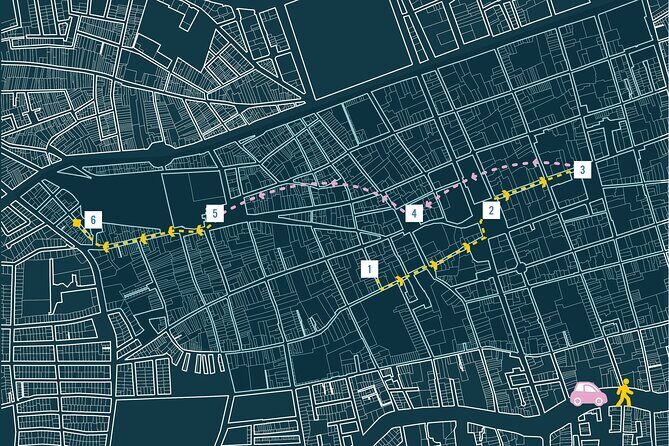
You’ll start in central Querétaro at Calle Dr. Leopoldo Río de la Loza 6 (Centro) and finish at Mirador de los Arcos, Ejército Republicano 47 in La Santa Cruz. Ending at a viewpoint is a nice payoff, because the last minutes help you step back and see the city’s big pieces—especially the aqueduct area—instead of ending in the middle of streets.
Logistically, the start is in a convenient downtown zone near public transportation. And since the tour is offered in English with a mobile ticket, it’s built for people who want to spend more time sightseeing and less time figuring out paperwork.
You can also read our reviews of more tours and experiences in San Miguel de Allende.


Hotel Criol library kickoff: coffee, timeline, and an easy start
The tour begins at Hotel Criol. There’s an introduction that runs about 30 minutes, held in the hotel library, where you also get a coffee break as part of the experience. This matters more than it sounds. You’re not just collecting facts; you’re setting a framework for what you’re about to see.
The best part is the timeline. When you’re walking through multiple religious buildings and historic homes, the danger is getting lost in details. A timeline gives you anchors—so later, when the guide points out connections between places, it feels like a chain instead of random stops.
You’ll also notice the pacing starts with a bit of comfort before you go outside. That’s a small thing, but it helps if you’re arriving from elsewhere in the city and want your brain switched on without overheating.
How the route builds meaning: churches, convents, and city squares
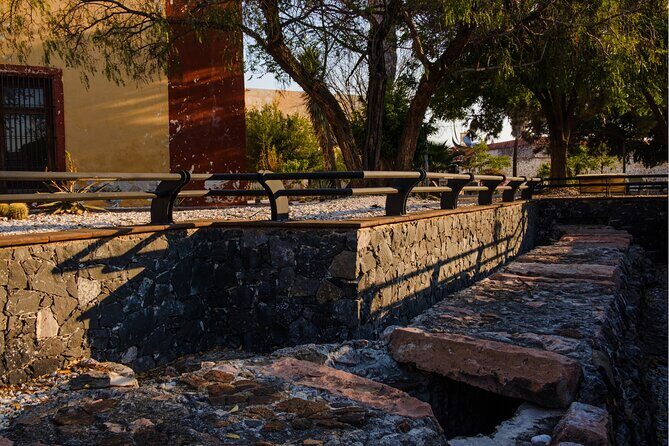
After the Hotel Criol start, the tour keeps moving through a classic central-city pattern: religious landmarks first, then architecture and civic spaces, and finally a water-and-view finish.
Stop 2: Santuario de La Congregación de Nuestra Señora de Guadalupe
This sanctuary is dedicated to the Virgin of Guadalupe, and it’s described as the second temple in Mexico dedicated to her. Even if you’re not a religious-history deep diver, the guide’s framing helps you understand why multiple sites matter—and how the same devotion can show up through different places and periods.
Stop 3: Templo y Exconvento de San Francisco de Asis de Queretaro
Next comes the San Francisco church and ex-convent complex, tied to Conin’s influence (as noted in the tour description). Ex-convent sites often feel like a jumble from the outside, but they’re usually central to how cities organized power, care, and education. Here, the focus is on that named influence—so you’re not guessing at why the building exists.


Stop 4: Templo San José de Gracia (Sacred Museum)
This stop is one of the most “this city had systems” moments. The tour describes Templo San José de Gracia as the first hospital in Querétaro, founded by the Franciscans and later delivered to the order of San Hipólito. Today, it’s the headquarters of the Sacred Museum.
This is a great example of why a guided walk beats self-paced browsing. You see the building, then you learn what kind of social role it played—health care, not just worship.
Stop 5: Hotel La Casa De La Marquesa
Then you shift from institutions to domestic architecture. This house is described as the residence destined for the wife of the marquis, and it’s noted for Moorish details. If you like architectural character, this is one to watch closely. Moorish-style elements can look subtle at street level, so the guide’s attention helps you spot what makes it different.
Stop 6: Parroquia del Sagrado Corazon de Jesus / Templo de Santa Clara
This one is described through a theme: temples, dowries, and an ancient worldview. That phrasing might sound abstract, but it helps you look beyond the façade. You’re being nudged to connect religious buildings with social customs—especially the way families and institutions shaped community life.
Stop 7: Convento de Capuchinas
Now the tour turns to a cloistered convent of Capuchin nuns. It’s associated with Querétaro’s water history and the end of the second Mexican empire. Water and empire in the same breath is unusual in many city tours, which is why this stop feels like a “wait, what?” moment—in a good way.
Stop 8: Teatro de la República (Theater of the Republic)
Next is the Theater of the Republic. The tour description emphasizes that it was designed to compete with other cities’ theaters, even though it’s smaller. The guide also frames its history as bigger than just one building or one neighborhood.
If you like seeing how cities tried to measure themselves against others, this is your moment. It’s not just a theater; it’s a statement about ambition.
Stop 9: Templo de San Antonio de Padua
This stop is described as one of the oldest temples in the city and paired with a small public square that’s said to be pretty. It’s a brief pause, but it gives you a breather. More importantly, older temples anchored in small squares often become informal gathering points, even when you’re just passing through.
Stop 10: Casona de los 5 Patios
Then you hit domestic architecture again—this time a famous style cue: a house with five patios. It’s described as an 18th-century place where many past characters passed through, and the patios are said to be characteristic of the historic center.
Patios can feel repetitive if you just glance at them. With a guide pointing out patterns, you’re more likely to notice how the patios shape light, movement, and how people lived around inner space rather than outward street frontage.
Stop 11: Plaza de Armas
The tour ends this middle section at Plaza de Armas, described as key in Mexico’s history. That’s a broad claim, but in practice, plazas are where civic life concentrates: processions, announcements, everyday meeting points. The guide helps you treat it as more than a scenic pause.
The water storyline: aqueducts, sources, and a viewpoint payoff
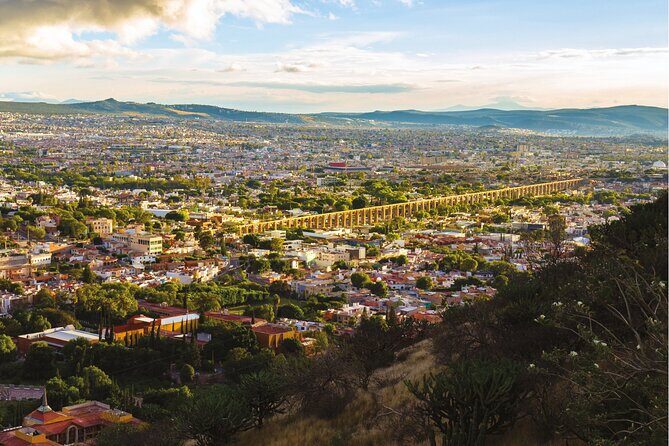
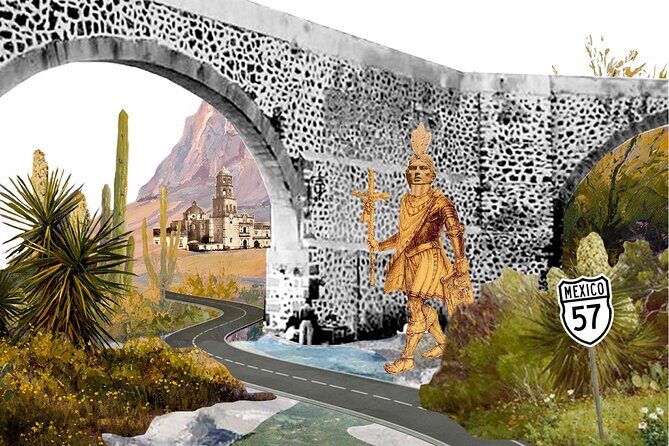
The final stretch is where this tour really earns its keep. The stops are tied together by how the city managed and distributed water, from sources to aqueduct connections to a panoramic look at the system.
Stop 12: Templo y ex-convento de la Santa Cruz de los Milagros
This Franciscan convent is described as receiving water from the aqueduct. It’s also connected to schools dedicated to evangelists who traveled to the Sierra Gorda and California. That travel reference adds context to why these religious sites often functioned like networks—people didn’t just pray; they also traveled, taught, and spread ideas.
Stop 13: Fuente de la Virgen del Pilar
Then you reach the Fuente de la Virgen del Pilar, described as the first source where water was distributed to the other sources of the city. For many visitors, fountains are just pretty street furniture. Here, it’s presented as infrastructure, which changes how you see it instantly.
Stop 14: Mirador Acueducto
Finally, you finish at Mirador Acueducto, a panoramic view where you can observe elements like the Aqueduct, Cañada, and the old town of the former hacienda de cartes. If you’ve been looking down at streets and buildings, this viewpoint helps you switch perspectives and understand the city’s layout and water lines as physical geography, not just a history lesson.
Finishing here is a smart way to close the loop: your earlier stops explain the pieces, and the viewpoint lets you place them in space.
Pacing, comfort, and who this tour fits best
This is a moderate-walking tour with short time slots at each stop. The duration is about 2 hours 30 minutes, and many stops are around 5 to 13 minutes each, so you’re not meant to linger. Bring the mindset of a “see it, learn it, move on” city walk.
The tour also notes moderate physical fitness is required. It’s not recommended for the elderly and not recommended for children under 7. If you’re traveling with anyone who needs long breaks, or you want a slow museum-style pace, you may find this format a bit tight.
The good news: everything is in central Querétaro, and the tour ends at a scenic location. So even if you move at a steady pace, you still get a satisfying finish.
Price and value: what you’re getting for $28.54
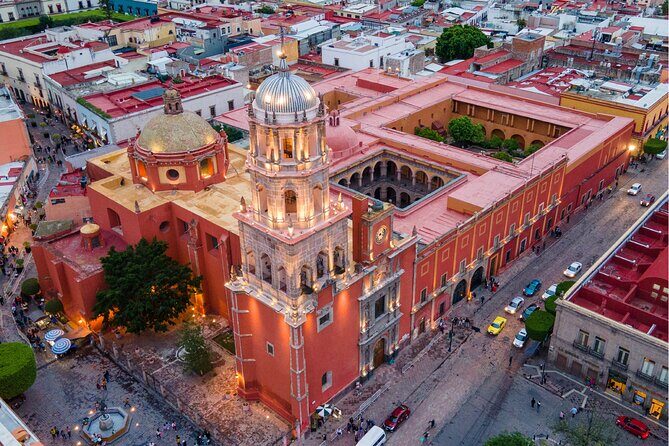
At $28.54 per person, this tour is priced like a budget-friendly introduction to a lot of key sights. The biggest value lever is that admission tickets are listed as free for the stops you visit. On many city tours, you pay separately for entrances and then feel surprised when totals climb. Here, the structure is more predictable.
You also get:
- A guided intro at Hotel Criol in the library
- A coffee break
- A small group size capped at 20
- A route that covers multiple categories: religion, architecture, civic squares, and water history
That combination is what makes the price feel fair. You’re not paying just for someone to point at buildings; you’re paying for interpretation that ties the stops together—especially through the water theme and the timeline concept.
Guide quality matters, and it shows
A tour is only as good as the guide’s ability to explain. This one places a lot of emphasis on answers and making sure you understand what you’re seeing. Guides such as Armando are highlighted for delivering history in a way that keeps attention.
And because the group stays small, it’s easier to ask questions and get answers that relate to the buildings around you—not generic lecture mode.
If you care about learning, this tour’s style is a good fit. If you just want photos with minimal talking, you might find the narration more than you need—but the short stop times help keep things moving.
Should you book this Querétaro tour?
Book it if you want a fast, organized way to understand central Querétaro without guessing which places connect to each other. It’s especially worth it for the water-focused ending, the Hotel Criol library kickoff, and the fact that admission tickets are free at the listed stops.
Skip it if walking a lot in short bursts is hard for you, or if you’re traveling with kids under 7. Also consider skipping if you want a slow, linger-and-explore style, because the stop durations are brief by design.
If your goal is to make your first day in Querétaro feel like you’re already in the know, this tour is one of the most practical ways to do it.
FAQ
How long is the Descubre Querétaro tour?
The tour lasts about 2 hours 30 minutes.
Where does the tour start and where does it end?
It starts at Calle Dr. Leopoldo Río de la Loza 6, Centro, 76000 Santiago de Querétaro, Qro., Mexico and ends at Mirador de los Arcos, Ejército Republicano 47, La Santa Cruz, La Pastora, 76025 Santiago de Querétaro, Qro., Mexico.
What language is the tour offered in?
The tour is offered in English.
Is admission included for the stops?
For the listed sights, admission tickets are marked as free.
How big is the group?
The tour has a maximum of 20 travelers.
Is this tour suitable for children or seniors?
It requires moderate physical fitness and is not recommended for the elderly. It’s also not recommended for children under 7.
Can I cancel for a refund?
Yes. There is free cancellation, and you can cancel up to 24 hours in advance for a full refund.