REVIEW · MEXICO CITY
2 Hours of Mexican Muralism with an Art Lover
Book on Viator →Operated by GM International Travel · Bookable on Viator
Mexican muralism comes alive on foot. This 2.5-hour route is a smart way to connect major works with the bigger story of Mexico’s 20th-century art movement. I like the tight art-history arc and the way you get multiple key sites without rushing. The one thing to watch: museum entry fees are not included for some stops, so you’ll want a little cash ready.
You’ll start at Palacio de Bellas Artes, then move through central historic landmarks and two museum stops built for mural lovers. The group stays small (up to 15), and the guide keeps it in English with bilingual support, which makes the art and context feel easier to follow.
One possible drawback is the pacing. With three mural-focused stops plus time for streets and plazas, you’ll be on the move—great for people who enjoy walking and learning, less ideal if you prefer long, quiet museum browsing.
In This Review
- Key moments you’ll remember most
- Why Mexican muralism still matters (and what this tour explains)
- The route setup: timing, group size, and how to plan your day
- Stop 1: Palacio de Bellas Artes and the muralism origin story
- Between museums: the avenue views and church facades
- Central plaza time: Government Palace, Cathedral, and Tenochtitlan archaeology
- Stop 2: Antiguo Colegio de San Ildefonso and early Orozco
- Stop 3: Museo Vivo del Muralismo and Rivera’s 248-mural focus
- Price and value: where your $53.74 really goes
- Who should book this muralism tour (and who might not love it)
- Final take: should you book 2 Hours of Mexican Muralism?
- FAQ
- How long is the tour?
- What does the tour price include?
- Are museum entrance fees included?
- Where does the tour start and end?
- What language is the tour in?
- How many people are in the group?
- What is the cancellation policy?
Key moments you’ll remember most
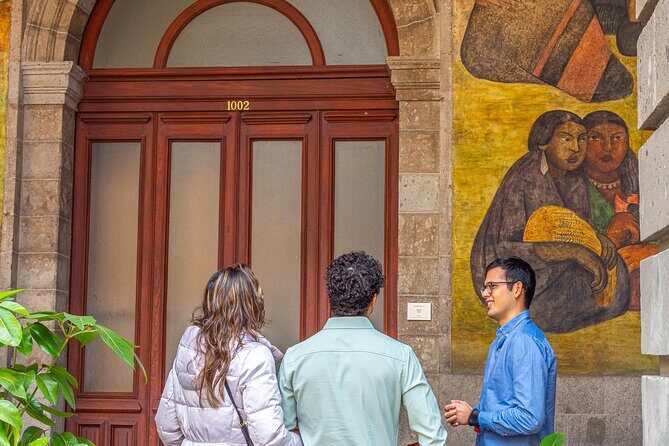
- A mural timeline in real places: You’ll see how the movement grew and changed across sites tied to big names.
- Jose-style guide energy (if that’s who you get): One guide praised for answering art, history, anthropology, and even politics questions without dodging.
- Two major museums + one free-entry mural complex: Pay for part of the route, then enjoy a free stop at the end.
- Central Mexico City landmarks with context: The Government Palace, Cathedral, and archaeological windows help connect mural art to place.
- Diego Rivera’s footprint, up close: Museo Vivo del Muralismo focuses on his works, including a count of 248 murals tied to his legacy.
Why Mexican muralism still matters (and what this tour explains)
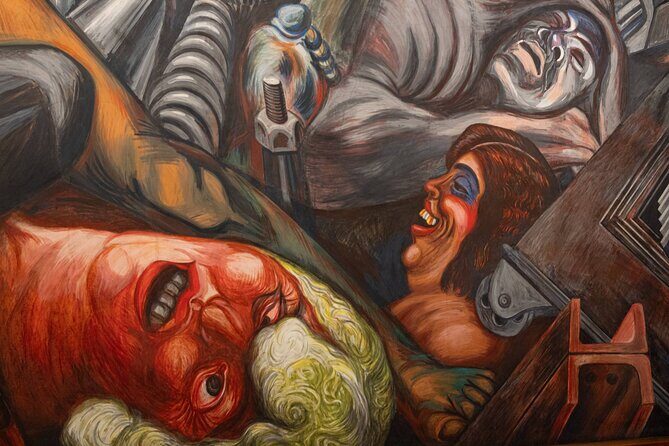
Mexican muralism isn’t just wall art. It’s politics, identity, and public storytelling, painted on such a large scale that it changes how you read a city. One reason this tour works so well is that it doesn’t treat murals like isolated masterpieces behind glass. Instead, you’re nudged to see them as part of a living argument about who Mexico was, who it could be, and what ordinary people deserved to recognize.
This route also helps you get past the common mural-museum trap: staring at pigments while missing the reasons the artists painted the way they did. You’ll talk about the history of muralism during the first museum stop, then you’ll keep building that foundation as you move through early 20th-century beginnings and later large-scale mural environments.
And because you’re guided, you’re not stuck trying to decode everything alone. The tour is set up for art lovers, yes—but it’s also for anyone who likes meaning. If you’re curious about how art reacts to social change, you’ll get a lot out of the flow from one site to the next.
You can also read our reviews of more tours and experiences in Mexico City


The route setup: timing, group size, and how to plan your day
This experience runs about 2 hours 30 minutes and is offered in English with a bilingual guide. Expect a guided walk plus museum time—three stops that do the heavy lifting.
- Small group size: up to 15 travelers. That usually means fewer delays and more chances to ask questions.
- Near public transportation: you can keep your day flexible.
- Mobile ticket: you won’t be juggling printed confirmations.
Where it gets practical: you’ll end at the entrance of Museo Vivo del Muralismo. That’s convenient if you want to stay in the area after the official tour time, grab a snack nearby, or line up another museum or café visit.
Bring comfortable shoes. This is not a sit-and-stare tour. You’ll move between major stops in central Mexico City, and the route includes streets and a central plaza segment.
Stop 1: Palacio de Bellas Artes and the muralism origin story
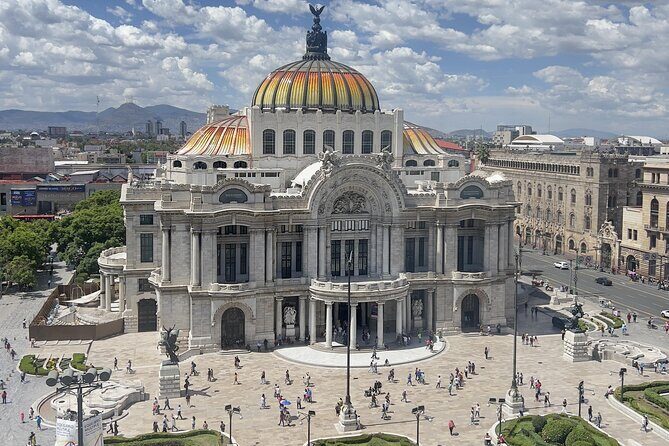
You begin at Palacio de Bellas Artes, and you’re there for about 1 hour, including guided discussion. This is a powerful starting point because the building itself signals importance. It’s not a random room—it’s a centerpiece location for Mexican arts, so it helps set the tone: muralism wasn’t a side project. It became part of the national cultural conversation.
In this stop, you focus on major mural artists and how muralism became a visible movement. You’ll talk about the history of Mexican muralism and see works associated with names like Rivera, Siqueiros, Orozco, Camarena, and Tamayo.
What I like about beginning here: you get a broad anchor early. If Rivera is your main interest, you’ll still understand why the movement included other voices, and why different artists pushed muralism in slightly different directions. If you’re newer to it, this stop helps you build a mental map fast: who’s who, what changed over time, and how the themes connect.
Possible drawback to factor in: admission is not included for this museum stop. So you’ll pay extra on site, based on the tour’s stated policy. It’s easy enough to handle—just don’t expect the $53.74 price to cover everything.
Between museums: the avenue views and church facades
After Bellas Artes, the tour shifts from interiors to the city’s architecture. You’ll spend time seeing an impressive avenue with baroque-style palaces and the facades of some churches.
This part matters more than it seems. Murals don’t float in a vacuum. In Mexico City, the visual conversation between old stone facades, grand public buildings, and painted public messages is part of the cultural mix. Even a quick look outside helps you understand why muralists wanted their work to be seen in the public sphere, not hidden away.
Keep your phone handy for photos, but don’t let it steal your attention. Look at the shapes and textures first. Baroque details can change how you notice line, contrast, and ornament—skills your brain will use again when you start reading mural compositions more carefully.
Central plaza time: Government Palace, Cathedral, and Tenochtitlan archaeology
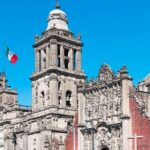
Next comes the heart of Mexico City’s historic center, where the tour visits the government palace, the cathedral, and the archaeological windows of ancient Mexico-Tenochtitlan.
This segment gives you a reality check in a good way. Muralism often reaches backward—into pre-Hispanic roots, colonial memories, and the layers of the city itself. By pairing mural-focused museum stops with visible reminders of what stood here before, you get context for why muralists could treat history as material for art, not just a subject for textbooks.
Even if you don’t read every detail in the stone, the idea lands: Mexico City is layered, and muralism is one of the ways people narrate those layers to the public.
The main consideration here is pace and foot traffic. This is a central plaza area, so you’ll likely be navigating around groups and movement. Wear shoes you trust and keep water in your bag.




Stop 2: Antiguo Colegio de San Ildefonso and early Orozco
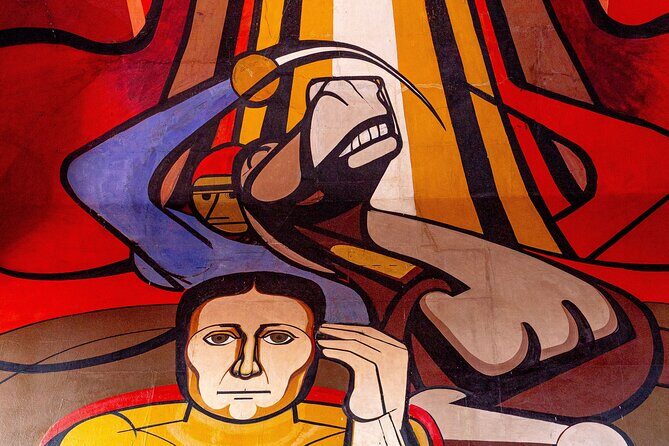
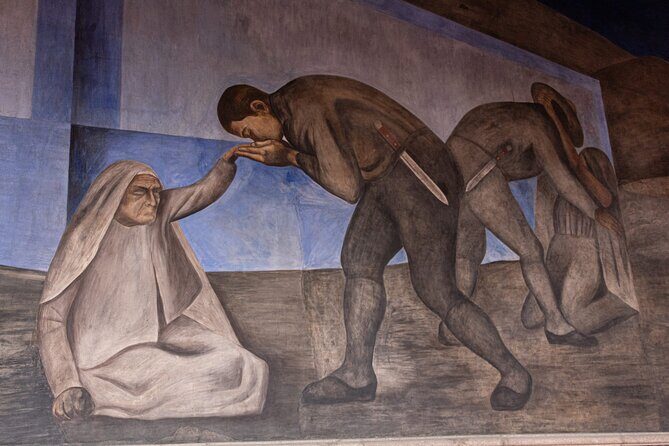
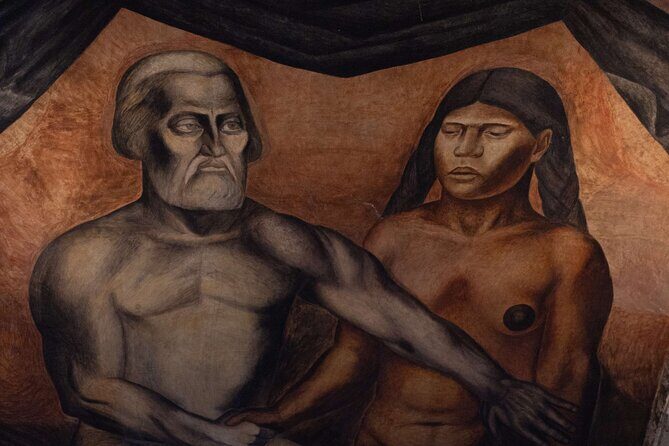
You’ll then head to Antiguo Colegio de San Ildefonso for about 45 minutes. This museum is described as excellent for learning about early work of Clemente Orozco, and more generally, the birth of the muralist movement of the 20th century.
I love this placement in the schedule. After Bellas Artes gives you the big-name mural landscape, I think you’ll appreciate seeing where the movement’s momentum gathered earlier. It’s one thing to know the famous murals. It’s another to understand how the movement formed and why it took the shape it did.
For people who care about art history details, this stop is a useful bridge. You can connect the ideas you hear in the first museum stop—how muralism grew and changed—with an earlier stage and a specific artist anchor.
Note on cost: admission is not included here either. The tour states MX$150.00 per person for entrance to fine art and Saint Ildefonso. Factor that into your budget so the day stays smooth.
Stop 3: Museo Vivo del Muralismo and Rivera’s 248-mural focus
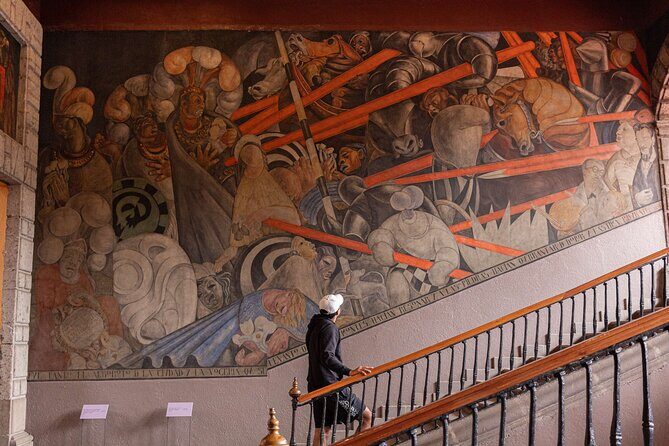
The final stop is Museo Vivo del Muralismo, and it’s set up for mural lovers in a very practical way. The admission here is listed as free, and you get around 45 minutes.
This is where the tour really pays off if you’re Diego Rivera curious. The museum complex is described as focusing on his impressive murals, and it notes 248 murals in total. That’s the kind of number that changes your expectations. You’re not just seeing one or two famous panels. You’re walking into an environment designed around Rivera’s mural legacy.
The building itself is organized on three floors, plus temporary rooms that feature different formats, including easel art, murals, ceramics, and pre-Hispanic drawings.
What’s smart about ending here: by the time you reach the mural-focused complex, you already have context from the earlier stops. Rivera’s work won’t feel like an isolated finale. You’ll be able to notice how themes and styles connect back to the broader muralist story you started learning.
A possible consideration: since the museum is free for this stop, it can still feel like a popular draw. Your time is limited to about 45 minutes, so prioritize looking at the biggest mural surfaces first, then use the temporary rooms to follow your curiosity (especially if ceramics or pre-Hispanic drawings catch your eye).
Price and value: where your $53.74 really goes
The tour price is $53.74 per person, and the entry fees are split. The tour includes the bilingual guide, while some museum admissions are not included. You’ll want to budget an additional MX$150.00 per person for entrance to Bellas Artes and San Ildefonso.
So is it good value? I think it is, if you value structure. You’re paying for:
- a guided route that connects murals to Mexico City’s public spaces,
- time spent talking history, not just walking past artworks,
- a small group experience (max 15),
- and the convenience of moving between major mural sites without having to figure out the narrative yourself.
If you were to try this on your own, you’d likely spend more time planning, and you’d miss some of the art-history threads that make the murals click. The free final stop at Museo Vivo also helps. It means your last segment is the most mural-intensive part without extra admission cost tied to your ticket.
If you’re the type who loves museums but hates paying extra on arrival, then the add-on entrance fees might feel annoying. But they’re clearly stated, and the route is designed to justify them by giving you guided meaning at each place.
Who should book this muralism tour (and who might not love it)
This is a strong match for:
- art lovers who want context, not just photos,
- people who enjoy history and politics connections through culture,
- anyone who wants a fast, guided introduction to the muralist movement without turning the day into a logistics headache.
It’s also a good choice if you like questions. One guide (Jose) is specifically praised for being passionate and answering questions across art history, history, anthropology, and politics. Even if Jose isn’t your guide, the overall tour format is set up for discussion and explanations, not just quiet commentary.
Where it may not fit as well:
- If you want hours in one museum room with zero walking, this won’t be that.
- If you don’t care about muralism context and just want to see famous walls quickly, you might feel the guided storyline takes some time.
Final take: should you book 2 Hours of Mexican Muralism?
I’d book it if your goal is to understand Mexican muralism as a movement tied to place, politics, and identity—and to do it in a time-efficient, guided way. The standout value is the pairing of major museums with central Mexico City historical landmarks, then finishing at Museo Vivo del Muralismo where the mural focus stays strong and the admission for that stop is free.
If you’re on the fence, decide based on your tolerance for extra museum entry fees and walking pace. If that sounds fine, this tour is a solid way to get your bearings fast and leave with a clearer picture of why these murals matter.
FAQ
How long is the tour?
It runs for about 2 hours 30 minutes (approx.).
What does the tour price include?
The tour includes a bilingual guide. Admission tickets for fine art sites are not included.
Are museum entrance fees included?
No. Entrance for Palacio de Bellas Artes and Antiguo Colegio de San Ildefonso is not included, listed as MX$150.00 per person. Admission at Museo Vivo del Muralismo is free.
Where does the tour start and end?
It starts at Museo del Palacio de Bellas Artes (Av. Juárez s/n esq, Eje Central Lázaro Cárdenas Col, Centro) and ends at the entrance of Museo Vivo del Muralismo (República de Argentina 28, Centro Histórico).
What language is the tour in?
The tour is offered in English, and it includes a bilingual guide.
How many people are in the group?
The maximum group size is 15 travelers.
What is the cancellation policy?
You can cancel for a full refund if you cancel at least 24 hours before the experience’s start time.