REVIEW · XOCHIMILCO
Xochimilco & Colonial Coyoacan Trip
Book on GetYourGuide →Operated by MEXITOURS · Bookable on GetYourGuide
A change of pace hits fast with this loop. One day ride, two UNESCO stops, and a hit list of Mexico City art and architecture that most people never string together. You’ll start with the mural-and-stadium panorama, then slow down on the canals of Xochimilco before finishing in colonial Coyoacán with church vault paintings and famed homes.
I like how the tour mixes big-picture sightseeing with real local texture. I especially like the guided mural stops—Poliforum Cultural Siqueiros’ The March of Humanity and the Diego Rivera work at Teatro de los Insurgentes—because they help you understand what you’re looking at instead of just snapping photos. And the Xochimilco boat time is a relaxing break from city traffic, with a classic trajinera ride that feels like a living neighborhood ritual.
One thing to plan for: the schedule is tight. You’ll be moving by van most of the day, and the canal area is busy on some days, so you won’t get unlimited wandering in Coyoacán or long museum time inside Frida-related stops.
In This Review
- Key Things You’ll Really Notice
- Mural + Stadium Panorama: The Best Way to Get Oriented Quickly
- Xochimilco’s Trajinera Ride: When the Day Slows Down
- Money and snacks: plan for spending on the water
- Coyoacán on Foot: Colonial Streets and San Juan Bautista Church
- A reality check on time
- Hernán Cortés and Frida Kahlo: Panoramic Views That Still Matter
- Price and Value: What $42 Buys (and What It Doesn’t)
- A tour that reads well for first-timers
- Timing, Traffic, and the Shared-Van Reality of Doing Two Cities
- Who This Tour Fits Best (and Who Might Want Another Option)
- Should You Book This Xochimilco and Colonial Coyoacán Trip?
- FAQ
- How long is the Xochimilco & Colonial Coyoacan trip?
- Where do I meet the group for pickup?
- What time does the tour start?
- Are admission fees included?
- Are food and beverages included?
- Is the tour suitable for wheelchair users or mobility impairments?
Key Things You’ll Really Notice
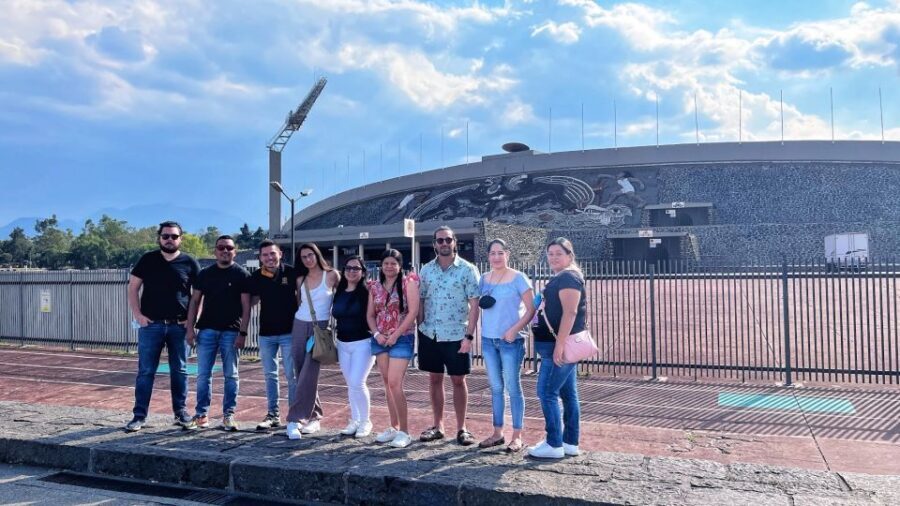
- Mural power with context: Poliforum Cultural Siqueiros, Teatro de los Insurgentes, and Ciudad Universitaria UNESCO stops are easier to enjoy when someone connects the dots.
- A real UNESCO canal ride: Xochimilco is the core experience, and the trajinera time gives you a calmer pace.
- Coyoacán beyond the postcard: 16th-century houses, San Juan Bautista Church, and Juan Fabregat’s 1944 vault paintings focus on the neighborhood’s character.
- Outside viewing of major homes: you’ll see the Cortés mansion area and Frida Kahlo’s blue house as part of the panoramic walk/drive-by approach.
- A shared-service format: the bilingual guide is great, but the group language mix can affect how much time each language gets.
- Cash matters at the canals: plan for snack/souvenir spending at Xochimilco since there’s no ATM there.
Mural + Stadium Panorama: The Best Way to Get Oriented Quickly
This tour works as a fast orientation day for Mexico City. You’re not just going to “pretty places.” You’re traveling through a map of how art, politics, and place-making show up in the city.
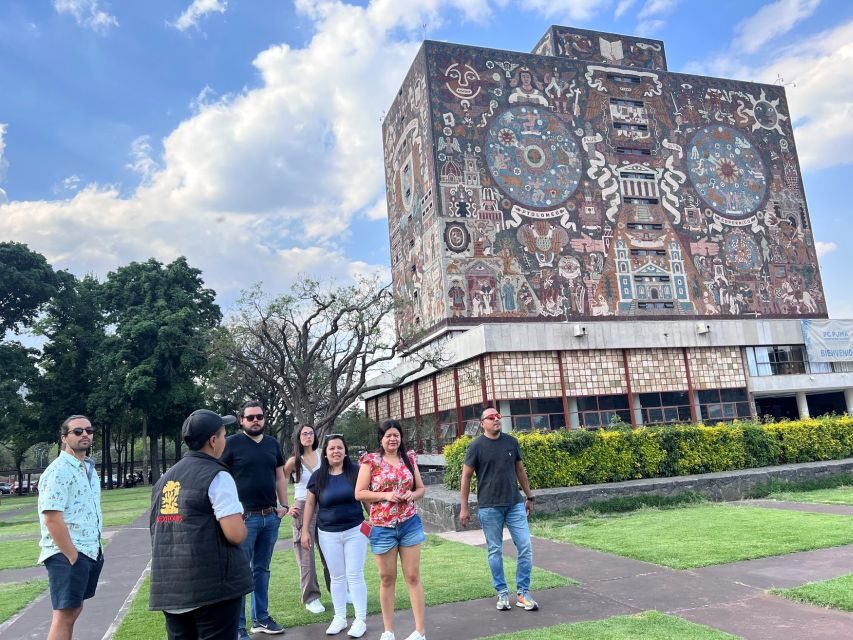
You’ll start with panoramic stops that set the tone. Poliforum Cultural Siqueiros is your first major art landmark, famous for The March of Humanity—the huge mural attributed to David Alfaro Siqueiros. Even if you’re not a mural fanatic, this stop helps you see why Mexican muralism is treated like a national voice, not just decoration.
From there, you pass the Plaza de Toros México, described as the largest in the world, built for around 50,000 people. Next comes Teatro de los Insurgentes, known for its massive façade mural by Diego Rivera, where Cantinflas is also represented. That Rivera-Cantinflas detail matters because it’s a reminder that pop culture and public art often travel together here.
Then you roll past the Estadio Olímpico Universitario and head toward Ciudad Universitaria, which is UNESCO-protected for both architecture and its mural tradition. This is also where you start to feel why guided touring helps: someone ties together the city’s big artistic themes instead of leaving you to guess.
Finally, you get a panoramic look at Pedregal de San Ángel, often called lava gardens. It’s an unusual natural/urban contrast—Mexico City isn’t only high-rises and avenues. You’re seeing the city’s edge where volcanic ground shaped the look of the area.
Practical tip: wear comfortable shoes even if you’re in the van most of the time. You’ll step out for photos and quick views, and the morning-to-canal rhythm is easier if your feet aren’t already angry.
Xochimilco’s Trajinera Ride: When the Day Slows Down
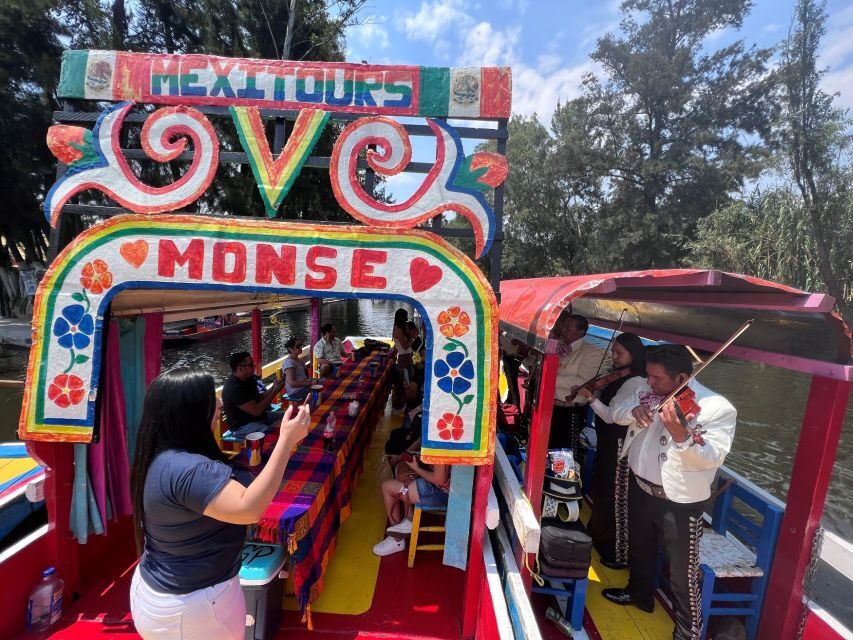
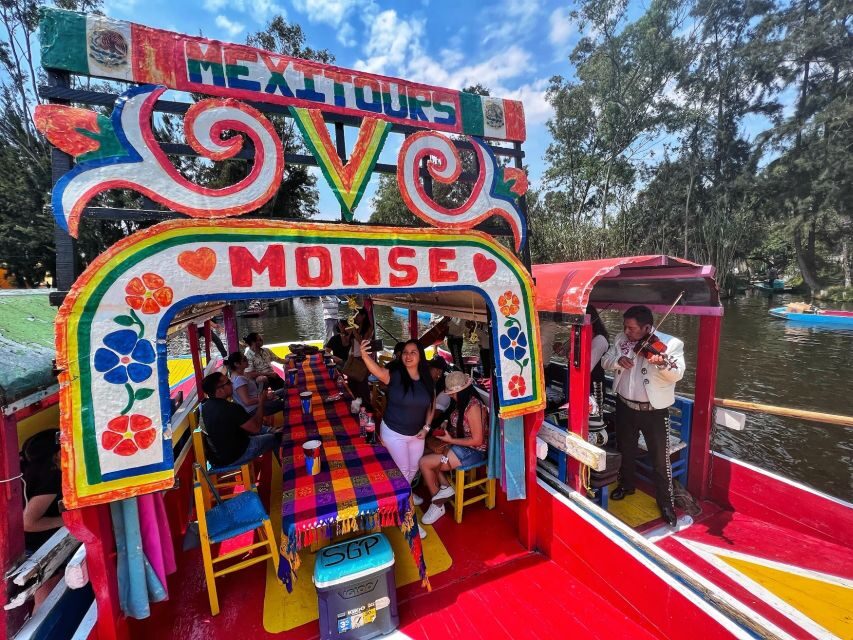
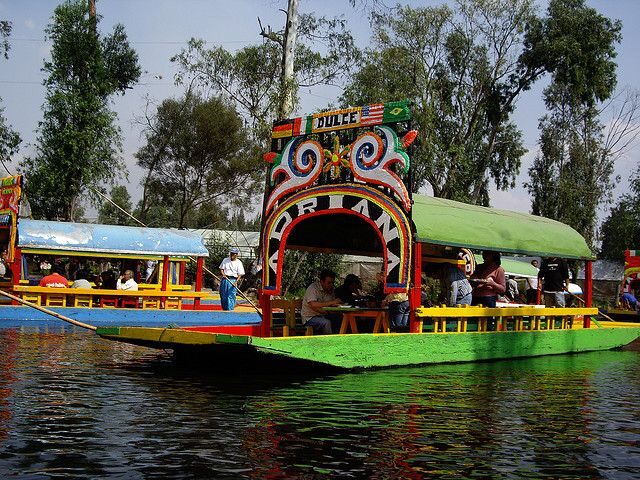
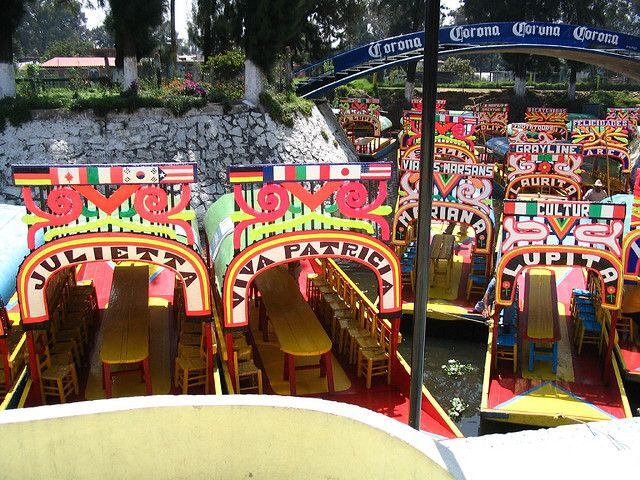
Xochimilco is the reason this tour feels like more than a bus circuit. It’s UNESCO World Heritage, and the visit centers on a traditional canal boat called a trajinera.
What you’re aiming for here is mood: shade, water, and that distinct canal life that’s different from Mexico City’s faster streets. On busy days—like Sundays—the canal area can be lively, with many colorful boats and more people near the docks. One of the standout notes from guides and drivers is that the boat crews often bring energy, with friendly steering and a social atmosphere on the water.
Some departures don’t spend your time riding far off to islands. Instead, you spend your time floating along the canals. That still works, because the “point” is the canal experience itself: how the boats pass each other, how everyday life shifts when you’re on water, and how the surroundings feel more rural even while you’re near a huge city.
Money and snacks: plan for spending on the water
This is where you’ll want a little preparation. There are constant vendors and hawkers around the boat area, offering food, drinks, and small souvenirs. Food and beverages are not included in the tour price, so you’ll want cash ready if you want to buy anything.
One key warning I’d take seriously: there are no ATM machines at Xochimilco. If you wait until you’re there to withdraw money, you may have a bad time. Bring enough cash not only for snacks but also for small items you might want to take home.
What to bring for comfort: sunglasses and sunscreen matter here. The sun gets in your face even when you’re near shade from the boat canopy.
Coyoacán on Foot: Colonial Streets and San Juan Bautista Church
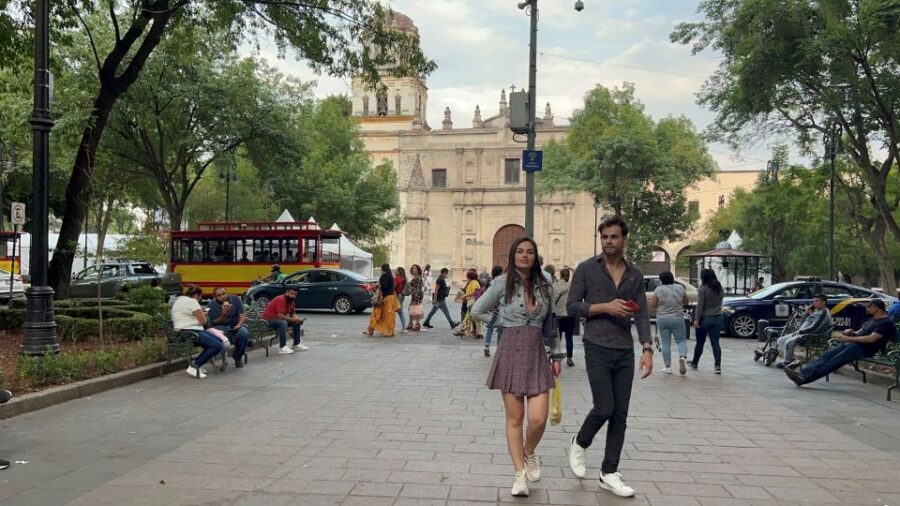
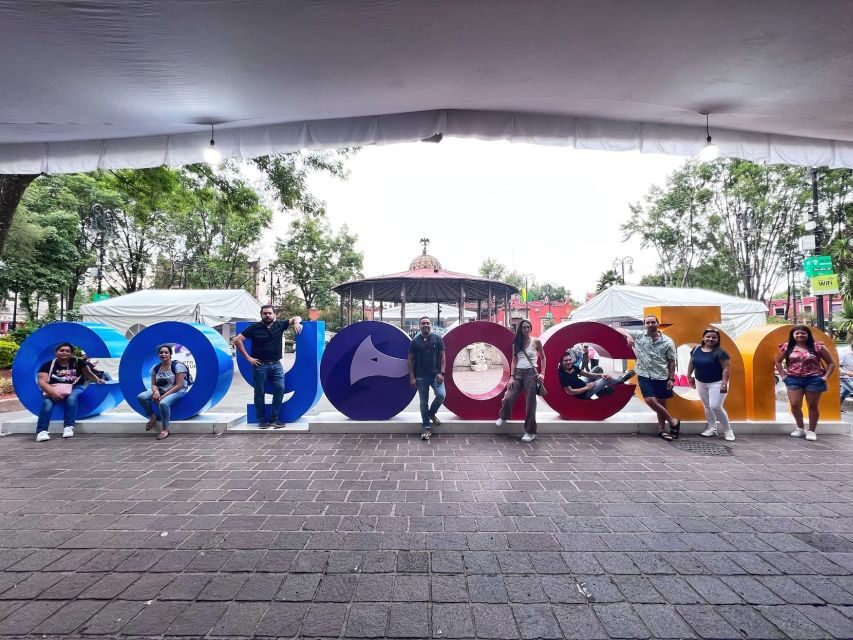
After the canals, the tour shifts gears into colonial Coyoacán. This is one of those neighborhoods where “rambling 16th-century houses” isn’t just a phrase—it’s the actual experience. Streets curve, facades change texture block to block, and you start to feel the neighborhood scale in a way you don’t get downtown.
You’ll explore Coyoacán’s colonial district, with time to walk around the center area. In practice, that means you’ll be doing smart wandering: main square views, quick side-street peeks, and enough time to soak up the atmosphere rather than rushing through everything.
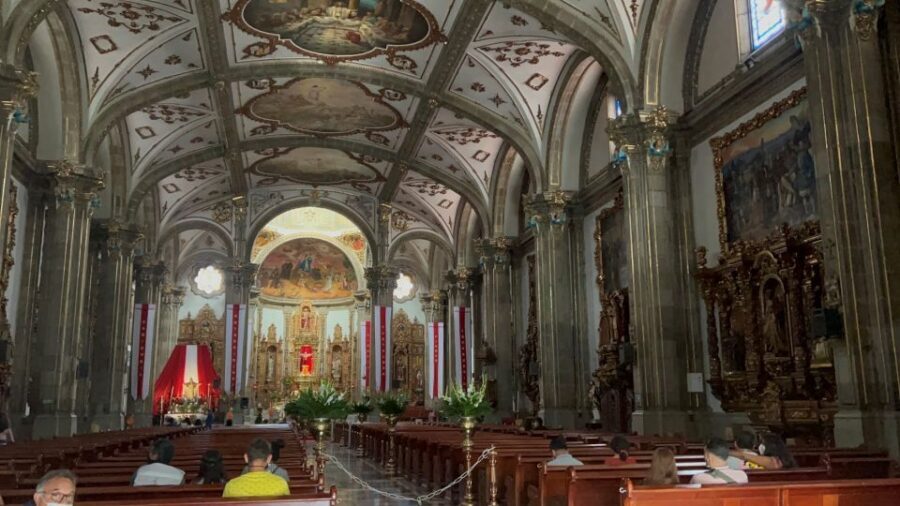
A major anchor stop is San Juan Bautista Church. Pay attention to the vault paintings by Juan Fabregat, created in 1944. This is the kind of detail that makes the church worth your time—inside visuals you usually miss if you only photograph the exterior. Even when you’re moving at a neighborhood pace, you’ll want a moment to look up, not just at the doorway.
Photo tip: Coyoacán rewards wide angles and small details. If you only take one type of photo, you’ll miss the charm. Look for doorways, window patterns, and that gentle mix of old stone with modern life.
A reality check on time
This is a five-hour tour, and Coyoacán is only part of it. So yes, you’ll see highlights, but the schedule can feel strict. One common feeling is wishing for a longer walk in the main square area. That’s not a failure of the day—it’s the math of trying to do Xochimilco plus Coyoacán plus major city panorama in one go.
If you want the neighborhood at a slower pace, use this as your launch point. Then come back later on your own for longer meals and shopping.
Hernán Cortés and Frida Kahlo: Panoramic Views That Still Matter
Coyoacán’s fame is also about the people connected to it. This tour gives you panoramic viewing of the mansions of Spanish conquistadors, including the impressive mansion of Hernán Cortes. You’re not going deep into archives here; you’re seeing where power and legacy left physical marks.
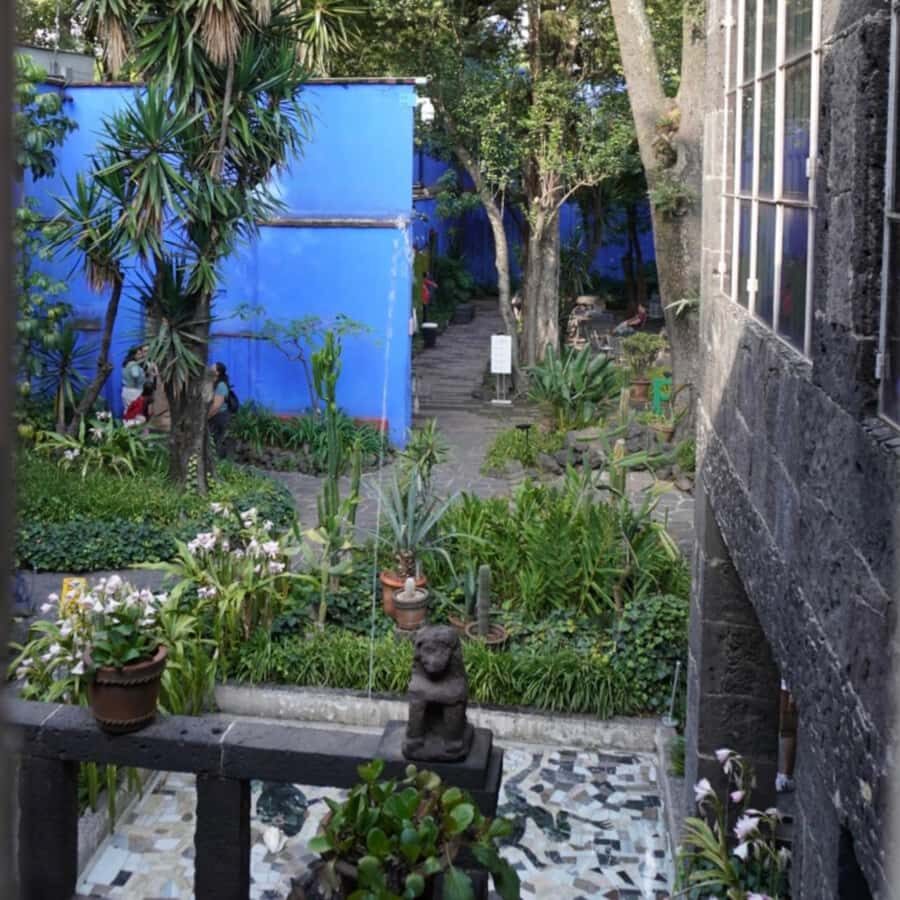
Then you get the Frida Kahlo connection. The itinerary includes a panoramic look at Frida Kahlo’s blue house. That’s important, because the blue house is the symbol people recognize instantly. But it’s also worth knowing how this tour handles it: you’re seeing it as part of a broader panoramic stop approach, so don’t count on a full indoor museum-style visit on this same day.
If you’re hoping for specific house access, treat it as a “view and atmosphere” stop rather than a guaranteed interior experience. Opening hours can affect what you can do in and around these sites.
Still, even from outside, it lands emotionally. The house color becomes a marker in your brain, and later you can connect what you saw in your guide’s explanation to Frida’s broader story.
Price and Value: What $42 Buys (and What It Doesn’t)
At about $42 per person for a five-hour shared tour, the value is in two places: admission coverage and guided interpretation.
You’re getting pickup from a selected meeting point, van transport between sites, admission fees, and a bilingual guide in English and Spanish. That package matters because the stops aren’t just “walk around.” You’re going to museums/church-related viewing points and major sites where entry matters.
Food and beverages are not included. On the canals, this turns into a cash-and-planning issue, since vendors are active and the temptation is real. If you want lunch on the water, budget for it separately.
Also, the guide is bilingual, and it’s shared service. If the group language mix is heavy on one side, you may hear more of one language than the other. This can affect how fully you catch details. It doesn’t mean the guide isn’t doing a good job—it just means you should mentally accept that you’re riding with a mixed group pace.
A tour that reads well for first-timers
The biggest value is that the day teaches you how to see. Poliforum, Teatro de los Insurgentes, and Ciudad Universitaria are all linked by mural tradition, and the guide helps you connect themes. Then Xochimilco shifts to daily life on water, and Coyoacán shifts again into colonial neighborhood rhythm.
It’s a smart combo if you only have a day or two and want your first taste of multiple sides of the city.
Timing, Traffic, and the Shared-Van Reality of Doing Two Cities
You should expect travel time. Xochimilco is not next door. The van ride out to the canals takes time, and traffic can change how the day feels.
Some departures run like clockwork. Others run a little behind due to road conditions. One traveler even noted a strict timetable at the end, where Coyoacán walking time felt shorter than they wanted. That’s exactly what you should watch for when a tour is built around multiple fixed stops.
Also, this is a shared service format, not an exclusive charter. In real terms, that means:
- you’ll be picking up from several possible locations,
- you’ll have a group pace,
- and you’ll follow a schedule that prioritizes coverage.
Guides can help you feel in control even when timing tightens. In some runs, guides like Eduardo were described as prompt and thoughtful, and a good driver can keep the day moving smoothly between neighborhoods.
If you’re easygoing, this kind of day works great. If you need unstructured time and zero schedule pressure, you might feel rushed.
Who This Tour Fits Best (and Who Might Want Another Option)
I’d point this tour at you if you want variety without planning. It’s a strong fit if you’re:
- new to Mexico City and want both UNESCO canal time and colonial neighborhood time,
- interested in art and murals, including big-name works and specific artist references,
- the type who enjoys a guided pace but still wants to wander a bit on your own.
It’s not suitable for people with mobility impairments or wheelchair users, since the tour involves walking and the canal area setup.
If you’re traveling with someone who loves photography, you’ll get plenty of photo moments. If you’re traveling with someone who loves history, you’ll also get enough anchors to keep the day from feeling random.
One more small but useful tip: bring an ID or passport. The tour data explicitly calls for it, and you’ll appreciate not scrambling at check-in moments.
Should You Book This Xochimilco and Colonial Coyoacán Trip?
I’d book it if you want a first-day-style hit list that doesn’t leave you wondering what you saw. For the money, the combination of UNESCO Xochimilco, major mural stops, and Coyoacán’s church-and-neighborhood vibe is a good deal—especially because admission fees are included.
Skip it if you need a slow, deep, museum-first day. This is a highlights tour. You’ll see a lot, but you won’t linger forever.
Before you go, do two quick things: bring cash for Xochimilco and pack for sun. Then let the schedule do its job.
FAQ
How long is the Xochimilco & Colonial Coyoacan trip?
It runs for 5 hours.
Where do I meet the group for pickup?
Pickup is available from select meeting points in Mexico City, including InterContinental Presidente Mexico City, Royal Reforma, Zócalo Central Hotel, and Av. de la República 154 (Tabacalera).
What time does the tour start?
Pickup starts 1 hour before the tour depending on your selected meeting point. Wednesday departures start at 14:00, and the tour also runs on Sunday morning.
Are admission fees included?
Yes. Admission fees are included in the tour price.
Are food and beverages included?
No. Food and beverages are not included.
Is the tour suitable for wheelchair users or mobility impairments?
No. The tour is not suitable for people with mobility impairments or wheelchair users.