REVIEW · MEXICO CITY
Tour Evolution of Muralism paints your Grafiti
Book on Viator →Operated by Educando con Cultura · Bookable on Viator
Murals in Mexico City hit harder close up. This tour strings together two landmark mural locations and ends in a full-on street art playground, so you see how political art and modern graffiti speak to the same city. It runs about 3 hours 30 minutes to 4 hours in a small group, in English, with a mobile ticket and public transport included.
I especially love how guide Jorge explains what you’re looking at, breaking murals into parts so the symbols and messages make sense instead of feeling random. I also love the mix of old-school muralism and modern wall culture, including the chance to get hands-on with graffiti at the end at Ex Fábrica MX.
One thing to consider: you’ll cover ground and ride transit, so wear walking shoes and expect a day that’s more active than a sit-and-watch museum visit.
In This Review
- Key highlights you’ll feel right away
- Mexico City muralism and graffiti: the point of this mix
- Stop 1: Antiguo Colegio de San Ildefonso and the mural origin story
- Stop 2: Abelardo L. Rodríguez market murals and the politics inside
- Ex Fábrica MX: where graffiti becomes part of an art district
- How the public transport portion shapes the whole day
- Price and value: what $71.36 buys you
- Who should book this mural + graffiti tour
- Should you book Evolution of Muralism paints your Grafiti?
- FAQ
- How long is the tour?
- What does the tour cost?
- What language is the tour offered in?
- Is the group small?
- Where does the tour start and end?
- Do I need to buy museum tickets?
- Does the tour include transportation?
- Do I get a mobile ticket?
- Can I try graffiti myself at the end?
- What’s the cancellation policy?
Key highlights you’ll feel right away
- Small group (max 12): You get real attention, not a herd shuffle.
- Guide-led symbolism: Jorge helps you read murals like a story, not just “pretty pictures.”
- Two mural worlds: Colonial-era mural space, then early-20th-century political art inside a former market.
- Massive mural-covered interior: The Abelardo L. Rodríguez murals cover about 1,450 square meters of walls and ceiling.
- Urban art finish at Ex Fábrica MX: Bright graffiti and art-district energy, plus a possible graffiti-spraying moment.
- Public transport included: Metro + bus are part of the experience, so the city feels lived-in.
Mexico City muralism and graffiti: the point of this mix
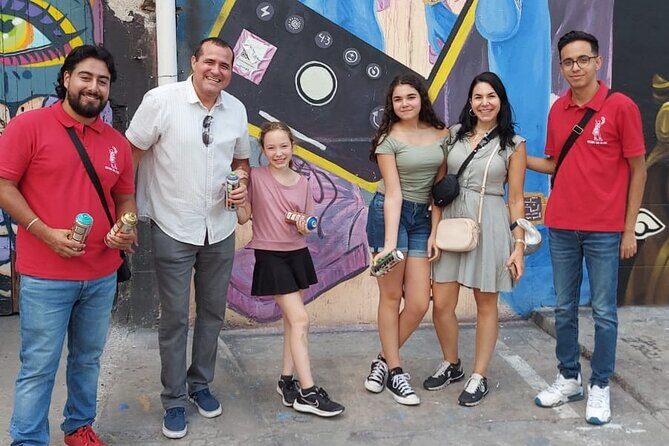
Mexico City has a talent for turning walls into public conversation. On this tour, you don’t just stop at “famous” murals and move on. You walk through spaces where murals were made to matter—then you roll right into an area where graffiti is part of everyday street identity.
You’ll start at the historic core and end in a transformed industrial site that feels like a color bomb. That contrast matters. It shows you how visual art keeps changing form while still carrying ideas about power, community, identity, and who gets to speak.
You can also read our reviews of more tours and experiences in Mexico City.


Stop 1: Antiguo Colegio de San Ildefonso and the mural origin story

Your first major stop is Antiguo Colegio de San Ildefonso, a colonial building in the historic center that’s considered one of the key cultural spaces in Mexico’s national life. It’s also tied to mural history in a big way, because this is where people point to as the place where the Mexican muralism movement really got its footing.
Here, you’ll see murals linked to heavyweight names like Diego Rivera, José Clemente Orozco, and David Alfaro Siqueiros. Don’t treat this like a simple photo stop. The value is in seeing how the art fits the building and the message.
You’ll spend about 1 hour 30 minutes here, with admission included. That timing is good because it gives you a chance to look slowly. The best part is when your guide ties the images together, so you start noticing details you’d normally miss—like how figures are staged, how scenes connect, and what the artist is pushing you to think about.
Practical tip: bring your curiosity, not just your camera. The more questions you ask, the more the murals “click,” especially when the guide turns symbolism into plain language.
Stop 2: Abelardo L. Rodríguez market murals and the politics inside
Next comes an indoor mural moment with serious scale: the Abelardo L. Rodríguez Murals inside a former market space. This market was designed as a model for a newer, more modern popular market in the early 1900s, after an earlier similar market in Mexico City.
The headline detail here is size: roughly 1,450 square meters of surfaces—walls and ceiling—covered with murals. And these murals were painted by and under the direction of students of Diego Rivera. That teacher-to-student chain is one of the reasons this stop feels so important. You’re not only looking at art. You’re looking at an artistic system and a political approach spreading through a school.
What you’ll notice in the themes is how tied the murals are to the era’s ideas. The murals reflect socialist themes, connected to government efforts that promoted the benefits of the 1910 Mexican Revolution. You’ll also see concerns of working life—like exploitation of workers, peasants, and miners—showing up as repeated subjects and social framing.
You’ll spend about 1 hour 30 minutes at this stop, and entry is free. That makes it great value because you get a lot of time with minimal extra cost.
One small caution: because it’s a huge mural-covered interior, your eyes can get tired if you try to take in everything at once. Let the guide’s pacing do the work. Pick a couple of scenes to focus on first, then widen out once you understand the “rules” of the mural storytelling.
Ex Fábrica MX: where graffiti becomes part of an art district
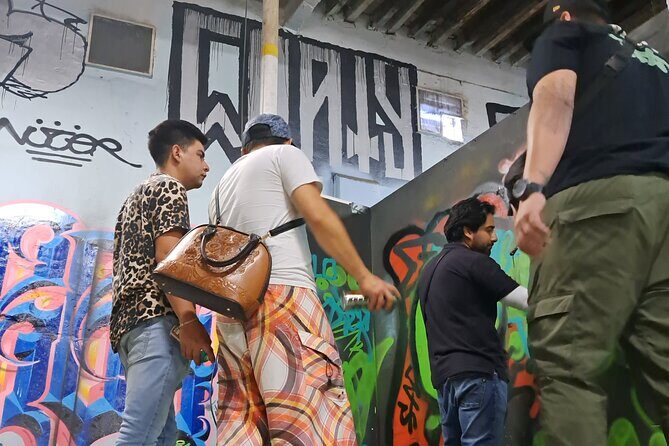
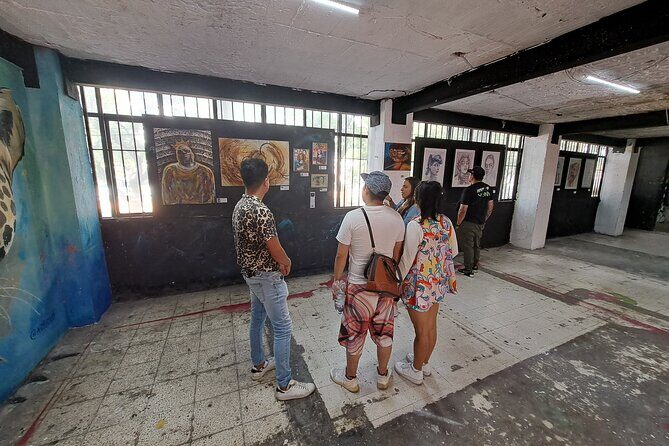
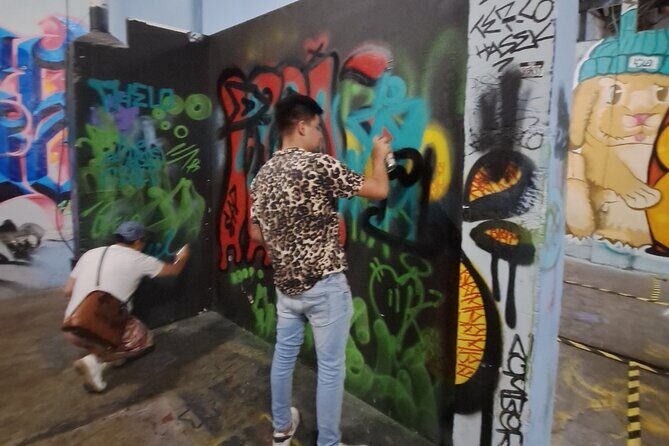
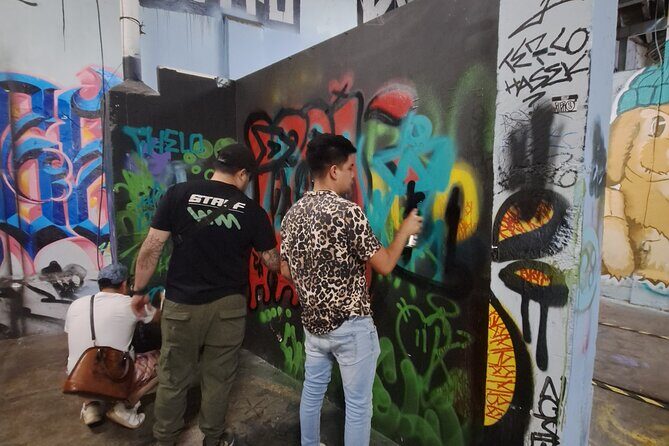
The final stop is Ex Fábrica MX, formerly a flour factory. The story here is urban change: after years of abandonment, the old flour factory was rehabilitated into an art district where expressions of urban art take over the surfaces.
This area is known for graffiti and bold street art figures with striking colors. It’s also become extremely photo-friendly because so much of the space is designed to grab your attention fast. But I wouldn’t treat it as only an Instagram stop. The point is that you’re seeing how street art occupies public space in a way that feels immediate and ongoing.
You’ll have about 40 minutes here. That time isn’t long enough for deep theory, which is fine. It’s the right length to soak up the vibe, recognize styles, and watch how people interact with the walls.
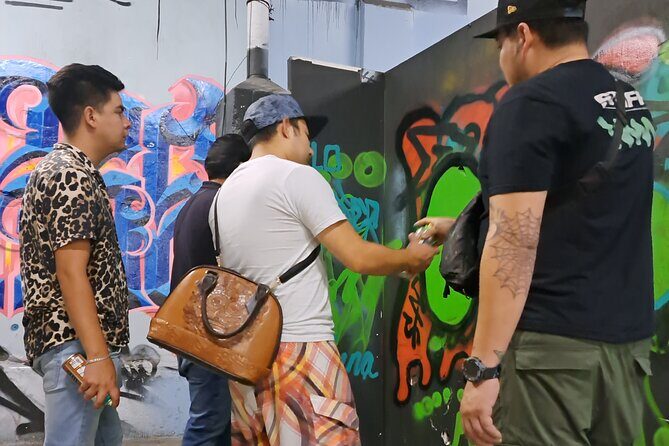
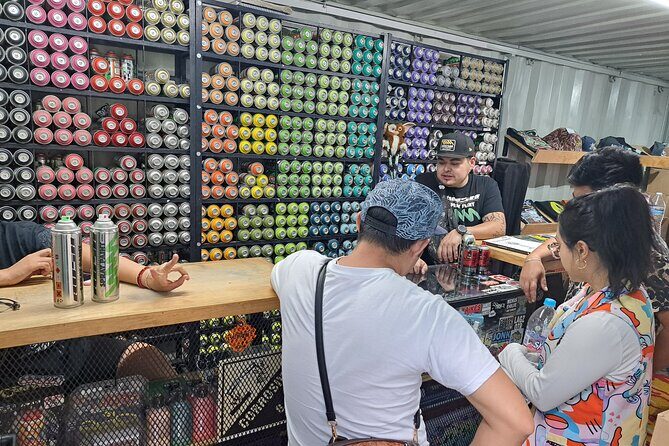
And here’s the practical sweet spot: some versions of the experience include a chance to do graffiti yourself. The end can include a moment where you can try graffiti spraying, which turns the tour from “seeing art” into “understanding how art feels.”
If you’re the type who gets restless at tours, this ending is usually the release valve. You can move, look, and play without the formality of a museum room.
How the public transport portion shapes the whole day
One detail that makes this tour feel more like real city life is that public transportation is included. Your guide brings you through the city using the metro and bus system, which changes the pace.
Instead of being locked into car-to-door transfers, you experience Mexico City as a moving, working place. You also get a better sense of distance and neighborhood rhythm, which helps you later when you’re on your own.
This also helps with value. You’re paying for the guide and the curated art stops, but you’re also getting the transit piece handled. That matters in a city where figuring out your route can eat time and energy.
Tip from the field: if you’re not used to transit, keep your phone secure and expect crowded moments. This isn’t a slow sightseeing drive. It’s a guided walk-and-ride day.




Price and value: what $71.36 buys you
At $71.36 per person, this tour isn’t trying to be a bargain in the “barebones” sense. It’s priced like an active, guided experience with entry and transit built in. Here’s where the value comes from:
- A certified guide who actually helps you read the art
- Public transportation included
- Admission included at the first stop (Antiguo Colegio de San Ildefonso)
- Additional stops that have entry handled through the experience plan (the second mural location and Ex Fábrica MX don’t require you to pay separately)
Add the small group size (max 12) and the time breakdown, and you can see why this works out. You’re getting enough minutes at each major art environment to form impressions, not just snap and run.
Booking-wise, it’s often reserved about 15 days in advance on average, so if you’re traveling in a busy season, waiting too long can shrink your choices.
Who should book this mural + graffiti tour
This tour is a strong match if you want your art day to feel grounded in the city’s social story. I’d especially recommend it if you like:
- Muralism and political art, and want context explained in clear language
- A mix of classic mural history and modern graffiti culture
- A guide-driven route that takes you off the most obvious tourist-only path
It’s also a good fit for families with teenagers who like art and graffiti. The structure gives adults historical depth and gives younger art lovers a more hands-on ending.
If you prefer slow museum pacing, you might find the schedule active. But if you’re okay walking and want a real “see it, then interpret it” day, this fits.
Quick tip for non-Spanish speakers: if the names or Spanish titles are a challenge, snap photos of the mural details and signature elements. That way you can compare with other mural sites later, without trying to memorize every label in one go.
Should you book Evolution of Muralism paints your Grafiti?
Book it if you want a guided day that connects Diego Rivera–era mural culture to today’s street art in a way that feels like a single story. The biggest reason is the guide-led explanation—when someone like Jorge breaks down symbolism, the murals stop being “wall art” and start becoming communication.
Skip it if you hate transit, dislike walking, or want a purely museum-style experience with minimal movement. This tour is built for seeing and doing, not just looking from one bench.
FAQ
FAQ
How long is the tour?
It’s about 3 hours 30 minutes to 4 hours total.
What does the tour cost?
The price is $71.36 per person.
What language is the tour offered in?
The tour is offered in English.
Is the group small?
Yes. It has a maximum of 12 travelers.
Where does the tour start and end?
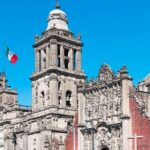
The start is at Mexico City Metropolitan Cathedral (P.za de la Constitución S/N, Centro Histórico). The tour ends at Ex Fábrica MX (Primavera 106, Tacuba, Miguel Hidalgo, 02099).
Do I need to buy museum tickets?
Admission is included for the first stop (Antiguo Colegio de San Ildefonso). The other stops are listed as free for admission.
Does the tour include transportation?
Yes. Public transportation is included, and the day uses transit to reach the stops.
Do I get a mobile ticket?
Yes. The tour uses a mobile ticket.
Can I try graffiti myself at the end?
At the Ex Fábrica MX stop, there is a chance to do graffiti spraying yourself.
What’s the cancellation policy?
You can cancel for a full refund up to 24 hours before the experience starts. If you cancel less than 24 hours before, it isn’t refunded.