Want tacos with a smart plan?
This tour pairs classic Mexico City street food with a short, guided walk along Paseo de la Reforma and key Cuauhtémoc sights. You start with taco basics, then work through a lineup of iconic varieties while getting a Taco Cheat Sheet to help you order for the rest of your trip.
Two things I really liked: the pace is friendly for first-timers, and the tour guide (Tyler) makes you feel confident fast. You also fill out taco scorecards, so the whole experience turns into a fun, hands-on lesson—not just eating.
One consideration: it’s not suitable for vegetarians, since the menu focuses on meat-heavy classics. If you eat only plants, you’ll want a different kind of food tour.
In This Review
- Key highlights at a glance
- Starting at Diana the Huntress Fountain with taco basics that actually stick
- Tacos Don Güero: al pastor and gringas, plus the salsa-and-topping lesson
- Birria Colorado: what makes birria special, and why dorados matter
- Quesadillas, flautas, and the cheese debate at a Mexico City stand
- Los Tacos Michigan: carnitas, ordering tips, and the art of choosing meat
- Casa Cusi and Reforma context: history stops that don’t drag
- The Angel of Independence photo stop, explained without the speech
- Taquería Gabriel: suadero and campechano, with a drink and scorecard comparisons
- Cuauhtémoc Market finale: tortillas by hand and candy to close the loop
- Price and value: what $74.72 buys you in real Mexico City learning
- Best for first-timers, food learners, and anyone who wants to order smarter
- Should you book Tacos 101 Mexico City?
- FAQ
- What is the duration of the Tacos 101 Mexico City taco experience?
- How many travelers are in a group?
- What kind of food do you try on the tour?
- Is the tour offered in English?
- Is this tour suitable for vegetarians?
- Where does the tour start and end?
- Does the tour run in any weather?
- Can I cancel for a full refund?
Key highlights at a glance

- Taco Cheat Sheet + taco scorecards that help you order later, not just today
- Two Reforma stops with real context (Casa Cusi and the Angel of Independence)
- A tour lineup built around classic Mexico City styles (al pastor, birria, suadero, campechano)
- Hands-on ordering tips for toppings, salsas, and carnitas
- End at Cuauhtémoc Market for tortilla-making you can actually see
- Small group size with a max of 8 travelers
Starting at Diana the Huntress Fountain with taco basics that actually stick
Your morning (or afternoon) begins at Diana the Huntress Fountain on Av. P.º de la Reforma, a convenient starting point in Cuauhtémoc. If you’re new to the city, this is a smart way to get your bearings. You’re not stuck indoors with a lecture. You’re outside, walking a famous corridor of Mexico City, while learning the food logic that matters most: what you’re eating, what toppings to choose, and how to pair salsas with specific tacos.
Before your first bite, you get an intro to Paseo de la Reforma, the Cuauhtémoc neighborhood, and the fundamentals of ordering tacos. Then you receive a Taco Cheat Sheet with clear descriptions of the tacos you’ll try. That matters because many taco menus in Mexico City move fast. If you can read what you’re ordering in plain language, you’ll waste less time and enjoy more of your day.
Pacing is also a quiet strength here. The tour runs about 3 hours, and the stops feel like short “chapters” instead of one long food marathon. You’ll still want a solid appetite, but it doesn’t feel chaotic.
You can also read our reviews of more tours and experiences in Mexico City.

Tacos Don Güero: al pastor and gringas, plus the salsa-and-topping lesson
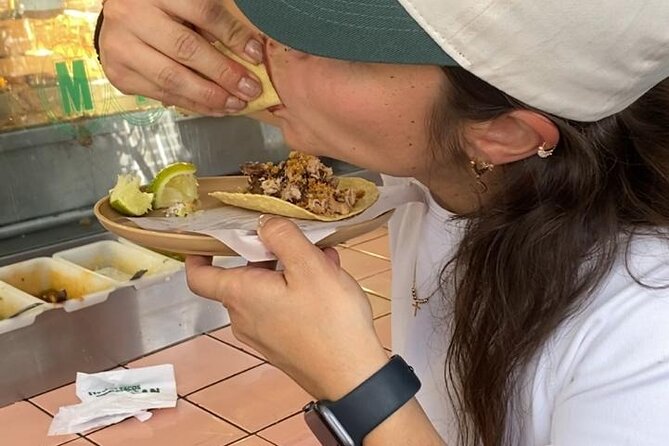
At the first real food stop, you’ll hit Tacos Don Güero, where two classic styles are front and center: tacos al pastor and gringas. This is a great pairing because both are famous in Mexico City for a reason: they show off how layered, seasoned meat can taste when it’s built for a tortilla-first meal.
But the real value isn’t only the eating. While you enjoy your tacos, you get practical taco essentials. You learn how to think about toppings (what to add, what to avoid if the taco already has plenty going on). You also learn how to taste salsas and decide what works best with which taco.
Then comes the part that turns this into a learning experience you can repeat: you begin filling out taco scorecards. Instead of saying yes/no to everything, you’re ranking what you taste. I like that approach because it gives you a framework. Later, when you’re staring at a taquería menu on your own, your brain already has categories.
A quick heads-up: this stop is about classics. If you’re hoping for extreme novelty flavors, you might find it more “foundational” than “wild.”
Birria Colorado: what makes birria special, and why dorados matter
Next up is Birria Colorado, one of those stops that makes people understand why birria has become a world-famous comfort food. Here, you sample some of the best birria in Mexico City and learn about tacos dorados and the history of birria as a classic meat preparation linked to Jalisco.
This is a useful lesson because birria isn’t just one thing. It’s a style, a method, and a flavor profile. Even if you’ve eaten birria elsewhere, hearing the regional background helps you taste with more intention. You start noticing the difference between what’s simply hearty and what’s built through careful seasoning and technique.
And you’re not only in “food mode.” The stop is timed and guided, so you leave with an idea of how birria shows up in multiple taco forms. That matters because, later in the city, you’ll likely see birria offered in more than one way—and you’ll know what to look for.
Quesadillas, flautas, and the cheese debate at a Mexico City stand
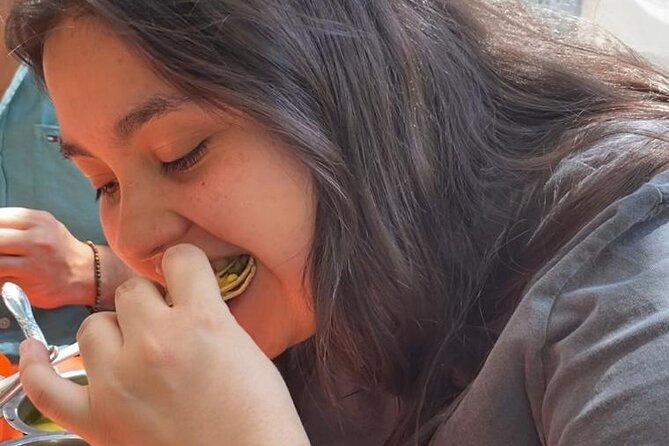
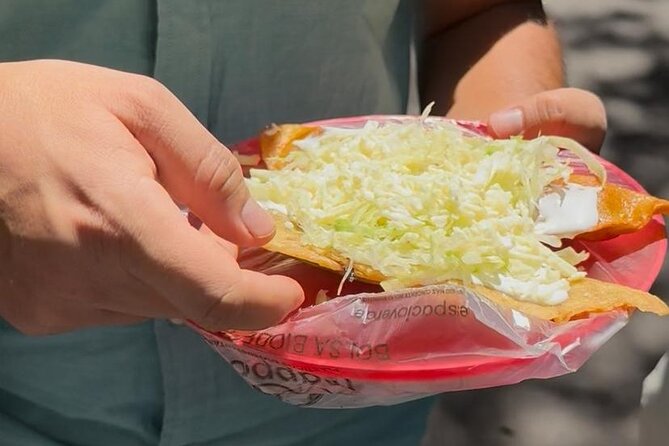
Now you get to the argument that can spark friendly chaos at the taco counter: whether quesadillas need cheese to be called quesadillas. At this stop, you’ll visit a stand making Mexico City quesadillas with or without cheese, and you’ll also sample flautas.
This is a strong choice for a taco tour because it teaches you something that tourists often miss. In Mexico City, food names can be practical and local, not always literal or universal. You learn to think less about strict definitions and more about how the taco is built and what the local eater expects.
The flautas component is also helpful for ordering later. It’s easy to forget that crispy rolled tacos can be their own category, not just a side item. You’ll likely come away with a clearer sense of what texture you want—soft, crispy, or saucy.
One small drawback: if you prefer your tours strictly meat-focused or strictly veggie-friendly, this kind of variety might feel like too much switching. But for most people, it’s exactly what makes this tour feel like a “real Mexico City” lesson.
Los Tacos Michigan: carnitas, ordering tips, and the art of choosing meat
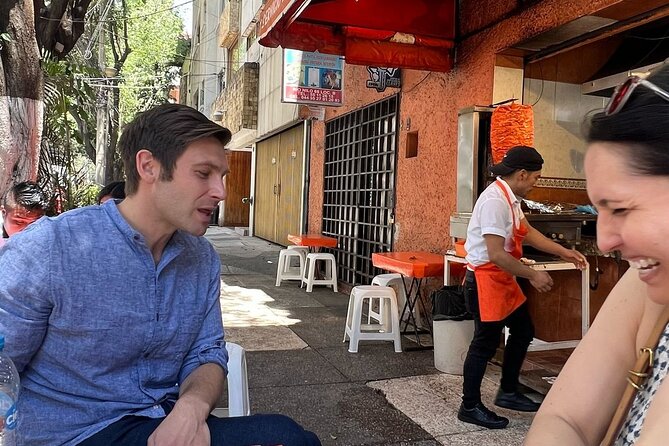
Then you move to Los Tacos Michigan for carnitas. This stop is built for one of Mexico City’s biggest pleasures: well-prepared pork, served in a way that’s easy to customize with toppings and salsa.
You’ll learn about different types of carnitas and, importantly, how to order carnitas. That might sound simple, but it’s the kind of practical skill that pays off all week. Carnitas isn’t one flavor. Different cuts and cooking styles give you different textures and richness. If you can ask for the version you like—rather than defaulting to the safest option—you’ll enjoy the city more.
This is where the scorecard approach pays off. After tasting multiple taco types, you’re not just filling your stomach. You’re training your palate to spot what you like: fatty vs. lean, crispy edges vs. softer meat, and how salsa changes the experience.
Also, the stop is a little longer than some others, so it doesn’t feel rushed. You get time to eat, ask, and absorb.



Casa Cusi and Reforma context: history stops that don’t drag
Between food rounds, you get a real taste of the city itself. At Casa Cusi, you’ll learn about the history of Paseo de la Reforma, including how it was built by Mexico’s last emperor. You’ll also see one of the older buildings in this area and get context for the Cuauhtémoc and Juárez neighborhoods.
This is the kind of stop that can make or break a food tour. I like it here because it’s short, focused, and tied to place. You’re not sent on a long museum detour. You’re walking the city corridor you’ll likely see again, and the guide helps you make sense of what you’re looking at.
If you’re someone who usually finds “history talk” boring, this part is designed to stay light and useful. You’ll remember a few names and ideas, and it won’t steal all your energy before the next taco.
The Angel of Independence photo stop, explained without the speech
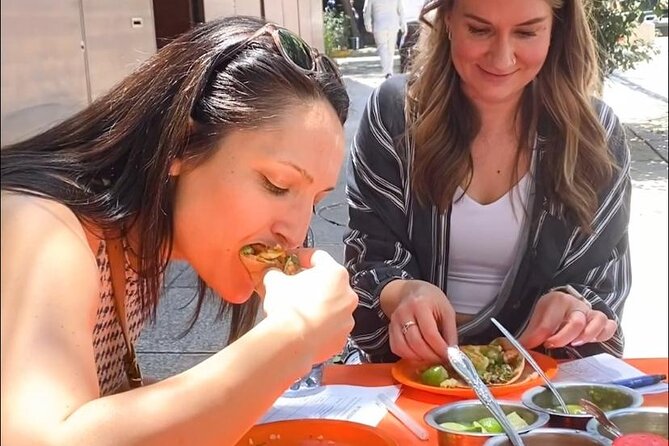
Next is The Angel of Independence. You get history and context, plus a chance to snap the classic Mexico City photo in front of the monument. This is a “quick win” stop: you’re sightseeing, but it also keeps the tour grounded in real locations you can revisit later.
What makes this stop work is that it’s not just a photo request. You hear a short background, so when you look at the Angel later, you’ll have something more than a postcard in your head. And because it’s brief, it doesn’t interrupt the food momentum.
If you’re photographing, wear shoes you can stand in. The best shot often means waiting a moment and adjusting where you stand, and that’s easier when your feet aren’t already mad.
Taquería Gabriel: suadero and campechano, with a drink and scorecard comparisons
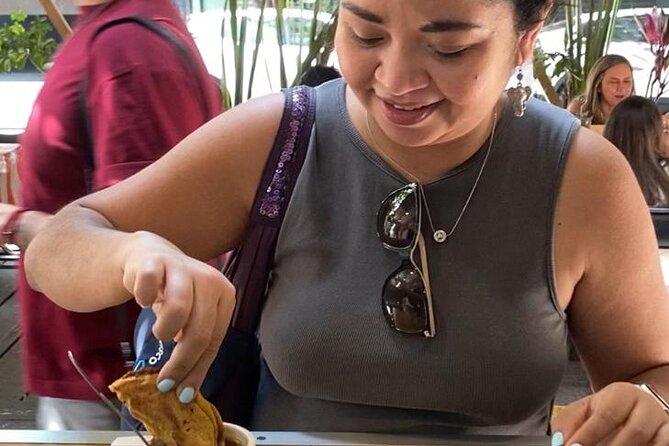
You’ll finish strong at Taqueria Gabriel with tacos de suadero and tacos campechanos. This is a great way to round out the tour because it adds variety beyond the earlier meat categories. You also learn how these tacos are made and why they’re so loved in Mexico City.
Then there’s a fun element: you get a beer or a soft drink, and you compare your taco scorecards. This is where it becomes a social wrap-up even in a small group. You’ll likely find your rankings shift after tasting multiple styles. One taco might be your favorite for comfort, another for flavor complexity, and another for texture.
I like this format because it gives you an immediate takeaway. You don’t just “enjoy tacos.” You identify your preferences. Then, later at home or on your next trip, you can pick the right taco faster.
Cuauhtémoc Market finale: tortillas by hand and candy to close the loop
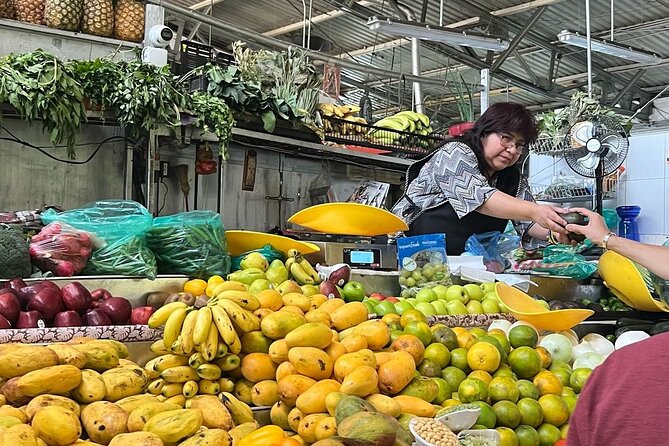
The tour ends at Cuauhtémoc Market at C. Río Lerma S/N, Cuauhtémoc, 06500 Ciudad de México, CDMX. Here, you get a view into day-to-day food culture rather than a staged experience. You’ll see tortillas being made at an authentic tortilleria, which helps you understand why Mexican tacos taste the way they do.
This stop also adds a sweet ending. You’ll visit a candy stall in the market to try traditional Mexican candy. It’s not just dessert. It’s a palate cleanser and a final reminder that Mexico City food isn’t only about savory hits.
If you have extra time after the tour, this is a good place to linger. Just pace yourself. If you’ve followed the tour’s advice and arrived hungry, you’ll probably already feel full at the tortilla demonstration. That’s normal.
Price and value: what $74.72 buys you in real Mexico City learning
At $74.72 per person for about 3 hours, the value comes from three places: variety, guidance, and usefulness after the tour.
First, the food lineup is broad. You sample multiple classic taco styles across different meat preparations, plus quesadillas and flautas, and you finish with a market candy stop. Second, you get guided tasting skills: choosing toppings and pairing salsas. Those are the kinds of skills that keep paying off long after the last bite. Third, you get structured learning tools: the Taco Cheat Sheet and taco scorecards.
You’re not only paying for meals. You’re paying for a method to help you order confidently and taste intentionally around the city.
One note on logistics: the tour is offered in English, uses a mobile ticket, and keeps the group to a maximum of 8 travelers. A smaller group usually means more chances to ask questions and get your ordering doubts cleared.
Best for first-timers, food learners, and anyone who wants to order smarter
This tour fits best if:
- You’re in Mexico City for the first time and want taco confidence quickly
- You like learning through tasting, with practical tools like the scorecards
- You’re happy walking a bit along Paseo de la Reforma between food stops
It’s also a good fit if you’ve tried tacos before but want a clearer way to match toppings and salsas. The tour’s structure is built for that exact “I want a system” feeling.
It’s not the best match if you avoid meat. The tour explicitly says it’s not suitable for vegetarians. Also, if you prefer slow, restaurant-only meals, the street-food style and multiple short stops might feel too active.
Should you book Tacos 101 Mexico City?
If you want a guided taco education you can use the rest of your trip, I’d book it. The highlights are the guide’s approach (Tyler is easy to follow), the mix of classics across multiple taco types, and the way the tour turns into a repeatable ordering skill through the Taco Cheat Sheet and taco scorecards.
I’d skip it if you don’t eat meat or if your ideal day is long seated dining with minimal walking. Otherwise, this is a strong first-trip choice that ends in a local market setting and leaves you with both full plates and a clearer sense of what you like.
FAQ
What is the duration of the Tacos 101 Mexico City taco experience?
The tour lasts about 3 hours.
How many travelers are in a group?
This experience has a maximum of 8 travelers.
What kind of food do you try on the tour?
You’ll sample classic tacos and related items including tacos al pastor and gringas, birria (Birria Colorado), quesadillas and flautas, carnitas, tacos de suadero and tacos campechanos, plus traditional Mexican candy at the end.
Is the tour offered in English?
Yes. The tour is offered in English.
Is this tour suitable for vegetarians?
No. The tour is not suitable for vegetarians.
Where does the tour start and end?
It starts at Diana the Huntress Fountain on Av. P.º de la Reforma 21, Colonia Centro, Cuauhtémoc, and ends at Cuauhtémoc Market, C. Río Lerma S/N, Cuauhtémoc.
Does the tour run in any weather?
The tour requires good weather. If it’s canceled due to poor weather, you’ll be offered a different date or a full refund.
Can I cancel for a full refund?
Yes. You can cancel for free up to 24 hours in advance for a full refund.