REVIEW · MEXICO CITY
Small VIP Group: Frida Kahlo and Diego Rivera Legacy
Book on Viator →Operated by INTERLIV TRAVEL · Bookable on Viator
Murals and homes. Two genius lives. One long, good day. This small-group VIP tour is interesting because it doesn’t stop at the obvious places. You’ll move through the historic center, Chapultepec Park, and Coyoacán, using art as a map to understand how Diego Rivera and Frida Kahlo shaped Mexican identity—public art, private life, and everything in between. You’re also riding in comfort with hotel pickup and drop-off, and the format is built for people who want more than a quick photo stop.
I especially like two things. First, you get included entry tickets for the key museum stops, so you’re not constantly calculating costs while your day is already packed. Second, the day is guided like a real storyline, with names you’ll remember—Felipe, Gaby, and Luis come up again and again for keeping the pacing fun and the explanations clear. One possible drawback: guide style can vary. A small number of people felt the level of explanation wasn’t as strong as they wanted, so if you’re the type who likes to ask follow-up questions, plan on doing exactly that.
In This Review
- Key things to know before you go
- Why this Frida-and-Diego route works so well
- Small VIP group and pickup: the comfort part you feel immediately
- Stop 1 in the historic center: Museo Mural Diego Rivera
- Chapultepec’s surprise stop: Museo del Carcamo de Dolores
- The studio stop at Juan O’Gorman’s modernist design
- A short but meaningful mural moment: Teatro de los Insurgentes façade
- Museo Anahuacalli: Rivera’s pyramid museum and pre-Hispanic roots
- Casa Azul in Coyoacán: where Frida’s story becomes personal
- Guides you can trust: Felipe, Gaby, and Luis in action
- Food, time breaks, and what to budget for
- Price and value: why $132.62 can make sense
- Should you book this tour?
- FAQ
- What time does the tour start?
- How does hotel pickup work in Mexico City?
- How long is the tour?
- What group size should I expect?
- Are tickets to museums included?
- Is the tour offered in English, and is food included?
Key things to know before you go
- Max 15 travelers keeps it from feeling like a cattle-call museum day
- Hotel pickup and drop-off saves time in a city where traffic can eat your schedule
- Included museum admission means you’ll see more without extra ticket hassle
- Rivera murals plus Frida’s Blue House gives you public-versus-private perspective
- A short Teatro stop adds revolutionary context without turning the day into a marathon
- Health protocol on the day includes guidance around masks and entry rules if someone feels unwell
Why this Frida-and-Diego route works so well
This tour is built around a simple idea: seeing art in the right order changes how it lands. If you only do Frida’s Blue House and the studio home, you miss how Diego Rivera’s public murals set the cultural stage for her world. If you only chase Rivera murals, you miss why his work mattered emotionally to Kahlo’s life.
The route also does a practical thing. It clusters major stops so you’re not zig-zagging across town all day. You start in the historic center, move into the Chapultepec area, and finish in Coyoacán where the Casa Azul experience hits hardest. In other words: you get a coherent arc, not a pile of unrelated buildings.
And because the group is small—up to 15—you’re more likely to hear explanations clearly and stay flexible when a museum line, a transfer, or a question slows things down. That’s especially useful at places where you can linger if you’re the type who reads every panel.
You can also read our reviews of more tours and experiences in Mexico City
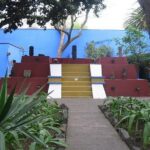


Small VIP group and pickup: the comfort part you feel immediately
Let’s be honest: Mexico City can be energetic, and a long day of museums is easier if you don’t also spend it wrestling transit. This tour offers pickup from most downtown hotels and drop-off back to your hotel or nearest meeting point. If your hotel is outside the downtown area, you’re assigned a closer meeting spot, which is the kind of detail that saves time.
You’ll also be in an air-conditioned vehicle, which matters when you’re trying to keep your brain switched on for art history. The tour also uses a mobile ticket, which reduces the “where’s my paperwork?” stress.
The VIP angle here isn’t about velvet ropes. It’s about control. Fewer people means smoother transitions between stops and less waiting around at busy points—especially helpful if you’re traveling with family or you hate feeling rushed through indoor spaces.
Stop 1 in the historic center: Museo Mural Diego Rivera
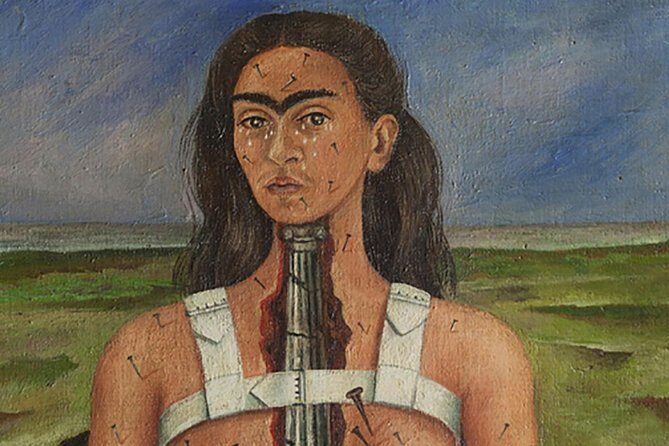
Your first museum stop is Museo Mural Diego Rivera in the historic center. The main draw is Rivera’s mural Dream of a Sunday Afternoon in Alameda Park. The payoff of seeing this piece early is that the guide can set up a way of looking at Rivera’s symbolism before you head to other mural sites.
The museum experience is more than admiring a famous painting. You’re guided through how Rivera portrays key figures from Mexican history and what that says about cultural and political evolution. That matters because Rivera’s murals don’t sit in a vacuum. They’re visual arguments—about people, power, and the story Mexico tells about itself.
Time-wise, it’s about 45 minutes. That’s a good length for a museum with a single star attraction and supporting context. The only drawback to this kind of museum format is that if you’re someone who loves wandering freely and reading every label at your own speed, you may wish you had more time. But with the rest of the day packed in, you’re trading “extra browsing” for “more total stops.”
Chapultepec’s surprise stop: Museo del Carcamo de Dolores
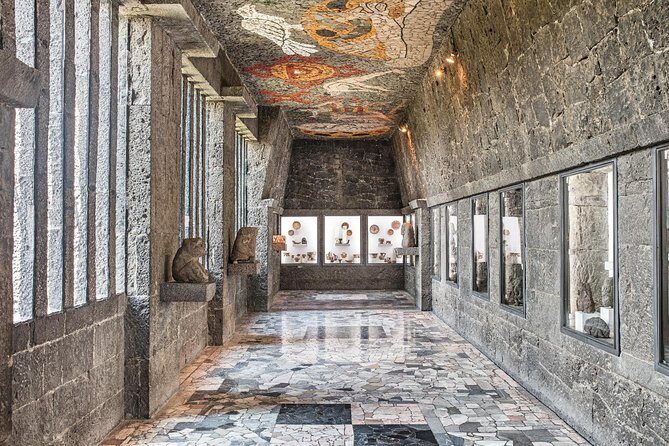
Next you head to Museo del Carcamo de Dolores in Chapultepec Park, a location that feels less familiar to many visitors—and that’s part of the appeal. Diego Rivera’s mural here blends themes of water, life, and Mexican culture, and the setting is what makes it extra memorable.
This museum sits in the context of a monumental water system. So instead of Rivera painting water as a metaphor only, you see it tied to infrastructure and daily life. The mural becomes part of the place, not an object behind glass.
Like the first museum, you get around 45 minutes here. That’s enough time to absorb the mural and understand the themes without feeling pressured. If you love off-the-main-road museums, this is one of those stops that can shift your day from “famous art tour” to “how did I not know this existed?”
The studio stop at Juan O’Gorman’s modernist design
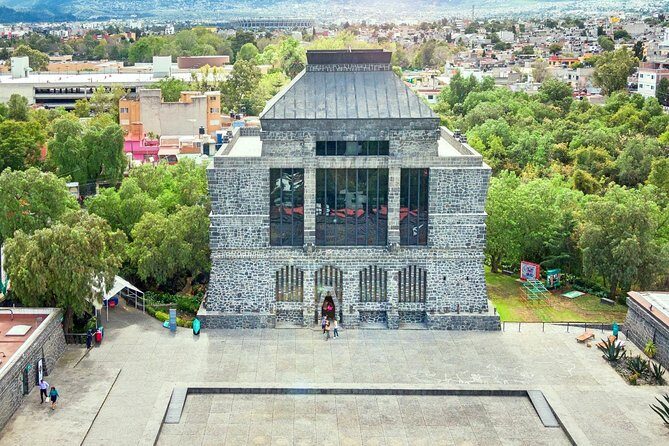
Stop 3 is Museo Estudio Diego Rivera y Frida Kahlo, the studio where Rivera lived and worked. This part of the day changes the temperature of the tour. Instead of big public messages, you’re in the artist’s working environment.
The studio building was designed by Juan O’Gorman, and the design supports a practical message: art-making as work, not just spectacle. In the museum spaces, you can see tools, unfinished works, and personal artifacts. That gives you a more human scale view of how Rivera approached creation—structured, purposeful, and grounded.
The timing is again about 45 minutes. That’s enough to get the “private lab” feeling without the day getting too heavy. If you’re a person who learns best through seeing process, this is where the tour starts connecting dots between what Rivera painted in public and how art functioned as a tool for social change.



A short but meaningful mural moment: Teatro de los Insurgentes façade
After three longer museum stops, Teatro de los Insurgentes is a quick hit—about 20 minutes. The reason it works is the façade mosaic mural by Rivera. It shows Rivera’s interpretation of Mexico’s revolutionary past and the role of people in shaping its future.
Because this is outside the deeper museum stops, it acts like a visual reset. You’re still in the Rivera story, but you’re reminded that the revolution isn’t just history—it’s also an ongoing idea about civic identity.
Admission here is free, so you’re not losing time paying for another ticket. The main consideration is simply that it’s short. If you want more explanation time at the exterior stop, you’ll probably need to ask your guide to slow down for questions.
Museo Anahuacalli: Rivera’s pyramid museum and pre-Hispanic roots
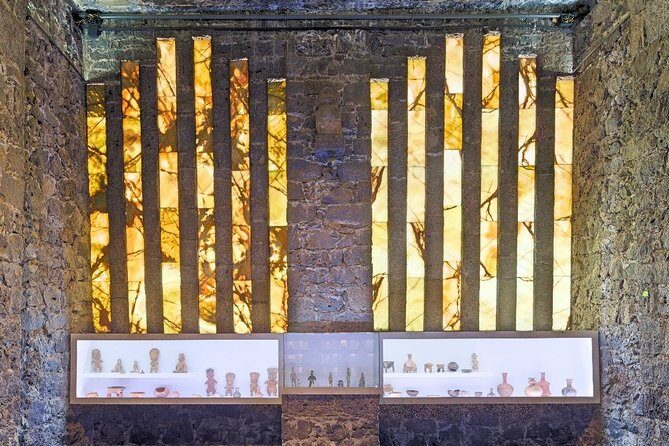
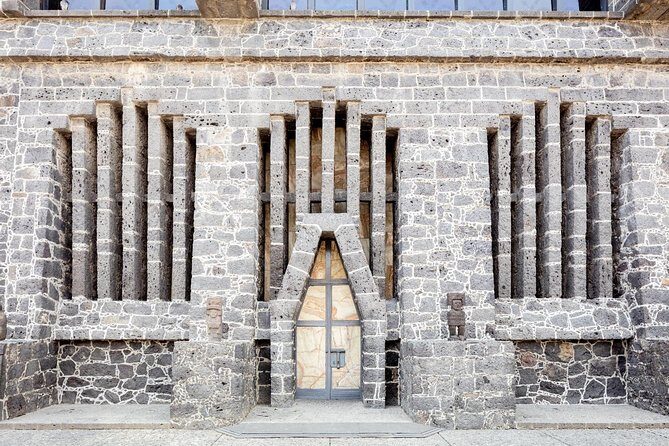
Stop 5 is Museo Diego Rivera Anahuacalli, a pyramid-shaped museum that Rivera designed himself. This is one of the most distinctive structures on the route, and it’s also where you start to feel how Rivera’s work was built on Mexican history from much farther back than the 20th century.
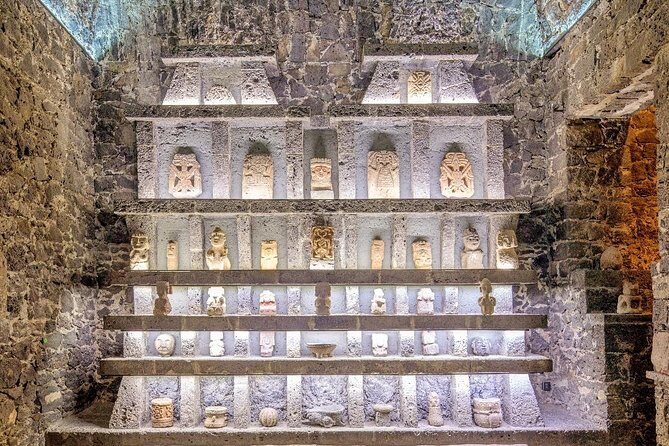
Inside, you’ll see Rivera’s vast collection of pre-Hispanic art and artifacts, which strongly influenced his approach to imagery and themes. The building blends indigenous Mexican designs with modern architecture, so you’re basically touring Rivera’s idea of how the past and present should talk to each other.
A detail worth knowing: one highlight guests often share is that the museum construction uses volcanic materials. Another is that Diego was prohibited from going to the Templos because of the archeological finds he was taking. Those kinds of stories add texture to what you’re looking at—his “collecting” was not just a hobby.
You’ll have about 45 minutes here. That should be enough to understand the museum’s purpose and absorb the core collection without feeling trapped in a long indoor crawl.
Casa Azul in Coyoacán: where Frida’s story becomes personal
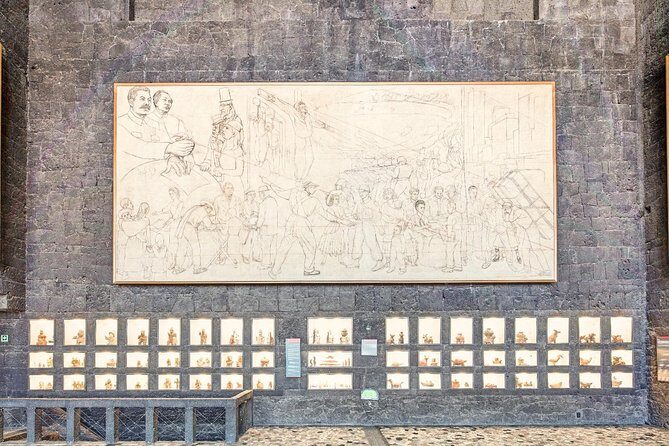
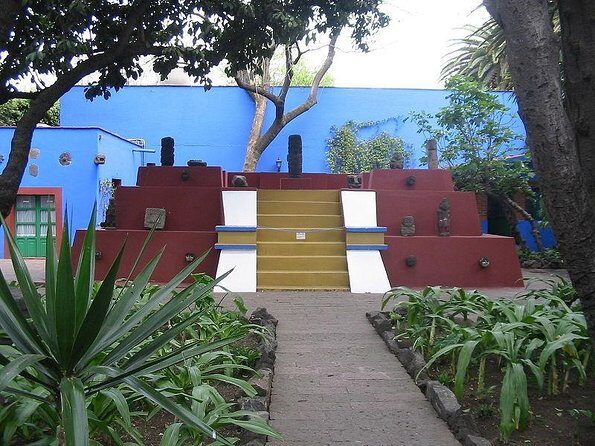
The final and most emotional stop is Museo Frida Kahlo, also known as La Casa Azul, in Coyoacán. This is Kahlo’s childhood home and later her residence with Rivera, so you’re stepping into a place that holds personal rhythm—rooms, objects, and the quiet spaces where she created.
The museum’s effect is different from the mural museums. Rivera’s work can feel like a public conversation. Frida’s house feels like a private notebook left open. You’ll see personal belongings and intimate spaces connected to her life and struggles, along with the artwork that came from that mix of pain, pride, and identity.
Time here is about 1 hour, which is well-judged. Casa Azul tends to reward slower attention, and an hour gives you room to look, reflect, and read the context without feeling you’re being shoved out the door.
If you care about emotional context—how lived experience shapes art—this stop is the reason many people remember the entire day. It’s also where the tour’s Rivera-and-Frida pairing really pays off. You start to see Rivera’s influence not just as visual style, but as shared life and shared Mexican identity.
Guides you can trust: Felipe, Gaby, and Luis in action
In a tour like this, the guide is the difference between seeing paintings and understanding why the paintings matter. The recurring names—Felipe, Gaby, and Luis—show up because they tend to connect the dots between places.
A common theme in strong experiences is that the guide keeps the pace stress-free and answers questions you didn’t think to ask. People also highlight that the guides explain how the stops relate: Rivera’s mural symbolism connects to the studio world, and both connect to Frida’s home.
One thing to watch for, based on the range of feedback: if you’re expecting very detailed explanations all the time, you should come ready with questions. A couple of people reported that some days felt more like transportation than instruction, and another mentioned incorrect info in the explanation. That doesn’t mean the tour is usually like that, but it does mean you’ll get the best results if you’re engaged during the day.
If you’re traveling with someone who loves art history class energy, Luis and Felipe-style storytelling seems especially suited to that. If you’re traveling with kids or a family group, guides who keep things fun and readable can make the long day feel manageable.
Food, time breaks, and what to budget for
Food isn’t included. That’s the clearest budgeting point. Since the tour runs about 9 hours, you’ll want a plan for lunch and snacks. You can either eat before you start (pickup is in the morning), then keep a small stash of snacks for energy later, or be ready to grab something near one of the stops if your day schedule allows.
Some guides have been praised for finding a market break when people asked about food. But that kind of timing isn’t guaranteed in the basic tour description, so don’t build your schedule on it.
Practical tip: carry water. Even if you’re in an air-conditioned van for parts of the day, museum time is still time, and museum time adds up fast.
Also note: Teatro de los Insurgentes and the museum stops mean you’ll likely do a mix of walking and standing. Wear comfortable shoes, and keep your day bag light.
Price and value: why $132.62 can make sense
At $132.62 per person for about 9 hours, this tour can be good value when you look at what’s included. You’re not just paying for a guide. You’re paying for transportation (air-conditioned vehicle), pickup and drop-off, and entrance fees for the museum stops tied to the Frida-and-Diego story.
That matters because if you tried to DIY this route on your own—tracking addresses, buying multiple tickets, and timing transit—you’d spend a lot of energy just making the day happen. Here, the day is pre-built around the key locations that connect Rivera’s public murals to Kahlo’s private world.
The value equation also works if you care about English commentary. The tour is offered in English, which is a big deal in Mexico City if you don’t want to rely on self-guided reading only.
The trade-off: you give up some freedom. You’re following a schedule across six major stops, so you can’t turn this into a “linger forever” day. If you’re the kind of traveler who wants control of every minute, consider whether you’d rather do a smaller number of locations at your own speed.
Should you book this tour?
Book it if you want a structured day that explains how Rivera and Kahlo connect—public art to private life—without you doing the heavy planning. The small-group size, hotel pickup, and included museum entry fees make it a practical way to get more done while still feeling human-scaled.
Skip or reconsider if you hate fixed schedules or you’re very sensitive to guide-by-guide variation in explanation quality. In that case, you might prefer a more flexible plan and focus on just Casa Azul plus one museum stop where you can spend more time reading at your own pace.
If you decide to go, do this one smart thing: show up ready with questions. Ask about symbolism in the murals at the start, and then ask how Rivera’s themes appear again in Frida’s world by the time you reach Coyoacán. That’s how you turn a sightseeing day into real understanding.
FAQ
What time does the tour start?
The tour starts at 8:30 am.
How does hotel pickup work in Mexico City?
Pickup is available in most hotels in the downtown area. If your hotel is outside downtown radio, the operator contacts you to assign the closest meeting point.
How long is the tour?
It lasts approximately 9 hours.
What group size should I expect?
The tour has a maximum of 15 travelers.
Are tickets to museums included?
Entrance fees to the museums on the tour are included, and the Teatro de los Insurgentes stop is free.
Is the tour offered in English, and is food included?
The tour is offered in English, and food and beverages are not included.