REVIEW · MEXICO CITY
Mexico City; ART NACO : Murals & Street Art Bike Tour
Book on Viator →Operated by Poray · Bookable on Viator
Street art looks different when you roll past it.
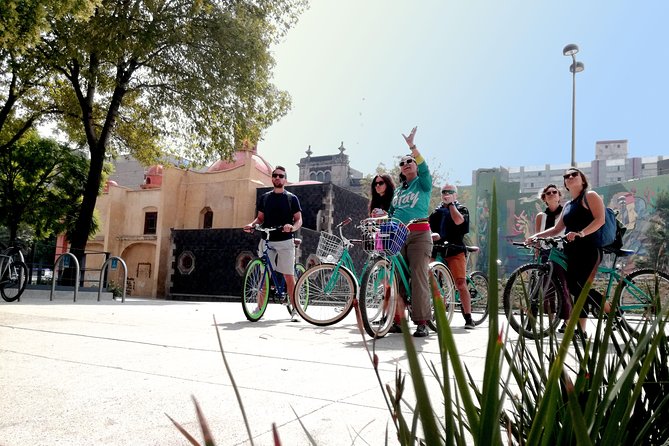
This 3-hour Mexico City bike tour is designed to show you murals and wall paintings in working neighborhoods, not just postcard stops. I like that it keeps things practical: bike rental, a fitted helmet/bike setup, and snack breaks are built in, so you’re focused on the art and the city streets.
What I really like is the way the tour connects artwork to place and community—think Obrera/Doctores murals, the Antique Toy Museum area linked to a 2011 street art festival, and a route that ends in some of the biggest mural walls. It’s also run as a small group (max 10), which makes it easier to move, ask questions, and actually see what you’re biking past.
One possible drawback: you’re riding in traffic-adjacent streets, so you’ll want to feel comfortable on a bike. Also, depending on your guide, English may be stronger or weaker, and timing can be affected if the group has a late arrival.
In This Review
- Key highlights you’ll care about
- Why a bike tour is the fast way to read Mexico City street art
- Start at Paseo de la Reforma: what your morning looks like
- Poray and the Centro-to-barrio feel: Toy Museum, festival roots, and a garden pause
- Obrera, Doctores, and big-wall energy: crossing into Juárez and Cuauhtémoc
- What you actually eat on this tour: tacos, tlacoyos, gorditas, and more
- Safety on Mexico City streets: why the staff setup matters
- Guide names you might meet: Alberto, Ivan, Gaby, and others
- How the timing works (and why it sometimes slips)
- What this tour is best for—and who should think twice
- Value check: is $60.56 worth it?
- Should you book ART NACO: Murals & Street Art Bike Tour?
- FAQ
- How long is the Mexico City ART NACO street art bike tour?
- What’s included in the price?
- Is hotel pickup included?
- How big is the group?
- What language is the tour offered in?
- Can I cancel for a full refund?
Key highlights you’ll care about
- Small-group size (max 10) keeps the pace steady and the stops watchable
- Two routes to choose from (north or south) lets you tailor the barrio route
- Antique Toy Museum + 2011 festival ties add real context to the street art scene
- Pushkin Garden stop gives you a breather before crossing into more mural-heavy blocks
- Street food snacks included (with options and diet restrictions) so you don’t hunt for lunch
- Extra safety staff help manage crossings on busy Mexico City streets
Why a bike tour is the fast way to read Mexico City street art
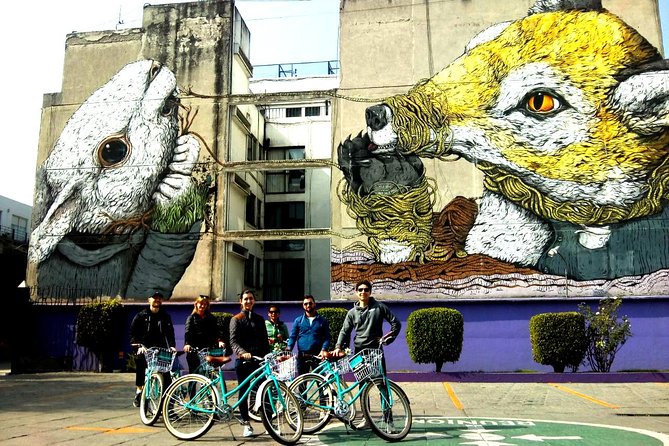
Mexico City street art isn’t just decoration. It’s commentary—on neighborhood identity, local pride, and the constant back-and-forth between the official city and what communities make on their own walls. Riding helps because you see scale and rhythm. Murals don’t feel like posters when you’re moving past them at bike speed.
This tour is built to help you see more city per hour without feeling rushed. You’re on a slow, controlled ride, stopping frequently enough to look closely and get the story behind what you’re seeing.
The small-group limit matters more than it sounds. With a max of 10 people, you get space to stop, point, and take photos without turning every street corner into a bottleneck. It also makes the safety team’s job easier when you’re crossing lanes or waiting for gaps in traffic.
You can also read our reviews of more tours and experiences in Mexico City.

Start at Paseo de la Reforma: what your morning looks like
The meeting point is Av. P.º de la Reforma 24-1, Colonia Centro, Cuauhtémoc, 06040 Ciudad de México, CDMX. The start time is 10:00 am, and the tour ends back at the meeting point.
You’re near public transportation, which is a big deal in Mexico City. You don’t need a hotel pickup, so it’s smarter to plan your route to Reforma and arrive a bit early rather than relying on last-minute rides.
Bring a few basics:
- a charged phone (for photos and maps)
- comfortable clothes that can handle some sun and street dust
- a light layer, just in case the morning feels cooler than expected
Also: this is a mobile-ticket tour. Have it ready on your phone when you arrive.
Poray and the Centro-to-barrio feel: Toy Museum, festival roots, and a garden pause
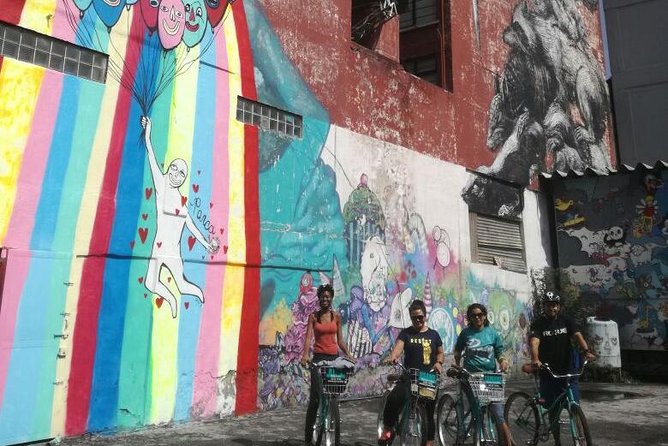
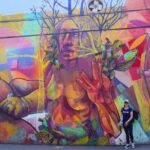
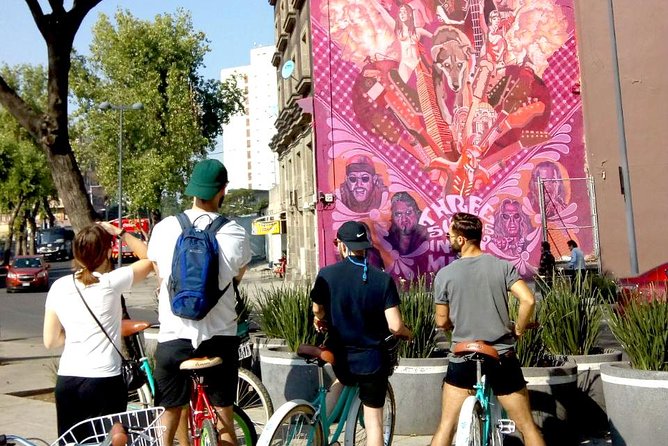
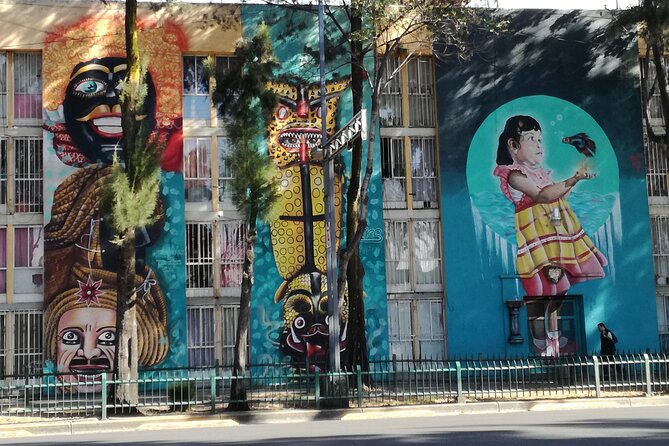
Your route begins in Colonia Guerrero around Lagunilla—the kind of area where you’ll feel the city living at street level. From there, you move toward the Obrera and Doctores neighborhoods, where you’ll spend a good chunk of time looking at murals and street art works by local and international artists.
A key stop here is the Antique Toy Museum area. It’s described as the home of the first street art festival in 2011, and that detail matters because it frames the murals as part of an ongoing community project, not just one-off artwork. In plain terms: you’re not only looking at painted walls—you’re seeing how a scene grew and kept going.
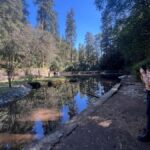
After enough wall time to start spotting recurring themes and styles, you’ll get a break at Pushkin Garden. This isn’t just a rest stop. It’s a useful mental reset before you head into more mural-dense blocks and busier intersections.
The tour also mentions getting to know Rome Chic during this break. You’re likely to use this moment to rehydrate, regroup, and decide whether you want to linger a second before the ride continues.
Obrera, Doctores, and big-wall energy: crossing into Juárez and Cuauhtémoc
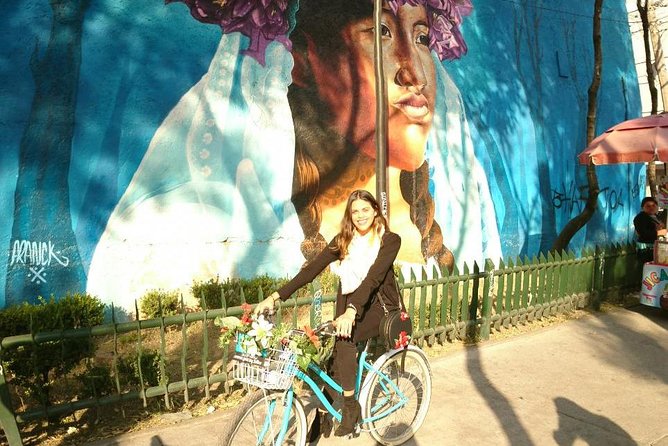
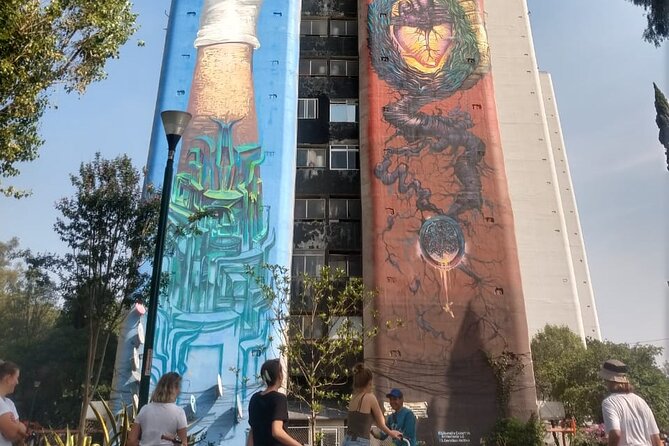
After you’ve soaked in the early street art context, the ride takes you across Juárez and Cuauhtémoc neighborhoods. This is where you’ll start seeing larger-scale murals and bigger visual statements.
The tour highlights murals painted using different Alameda techniques, and it specifically points you toward a connection with the Diego Rivera Mural. Even if you’re not a Mexico City mural expert, this kind of framing helps you read what you’re seeing: wall art here connects to broader Mexican art traditions and public-space storytelling.
You’ll also have two route options—a north route or a south route. One big advantage of offering options is that it gives you a chance to match your interests. If you’re more into the “city layers” side of murals, you may prefer the route that leans harder into history themes. If you want something that feels more like a daily neighborhood ride, the other route can fit that mood.
What you actually eat on this tour: tacos, tlacoyos, gorditas, and more
One of the most practical perks is that street food snacks are included during the tour. This isn’t a tiny cookie moment. It’s positioned as a real snack stop with multiple choices, including:
- tacos
- queskas
- tlacoyos
- gorditas
- chilaquiles
…and more options based on what you can eat.
The tour also notes options for dietary restrictions, and you may find vegan-friendly street food on the ride. That’s huge for travel days, because Mexico City is full of great food, but it’s also easy to lose time searching when you already have a tight itinerary.
If you’re the type who gets hungry from walking and biking (that’s most people), this setup is a win. You’re not trying to time lunch between murals. You’re eating because the tour schedule says you should.



Safety on Mexico City streets: why the staff setup matters
Let’s talk bike safety, because Mexico City streets can be intense if you’re used to quieter roads.
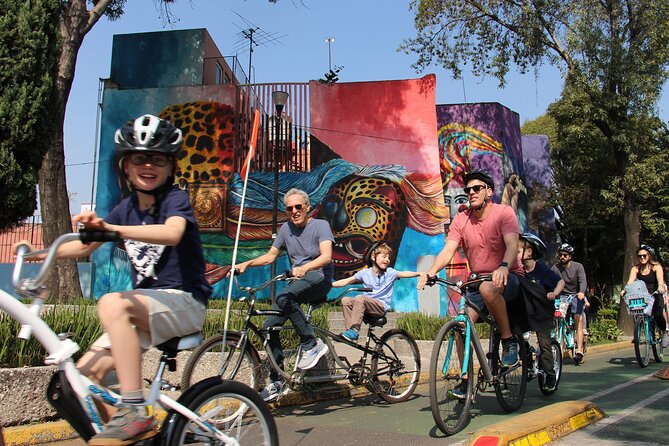
This tour is set up with safety support staff. In multiple accounts, groups have felt protected because guides and assistants help manage the flow—often stopping traffic and controlling crossings so you can move as a unit. You’re not just sent into the chaos alone with a map.
You may even notice the team structure varies by group size. Sometimes it’s one guide with extra assistants; in other cases, you may see two guides plus staff working together to keep things calm. Either way, the effect is the same: you feel guided, and that’s the difference between a fun ride and a stressful one.
Still, be realistic. You’re bicycling through busy city blocks. Your job is to follow instructions and stay predictable:
- keep a steady line when the group rolls
- wait at the stops
- don’t sprint ahead or drift wide on turns
One practical tip: once you get your fitted bike, do a quick check of the brakes and how the bike feels when you start rolling. There are reports of bikes needing a bit more care (weak brakes or odd shifting). Most of the time it won’t ruin the day, but a quick check helps you catch issues early.
Guide names you might meet: Alberto, Ivan, Gaby, and others
A bike tour lives or dies on the guide’s storytelling and group management. This one tends to shine when the guide blends art context with street-level clarity.
You may run into guides like Alberto, Gaby, Ivan, Eduardo, and teams that include people such as Cesar, Timon, and Beto. Some guides lean more into art history and artist context; others focus on neighborhood meaning, local customs, and how the street art scene grew.
Language quality can vary. For example, there are cases where English wasn’t as smooth, even though the ride and direction were handled well. If fluent English matters a lot to you, it can help to join with curiosity and flexibility—street art is visual, and even partial language explanations still usually give you plenty to work with.
How the timing works (and why it sometimes slips)
The tour is listed at about 3 hours. In practice, that means a mix of riding time, frequent mural stops, and a food/snack break.
Most of the time, the pacing keeps the tour from feeling frantic. But timing can run over if the group is waiting for a late arrival. If you have a hard appointment after 1:00 pm (or after the tour end), give yourself a cushion.
A good approach: plan your afternoon as flexible, and treat the bike tour as the main event of the day rather than a quick add-on.
What this tour is best for—and who should think twice
This is a strong choice if you want:
- street art plus local context (not just photos)
- a guided way into neighborhoods beyond the usual tourist loop
- a steady bike ride rather than an all-out workout
- included street snacks so you can keep the day moving
It’s also a fun fit for families and teens. Several groups have mentioned bringing teenagers and having a good time, especially because the ride is paced and the safety support helps everyone relax.
Who should think twice:
- If you’re not comfortable riding a bike in city traffic-adjacent streets, this may feel stressful.
- If you’re picky about bike condition, do that quick brake/shift check at the start and be ready for minor mechanical differences.
- If you need perfectly fluid English, you might want to confirm expectations when booking.
Value check: is $60.56 worth it?
At $60.56 per person, the price feels reasonable because it bundles three things that usually cost extra on their own:
- Bike rental plus fitting to you
- Guide time across multiple neighborhoods
- Street food snacks with options (including diet restrictions)
You’re not just paying for movement—you’re paying for someone to connect the murals to place and keep you safe while you ride. In cities where art is everywhere, the value often comes down to interpretation and access. This tour gives you both.
Also, the small group size helps justify the cost. You’re less likely to get a lecture for a crowd of 30 people. You’re more likely to be able to ask a question when something catches your eye.
Should you book ART NACO: Murals & Street Art Bike Tour?
I’d book it if you want to see Mexico City street art in a way that feels connected to real neighborhoods, with a guided ride that takes safety seriously and includes food so your day stays smooth. The combination of small-group size, multiple mural stops, and street snacks is a good match for people who want more than just sightseeing photos.
I’d hesitate if you’re uneasy about riding in busy areas or if you expect perfectly maintained bikes and fully fluent English every time. Also, if your schedule is tight and unforgiving, remember the ride can shift with late arrivals.
If you fit the sweet spot—comfortable biking, curiosity about murals, and a hunger for local street food—this is the kind of tour that can turn a “cool art stop” into a whole afternoon of city understanding.
FAQ
How long is the Mexico City ART NACO street art bike tour?
It’s listed at about 3 hours.
What’s included in the price?
The tour includes a local guide, a bicycle fitted to you, small-group format (max 10), bottled water, and street food snacks with options for diet restrictions.
Is hotel pickup included?
No. There’s no hotel pickup or drop-off.
How big is the group?
It’s limited to a maximum of 10 travelers.
What language is the tour offered in?
It’s offered in English.
Can I cancel for a full refund?
Yes, you can cancel up to 24 hours in advance for a full refund. If you cancel less than 24 hours before the start time, the amount paid isn’t refunded.