REVIEW · MEXICO CITY
Gay Side of History through Plazas & Temples
Book on Viator →Operated by Mex at Max · Bookable on Viator
A city map with a queer backbone. This tour threads LGBTQ+ stories through Mexico City’s most famous squares and temples, then adds context at street level—so you’re not just sightseeing. You also get a digital LGBT+ map plus extra resources, and the guide keeps the pace small-group and personal.
I especially like two things. First, the rooftop stop at Librería Porrúa sets the stage with big views of the Templo Mayor ruins and surrounding landmarks, which makes the rest click faster. Second, the guide—Carlos, in many cases—tells the story in a way that feels like history class that forgot to be boring: you get clear context before you move on.
One consideration: this is a real walking tour in open-air parts, and it operates in all weather, so plan for sun or rain. Also, because it’s a small-group experience, if something goes wrong on the day, you’ll feel it more than you would on a giant bus tour.
In This Review
- Key points to know before you go
- A Historic Center walk with an LGBTQ+ lens you can follow
- Small group, clear storytelling, and Carlos as a guide
- Stop 1 at Librería Porrúa: your rooftop “start line” for the day
- Templo Mayor ruins and the Cathedral: layers of authority in plain sight
- Zócalo and the National Palace: where public life concentrates
- Centro Cultural de España and the Old Customs Building: colonial leftovers with new purpose
- Plaza de Santo Domingo: Portal de Evangelistas and the craft of printing
- Santo Domingo Church and the Inquisition’s shadow: trade routes and punishment
- Price and value: what $99 gets you in real terms
- How to make the most of your 3.5-hour walk
- Who should book this tour (and who might skip it)
- Should you book Gay Side of History through Plazas & Temples?
- FAQ
- What’s the tour length?
- How much do you walk?
- What language is the tour offered in?
- Is the tour group size small?
- What’s included in the price?
- Are tickets included for the sights?
- Is there a minimum age?
Key points to know before you go
- Small group (max 10): you’ll get a more personal rhythm and room for questions.
- Rooftop orientation at Librería Porrúa: a high, central viewpoint over key landmarks.
- LGBT+ digital map + PDF e-book: you’re not leaving with just photos.
- Mostly free public-site stops: you’re paying for the guide and the special paid viewpoint, not a pile of admissions.
- Santo Domingo area details: Portal de Evangelistas typewriter/printing craft scene and major historic crossroads.
A Historic Center walk with an LGBTQ+ lens you can follow
Mexico City’s Historic Center can feel like a maze—until someone hands you a map that actually explains what you’re looking at. Here, the digital LGBT+ map is doing more than decoration. It gives you a way to connect sites you might otherwise treat as separate stops.
And the tour keeps the focus on how power, religion, and modern life collided in this city. You’ll move through places tied to the Mexica (Aztec) world, Spanish colonial rule, Catholic authority, and the later political era. Then you’ll see how LGBTQ+ life and persecution fit inside that same timeline, not off to the side.
You can also read our reviews of more tours and experiences in Mexico City.


Small group, clear storytelling, and Carlos as a guide
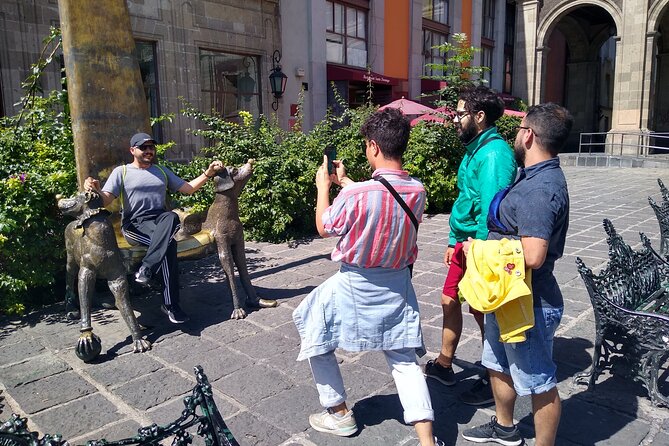
This experience runs with up to 10 travelers, which matters. In a big group, you’d lose the thread every time a question gets asked. In a small group, the guide can slow down when something matters and speed up when it doesn’t.
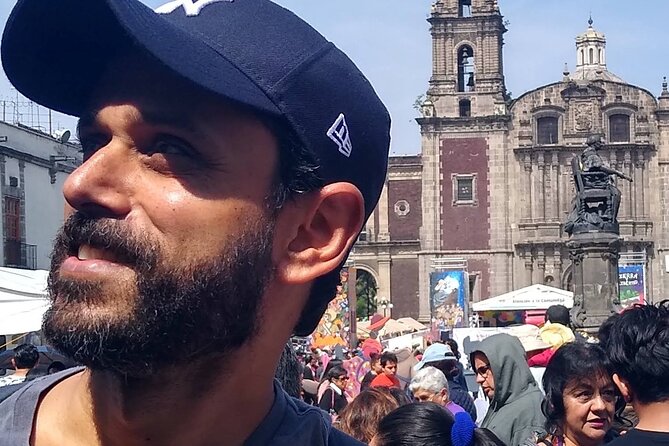
In the reviews, Carlos comes up again and again as a guide who tells stories with confidence and precision. People describe his way of explaining history as both serious and not dry, with the right mix of facts and human detail. If you’re the type who likes to ask why something happened, you’ll get more of that than on most “point-and-walk” tours.
Since the tour is offered in English, you won’t have to work around a language gap while the guide builds context.
Stop 1 at Librería Porrúa: your rooftop “start line” for the day
Your first major moment is Librería Porrúa, where you’ll spend about 1 hour on a rooftop balcony. This is not just a scenic pause. It’s an orientation tool.
From up there, you get a view that helps you understand the geography of the Historic Center: you can look toward the Palace of the Royal Duty area, the Hideaway Rooms of Frida Kahlo, and the ruins linked to the Great Aztec Temple (Templo Mayor). Seeing those layers from above makes the later street-level stops feel less random.
This stop includes an admission ticket, which is one reason the tour price feels more fair. You’re paying for a specific, higher-impact viewpoint, not only for walking from one landmark sign to the next. If you like “stand here first, then look again” experiences, you’ll appreciate how this one is built.
Templo Mayor ruins and the Cathedral: layers of authority in plain sight
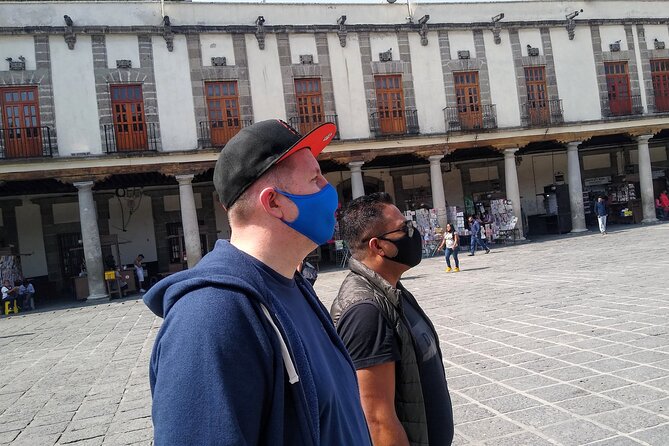
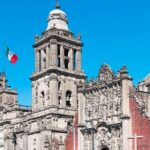
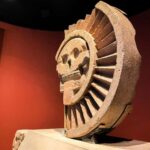
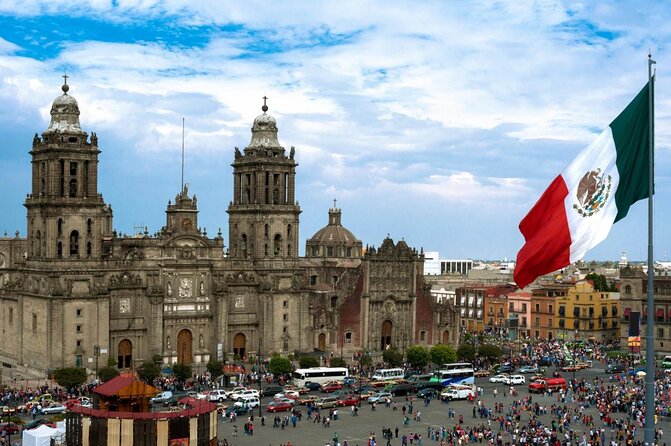
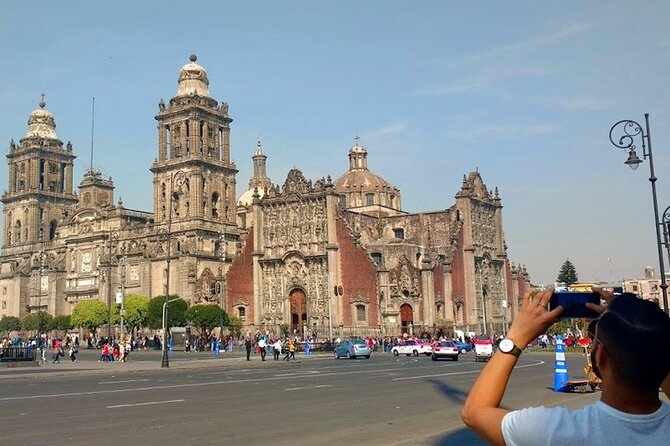
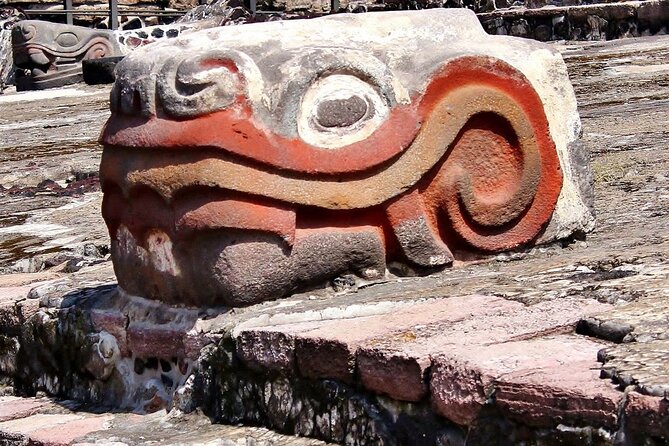
After you’ve got the big picture from the rooftop, you shift into two heavy hitters: the Templo Mayor and the Metropolitan Cathedral. The Templo Mayor was the main temple of the Mexica in their capital. The Cathedral is the Catholic anchor of the city.
What makes this pairing work on a guided walk is that you’ll be comparing different kinds of authority. One is tied to pre-Hispanic religious and political life; the other is tied to later Catholic power in the same urban space. You’re essentially watching the city’s priorities change over time while still standing in the same general neighborhood.
Even if you’ve visited Mexico City before, this is the kind of sequence that can make familiar landmarks feel new. The guide’s job here is to help you see connections—especially through the LGBTQ+ lens the tour is built around.
Zócalo and the National Palace: where public life concentrates
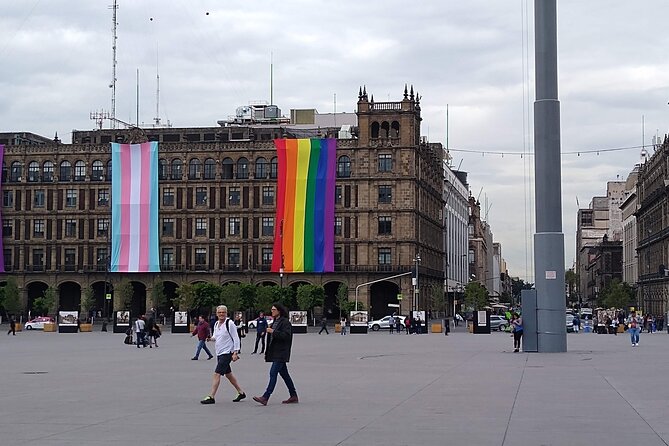
Next comes Zócalo, Mexico City’s central plaza. This stop is about 30 minutes, and it’s time well spent if you use it to get your bearings. Zócalo has been the meeting place since the 16th century, which means the plaza is not just a square—it’s a stage where new eras show up over and over.
Then you’ll connect it with the National Palace (Palacio Nacional). This building functions as the seat of the federal executive, and since 2018 it has served as the official residence for the President of Mexico. That’s a modern detail, but it also helps you understand why the Zócalo matters: politics here isn’t hidden behind walls.
For LGBTQ+ history, this matters because public power always shapes public life. When the center is the symbol of the nation, any marginalized history gets affected by who controls the story.



Centro Cultural de España and the Old Customs Building: colonial leftovers with new purpose
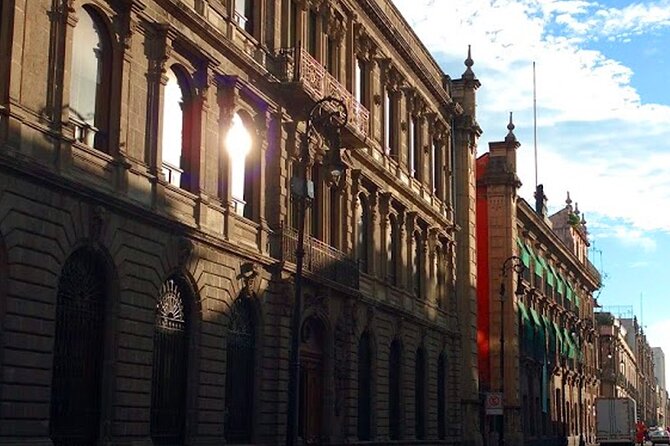
One of the more interesting pacing choices happens near Centro Cultural Espana en Mexico. This stop is about 30 minutes, and admission is free. The building used to be an old mansion just behind the Cathedral, and it sat in ruins in the late 1990s until the Mexico City government ceded it to the Spanish government.
After restoration, it reopened in the early 2000s, inaugurated by the King of Spain and the President of Mexico in 2002. That sequence tells you a lot about cultural ownership and identity, especially in a city where colonial history is never far away.
From there, the walk brings you toward the Old Customs Building, located on the east side of Santo Domingo Plaza. Customs buildings are practical places—this one points to the reality that trade routes and movement of people have always shaped who could live where, and under what rules.
Plaza de Santo Domingo: Portal de Evangelistas and the craft of printing
You’ll spend about 30 minutes at Plaza de Santo Domingo, and admission to the nearby areas is free. This is one of those plazas where the environment feels “worked in,” like daily life has left marks you can still read.
On the west side, the Portal de Evangelistas lines up with Tuscan colonnades and round arches. Here, scribes use typewriters and antique printing machines. It’s a small detail, but it adds a texture you won’t get at a museum with a single exit and a gift shop line.
This section is also a good moment to slow down mentally. If you’re trying to connect the LGBTQ+ history theme to physical space, plazas like this help. They were (and are) places where community, information, and authority rub shoulders.
Santo Domingo Church and the Inquisition’s shadow: trade routes and punishment
The tour also spotlights the Church of Santo Domingo, on the north side facing Santo Domingo plaza. This area connects to El Camino Real, a trading route from Old Mexico to New Mexico. The route is described as a safe haven for gay male couples.
That’s a powerful pairing: a church and a route that includes both spiritual authority and practical survival. It tells you that LGBTQ+ life didn’t exist only in private. People found ways to move, connect, and protect each other inside the constraints they faced.
Then the tour’s story takes a darker turn. The Spanish Inquisition, in this context, is described as a civilian institution that executed convicted homosexuals between 1521 and 1821. The tour’s final location links you to the space associated with that history—the Antiguo Palacio de la Santa Inquisición.
End your walk here, and you’ll feel the contrast in a way that’s hard to get from a brochure. One side is community and movement. The other is state power turning that movement into danger.
Price and value: what $99 gets you in real terms
At $99 per person for about 3 hours 30 minutes, the value comes from three places.
First, you’re paying for a guide plus interpretation. This tour isn’t just entry tickets. The guide explains the links between sites and the LGBTQ+ lens that binds them. That’s the core product.
Second, you get practical extras that make the experience smoother: bottled water, and coffee and/or tea are included. It’s a small cost saver, especially in a walking schedule.
Third, there’s real media value: a downloadable PDF copy of RAINBOW MEXICO and a digital LGBT+ map with extra resources. That means you can keep learning after the tour ends, when you’re back in your room or planning your next day.
The tour also includes admission at the first stop and uses free access for other areas, so you’re not paying a “stacked tickets” model. You’re paying for the viewpoint and the way the day is stitched together.
How to make the most of your 3.5-hour walk
You’ll walk about 1 mile in 3 hours, with the full experience lasting about 3 hours 30 minutes. That’s not a long trek, but it’s steady enough that you’ll want comfortable shoes. Also remember it operates in all weather conditions, so bring a light layer for sun and shade, and plan for rain if the forecast looks moody.
The tour starts at 10:00 am. A late start is convenient for sleep, but you’ll still want to eat something beforehand. You’ll have coffee/tea on board, but it’s better to start fueled.
Because the group is capped at 10, you’ll usually have a better chance to ask specific questions. If you have a theme you care about—culture, politics, religion, or the “how did people live” angle—bring it up early.
After the tour, if you want a place to decompress, there’s at least one good suggestion from the experiences people share: a drink or appetizer at Balcon de Zócalo is a common follow-up.
Who should book this tour (and who might skip it)
Book it if you want a Historic Center tour that treats LGBTQ+ history as central, not as a side note. You should also book it if you enjoy guided storytelling more than self-guided wandering. The rooftop orientation and the way the guide connects sites makes this a smart first or second day activity in Mexico City.
Skip it if you hate walking, or if you’re looking for a quick hits photo loop. This is interpretation-heavy, not “see everything in 10 seconds” travel.
It’s also best if you’re comfortable with serious subject matter. The tour includes the Spanish Inquisition and how persecution operated, so this is not a light stroll meant to avoid hard history.
Should you book Gay Side of History through Plazas & Temples?
I think it’s an easy yes for most visitors who want more than postcard landmarks. The mix is strong: a paid rooftop orientation that helps you see the city, major religious and political sites that anchor Mexico City’s story, and a finish tied to the consequences of persecution.
For $99, you get more than a walk. You leave with a digital map, a PDF e-book, and a guided explanation that helps you connect dots without turning history into a lecture. Just go in prepared for walking and real weather, and you’ll have a day that changes how you look at the center of Mexico City.
FAQ
What’s the tour length?
It runs for approximately 3 hours 30 minutes.
How much do you walk?
You’ll walk about 1 mile in about 3 hours.
What language is the tour offered in?
The tour is offered in English.
Is the tour group size small?
Yes. The maximum is 10 travelers.
What’s included in the price?
A local guide, bottled water, coffee and/or tea, a digital LGBT+ map (with extra resources), and a downloadable PDF copy of RAINBOW MEXICO.
Are tickets included for the sights?
Yes. Admission is included for the first stop at Librería Porrúa, and other listed stops are free.
Is there a minimum age?
The minimum age is 18 years. Service animals are allowed, and it operates in all weather conditions.